Published market ranges, not quotes
Do you need a water softener in Las Vegas?
This one is a money and upkeep question, not a water quality question. The valley's hardness is already settled and published, so what is left to decide is whether removing it pays for itself in your house.
- What changes
- What does not
- What upkeep involves
Probably, if you own the home and plan to stay a while. Valley tap water runs 280 parts per million, or 16 grains per gallon, and that mineral lands on heaters, fixtures and laundry. A softener removes it. Renters and short term owners often get more from a filter at the kitchen tap.
Last updated 2026-09-16. Written for homeowners in Las Vegas and Clark County, Nevada.
Who gets the most out of one?
Hardness is not a per house problem in this valley. Every address on district water receives the same published figure, so the question is never whether your water is hard. It is whether stopping what the mineral does is worth spending money on.
The households that gain most own the property, expect to stay several years, and already replace fixtures or fight spotting every week. Any return arrives slowly, through appliance life and less cleaning, rather than in one billing cycle.
Renters sit in a different position, because a softener is plumbed into the main line and stays with the building. A tenant is usually better served by treatment at the kitchen tap, which moves house with them.
What does hard water cost over time?
The honest way to answer that is with published market ranges rather than a figure invented for a sales page. The table below comes from HomeAdvisor cost guides, which list national ranges and averages job by job.
None of these are quotes, and none of them are this company's prices. A real number comes from someone looking at your main line, your heater location and the space available. Use the table for the scale of each decision, not the decimal point.
A water softener installed carries a wide published range of $200 to $6,000, with a national average near $1,500. A whole home system sized for 16 grains per gallon sits in the middle of that range rather than at the bottom of it.
| Job | Published range |
|---|---|
| Water softener, installed | $200 to $6,000 |
| Water softener repair | $162 to $982 |
| Tank water heater, installed | $882 to $1,826 |
| Tankless water heater, installed | $1,406 to $3,902 |
| Whole house filtration | $1,129 to $3,541 |
| Reverse osmosis, installed | $1,000 to $4,800 |
What a softener changes, and what it does not
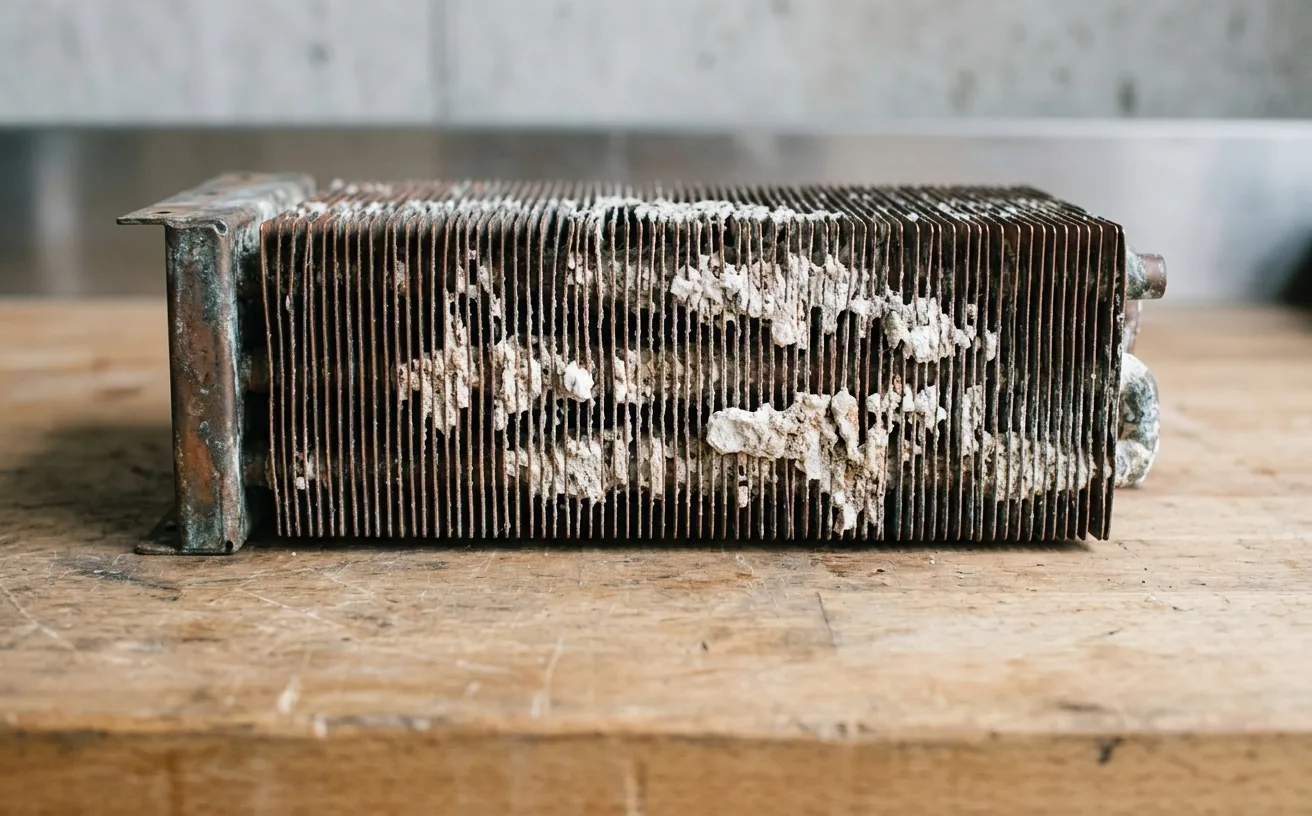
A softener swaps calcium and magnesium for sodium as water passes through a resin bed. That is the entire job. Soap lathers with less effort, spotting drops off, and mineral stops building on heated surfaces.
It does not remove chlorine. Valley water carries a free chlorine residual averaging 0.99 parts per million, and ion exchange leaves that untouched. Complaints about smell or a pool taste need carbon instead, fitted at the kitchen sink or on the main line.
It does not lower total dissolved solids, published at 591 parts per million. It does not raise low water pressure. It will not rescue old galvanized steel pipe that is already closing up from the inside.
Those are separate jobs with separate fixes. The water Softeners, Las Vegas NV covers the treatment options, and what size water softener a Las Vegas home needs, the guide covers capacity.
What owning one actually involves
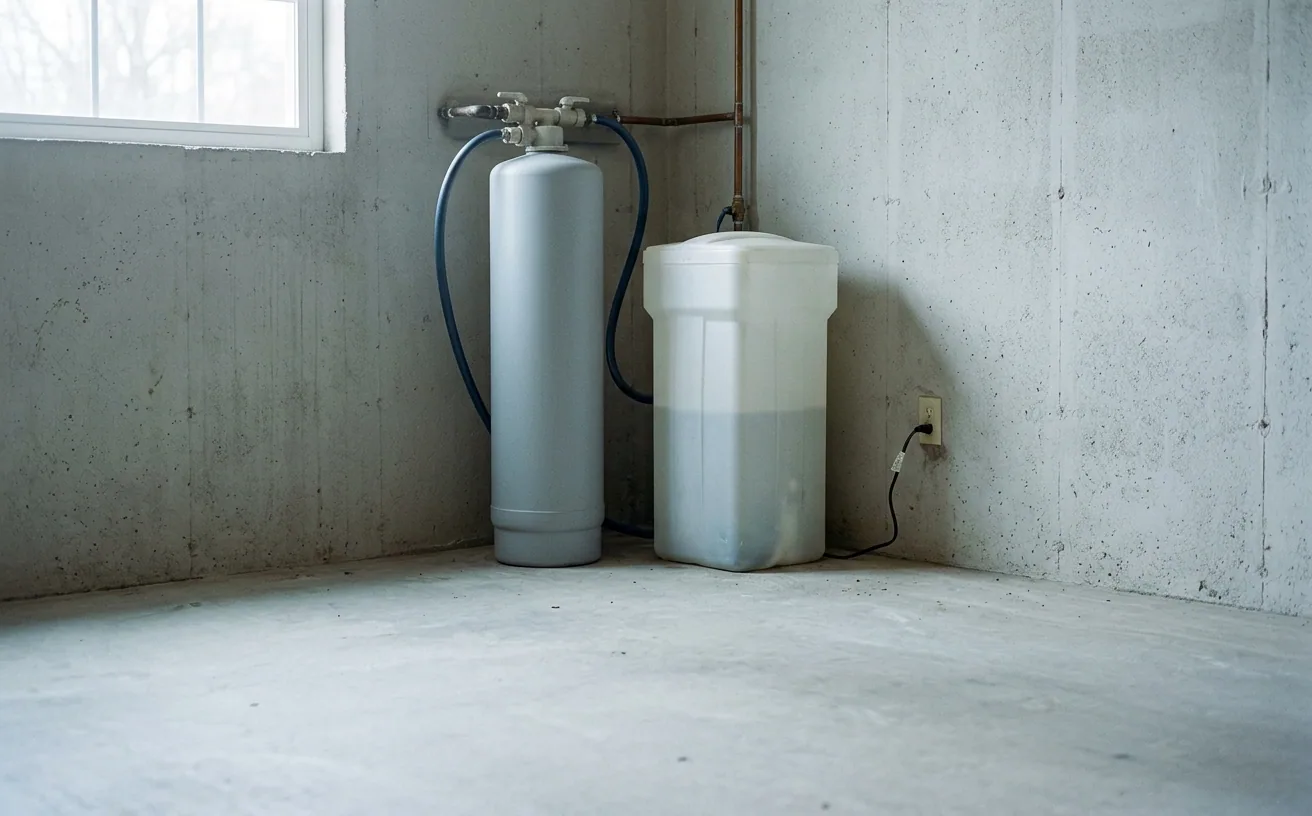
A softener needs salt, a drain for the brine it flushes, and an occasional look. Checking the salt is a two minute job: lift the lid of the brine tank and see whether the pellets sit above the water line.
The resin bed is the wear item. It typically lasts 10 to 15 years, and both high hardness and chlorine shorten that. When a system starts regenerating constantly or simply stops softening, the resin or the control valve is usually the reason.
Repairs are common enough to have a published range of their own. HomeAdvisor puts water softener repair at $162 to $982, with simple fixes starting near $65 and a full valve rebuild running far higher.
There is also paperwork, and it lands at the start rather than during ownership. A water conditioning system going into unincorporated Clark County needs a permit and an inspection before it is signed off. Leave a little calendar room for that step when you plan the install.
When the answer is no, or not yet
Some households should spend the money elsewhere first. A failing water heater, a slab leak or a sewer problem all outrank treatment, because those get worse while you think about it.
If the only real complaint is drinking water, a reverse osmosis unit under the kitchen sink is the smaller purchase. Published ranges put a full system at $1,000 to $4,800, and an under sink point of use unit at $200 to $800 installed.
Salt free conditioners are sold here too. They do not remove calcium or magnesium, so the 16 grains per gallon stays in the water. The hardness on your water quality report does not move. Ask any seller for test data behind the specific claim they make.
Sodium is the other frequent objection. Ion exchange adds sodium in proportion to the hardness removed. Anyone on a restricted diet should ask about potassium chloride or keep one untreated drinking tap. Those trade offs are worth raising on the phone before anything is ordered, on (725) 337-3692.
Sources
- Hardness of 280 ppm, total dissolved solids of 591 ppm and a free chlorine residual of 0.99 ppm LVVWD Water Quality Summary
- Water above 180 milligrams per liter is classed as very hard USGS, Hardness of Water
- Scale accumulation of 528 grams a year on unsoftened gas water heaters against 7 grams softened Water Quality Research Foundation, Battelle study
- Tank water heaters at 8 to 12 years, shortened by hard water Rheem
- Typical resin bed life of 10 to 15 years, shortened by chlorine and higher hardness Water Quality Association
- Published market ranges for softener installation and repair, filtration and reverse osmosis HomeAdvisor cost guides, 2026
- Water conditioning systems need a permit and an inspection, and the county issues several plumbing permits online Clark County Building and Fire Prevention
- About 47.3 percent of Clark County homes were built in 2000 or later US Census ACS via Census Reporter
Where to go from here
The service this covers
Related guides
Want someone to look at yours?
Reading about it only gets you so far. One call gets you an answer about your house.
Reach Clark County Plumber
- Phone
- (725) 337-3692
- Service area
- Clark County, Nevada, including Las Vegas, Henderson, North Las Vegas, Summerlin, Paradise, Spring Valley, Enterprise and Boulder City
We are a service area business. We come to you, so there is no counter to visit and no street address on this page. The number above is the fastest way in.
What to have ready
About a minute of detail changes what we can tell you on the call.
- The address and ZIP code, so we know which end of the valley you are on.
- What the symptom is, in your own words. "Water under the sink" beats a diagnosis.
- When it started, and anything already tried.
- On a water heater: gas or electric, and roughly how old it is.
- You get the diagnostic fee as a figure on the phone, before anyone is sent.
- Scope and price are agreed together, before any work starts.
- Water moving right now? Shut the main off first, then call and say so.
Related questions
Will a water softener help my water heater last longer?
That is the clearest measured effect. In a 2009 study run by Battelle for the Water Quality Research Foundation, untreated gas storage heaters accumulated 528 grams of scale annually. Softened units collected 7 grams over the same period. Not one of the untreated heaters survived to the end of the test.
The manufacturer side agrees. Rheem rates a tank unit for 8 to 12 years and names hard water as one of the things that cuts it short.
How much salt will a softener use here?
More than the same unit would use in a softer market, because salt consumption tracks hardness directly. Every regeneration has to strip 16 grains out of each gallon the household ran. The salt bill therefore tracks how much water you use, not how big the cabinet is. Correct sizing is what keeps it reasonable.
A properly sized system regenerates less often, and most homeowners judge the interval by how fast the brine tank empties between refills.
Do I need a permit for a water softener?
In unincorporated Clark County, yes, and a homeowner installing their own unit is covered by the same rule. Treat the permit as part of the purchase rather than an afterthought. It is the one part of the job that runs on the county's calendar instead of yours.
Which desk applies depends on the address, and which plumbing jobs need a permit in Clark County lists every department.
Does softened water feel slippery in the shower?
Some people notice it straight away. Without calcium in the water, soap rinses off instead of leaving a film on skin, and that changes how a shower feels. It is the same effect that lets softened water lather with less soap and shampoo than you were using before.
If it still bothers you, the hardness setting can be adjusted so the unit leaves a small amount of mineral in the water.
Is a softener worth it in a newer house?
The age of the house does not change the water. About 47 percent of Clark County homes were built in 2000 or later. Those homes receive the same 280 parts per million as a mid century ranch near Huntridge. New fixtures collect mineral at the same rate.
What a newer house can change is the install itself. Some were plumbed with a dedicated loop for a softener, which makes the work shorter when it is there.
Talk it through with someone
Describe what you are seeing and we will tell you what it usually turns out to be.