Plumbing and water treatment across Clark County. Call (725) 337-3692

Clark County and the Las Vegas ValleyWater published at 16 grains per gallonSources named on every number

Water softeners for Las Vegas water at 16 grains per gallon

The water district publishes Las Vegas tap water at 280 parts per million, or 16 grains per gallon. This page explains what that does inside a house, and which treatment fixes which problem.

  • Every figure here links to the page it came from
  • Permit pulled where the county requires one
  • Published market ranges, never a phone quote
Water Softeners in Las Vegas, Nevada
Illustrative image, not a photo of our work
16 gpgPublished Las Vegas hardness
280 ppmThe same figure as calcium carbonate
180 mg/LWhere the USGS calls water very hard
+0.25Saturation index, meaning water that deposits scale

Figures above are published third party data, not company claims. Sources: LVVWD Water Quality Report, LVVWD Water Quality Summary, USGS.

  • The hardness number is publicThe water district publishes 280 parts per million and tells customers to set a softener to 16 grains per gallon.
  • Two official numbers existThe district FAQ page still carries an older figure of 291 parts per million, so 16 and 17 grains both appear on official pages.
  • We say what we cannot proveThis site claims no rating, no review count and no founding date, because none of those has been independently verified.
  • One valley, several rulebooksWhether a softener needs a permit depends on the jurisdiction your address sits in, and we check that before quoting.
The short answer

Las Vegas tap water is published at 280 parts per million. That equals 16 grains per gallon, which the USGS calls very hard. The water deposits scale on fixtures and inside water heaters. A salt based ion exchange softener is the only common option that actually removes those minerals.

This page covers water softeners across the Las Vegas Valley. If you are not sure this is the right service, start from every plumbing service in one place.

What 16 grain water looks like inside a Las Vegas house

Hardness is calcium and magnesium dissolved in the water. Las Vegas water averages 75 parts per million of calcium and 24 of magnesium. Those minerals ride in from Rocky Mountain snowmelt, down the Colorado River and into Lake Mead.

They do not stay dissolved forever. The water district publishes a saturation index of plus 0.25. A positive index means the water lays scale down on surfaces instead of dissolving it away.

  • White crust on the showerhead that comes back a week after I scrub it off
  • Glasses come out of the dishwasher covered in spots no matter what I put in it
  • Soap and shampoo never seem to lather, and I keep using more of both
  • Towels come out of the dryer stiff and scratchy instead of soft
  • There is a chalky film on the shower door that will not wipe off
  • The water heater rumbles and pops every time it runs
  • The kitchen faucet spray has gone weak and sprays sideways
  • Coffee makers and steam irons die faster here than anywhere I have lived
Is this you?

White deposits, poor lather and spotted glass together point to hardness. Softening is the direct answer to all three. Every home on valley water starts at the same published 16 grains per gallon.

Taste and smell are a different complaint. If nothing is crusting up and the water simply tastes wrong, softening will change very little. That is a filtration question instead.

When this is the wrong page

A softener does not fix a leak, a clog or low pressure. Water pooling where it should not be belongs on leak Detection for Las Vegas homes. Slow or backing up drains belong on drain cleaning service in Southern Nevada.

Treating the water going in will not undo scale already inside a failing heater, so start at water Heater Repair in Clark County, NV. If you only want better drinking water at one tap, go straight to reverse osmosis.

The four treatment options, and what each one really does

These devices get sold interchangeably, and they are not interchangeable. Each one solves a different part of the problem. The honest comparison is which problem you actually have.

Water treatment options compared against 16 grain per gallon Las Vegas water
OptionWhat it actually does
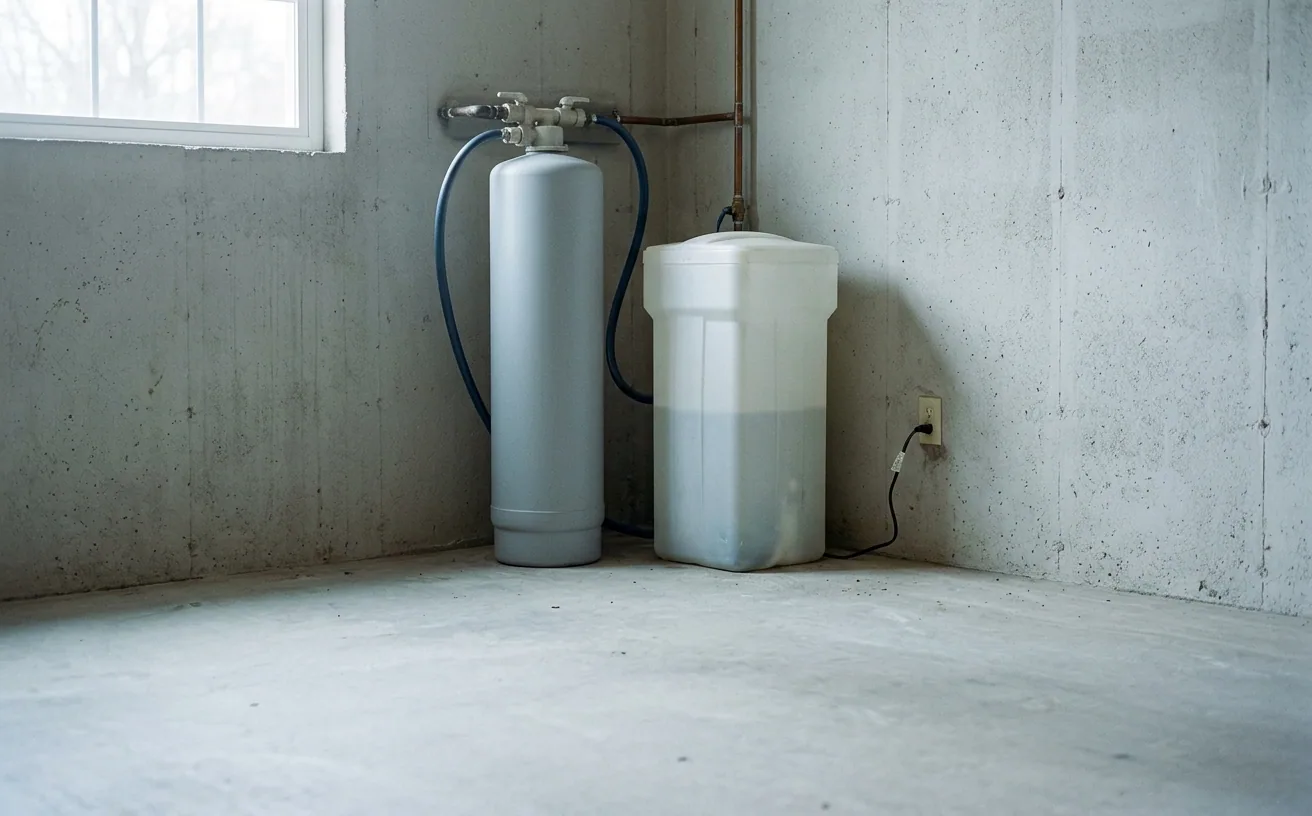
Salt based ion exchange softenerThis is the only common option that genuinely removes calcium and magnesium from the water. A resin bed trades those minerals for sodium. It is what the water district means when it says to set a unit to 16 grains per gallon.
Salt free conditionerA conditioner leaves the hardness minerals in the water and changes the form they take. The aim is scale that is less likely to stick. A hardness test downstream will still read hard, because nothing was removed.
Whole house carbon filtrationCarbon targets the free chlorine the valley disinfects with, published at an average residual of 0.99 parts per million. That improves taste and smell and protects softener resin. It does nothing at all to hardness.
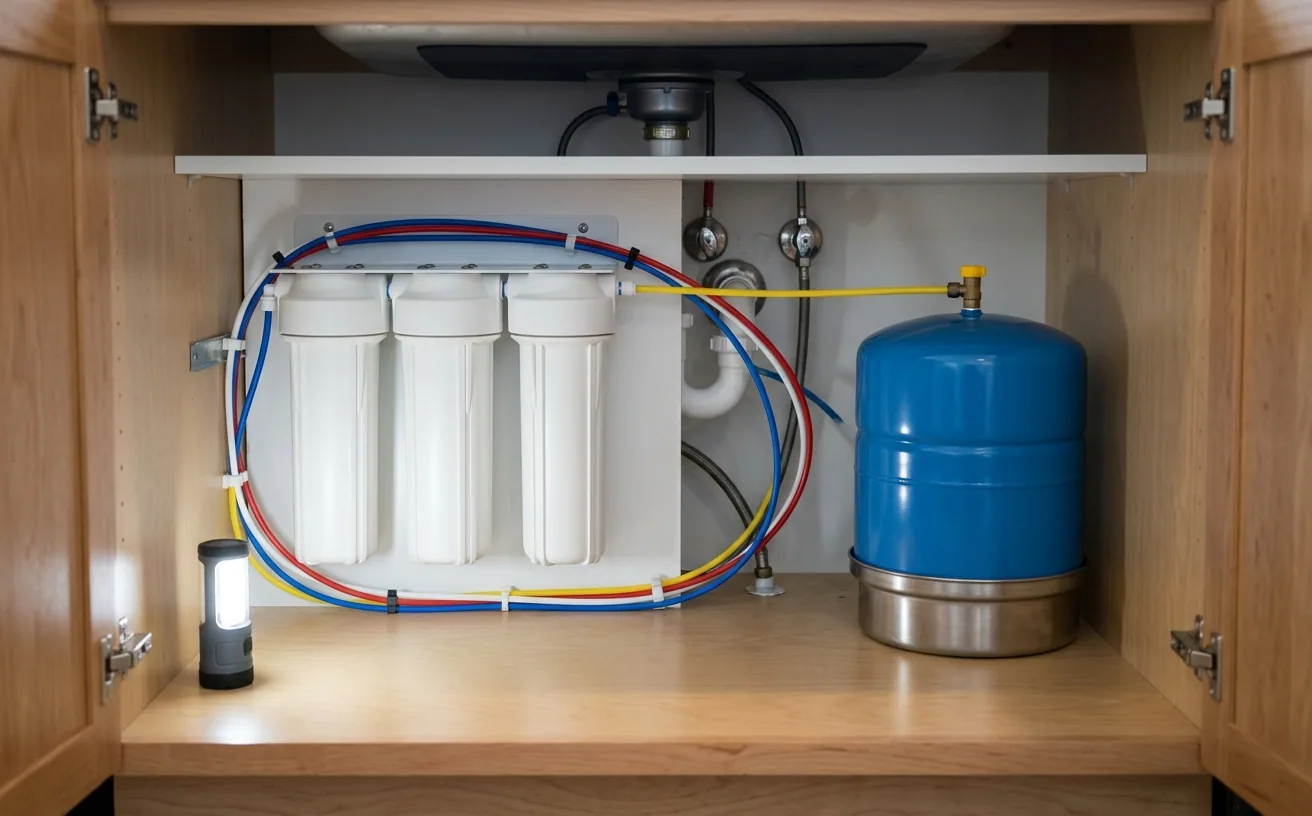
Reverse osmosis at the sinkAn under sink membrane strips dissolved solids out of drinking and cooking water. That matters here because total dissolved solids average 591 parts per million. The Nevada secondary standard is 1,000.
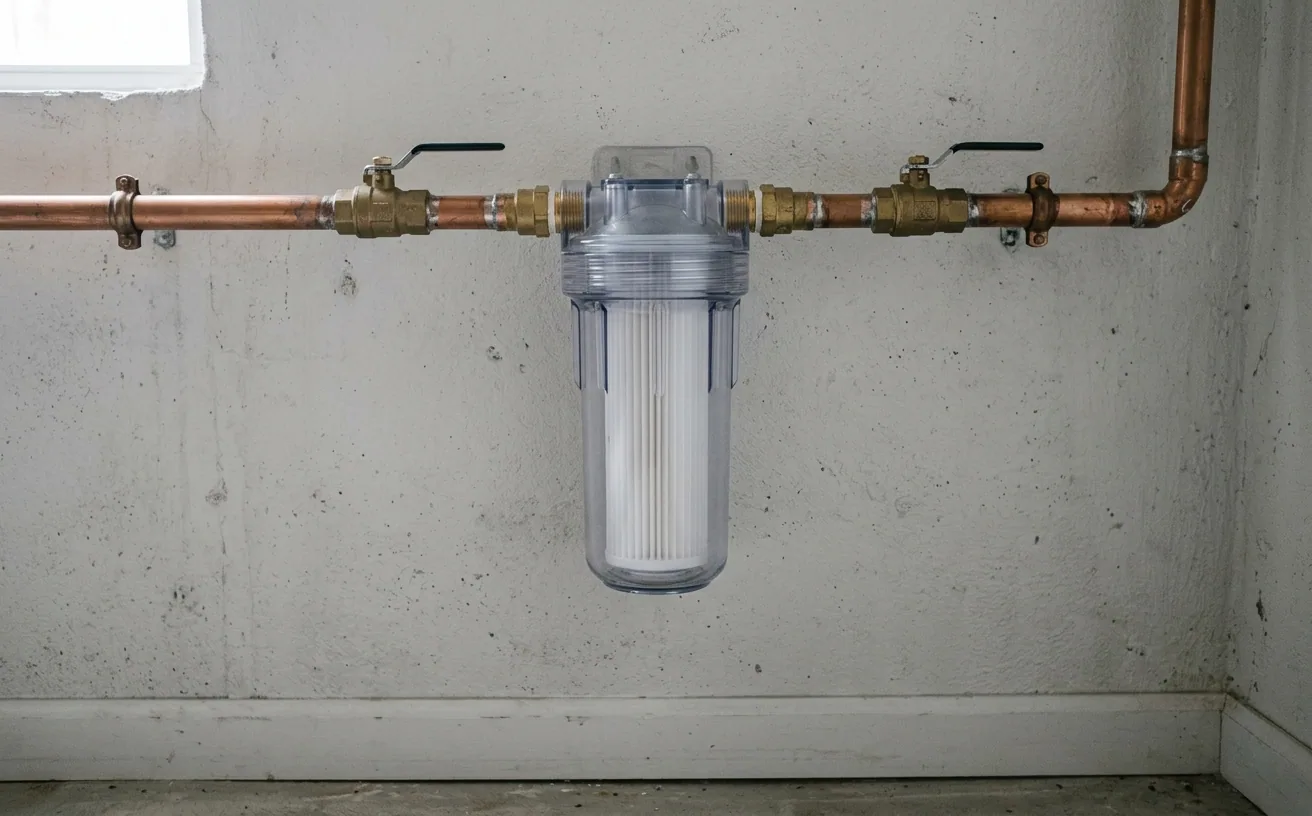
Sediment prefilterA prefilter catches grit and particles before they reach anything downstream, which protects valves and membranes. It is a support part rather than a hardness solution. On its own it changes no reading on a test kit.
Doing nothingHard water is not a health hazard, so doing nothing is a legitimate choice. The cost shows up in equipment rather than in health. A 2009 Battelle study for the Water Quality Research Foundation measured that cost on water heaters, and the FAQ below carries the figures.
What this work looks like

The parts and conditions behind water softeners

Water Softeners in Las Vegas, Nevada
Illustrative image, not a photo of our work
Water Softeners in Las Vegas, Nevada
Illustrative image, not a photo of our work
What we commit to

What we will commit to in writing

These are policies we can keep without any credential, award or rating behind them.

  • Sources sit beside the numbersEvery hardness, lifespan and price figure here carries the name of the third party that published it, so you can check any of them yourself.
  • We will tell you what will not helpIf the problem is taste rather than scale, we will say a softener is the wrong purchase. That is the larger sale, and we will still say it.
  • No price over the phoneWe do not quote a treatment system sight unseen. The drain, the outlet and the existing plumbing decide half the job, and none of them are visible from a phone call.
  • Unverified means unstatedYou will not find a rating, a review count or a founding date anywhere on this site. Nothing of that kind has been independently verified.
How it works

How we work out which one you need

Choosing between these is a short conversation and a test, not a sales appointment.

  1. Describe what the water is doing

    You describe the symptom in your own words, and where in the house it shows up. We ask which jurisdiction the address sits in. We also ask whether any treatment equipment is already installed.

    On the phone
  2. Test the water at your own tap

    You only need to point out an outside spigot that no equipment touches. The reading there confirms the published 16 grains per gallon at your address rather than assuming it. Where equipment is already fitted, a second reading inside shows whether it is doing anything.

    At the start of the visit
  3. Match the option to the symptom

    You say what actually bothers you most, deposits or taste or both. A plumber explains which option addresses that and which does not. You also hear what each would involve at your plumbing layout.

    Same visit
  4. Put the number in writing first

    You read the written scope and price, then decide. No pipe gets cut and no equipment gets ordered until you have agreed a fixed figure. No permit gets pulled before that either.

    Before any work starts

No equipment is ordered until you have signed a scope naming which of the options you chose. That decision comes after the hardness test, not before it.

What it costs

What water treatment costs in Las Vegas

The table below prices four different machines, not four versions of the same one. Each range is published by the source named beside it, and none of them is our price list.

They are here so you can judge whether a number someone gives you is normal for this market. Your own figure comes from the on site estimate.

How the estimate works

A plumber comes to the house and tests the hardness at an untreated tap. Then they look at where equipment could physically go. That means the main line, the garage loop if the builder ran one, the nearest drain and the nearest outlet.

You get a written scope and a fixed price before anything is cut. You are free to take that number and compare it elsewhere.

Published Las Vegas and national market ranges for water treatment work
JobTypical Las Vegas rangeWhat moves the number
Water softener, installed$200 to $6,000National average about $1,500. A whole home system sized for Las Vegas hardness sits in the middle of that range, not the bottom.
Whole house filtration$1,129 to $3,541Average about $2,275. A carbon filter runs $800 to $1,500, a UV unit $500 to $1,500.
Reverse osmosis, installed$1,000 to $4,800Average around $2,200 for a full system. An under sink point of use unit runs $200 to $800 installed.
Water softener repair$162 to $982Average about $557. Simple fixes start around $65 and a full valve rebuild runs to about $2,545.

Every figure in this table is a published Las Vegas or national market range from the source named beside it. It is not a quote and it is not this company's price list. Your number comes from the on site estimate. Sources: <a href="https://www.homeadvisor.com/cost/plumbing/" rel="nofollow noopener" target="_blank">HomeAdvisor cost guides, 2026</a>.

What changes your number

  • Household size and water use set the grain capacity you need. A larger unit costs more up front and regenerates less often.
  • Whether the builder ran a soft water loop in the garage matters most of all, because a loop turns a plumbing project into a connection.
  • Distance from the install spot to a drain and an outlet adds labor, since brine discharge and the control head both need somewhere to go.
  • Buying filtration and softening together costs more up front than either alone. It is also the only way to answer taste and hardness at once, because neither device does the other's job.
  • The jurisdiction your address sits in decides the permit path. An inspection adds an appointment that somebody has to be home for.
  • Choosing a conditioner instead of a softener changes the price and changes the result. Compare the two on what they do, not on cost alone.
Repair against replace

The four options on this page do not sit in one price band. Published ranges run from $200 to $6,000 for a softener installed. Whole house filtration is published at $1,129 to $3,541, and reverse osmosis at $1,000 to $4,800. Matching the option to the symptom decides the band before anything else does.

Service call and diagnostic fee

On a treatment question the visit is a water test and a look at the install route, not a repair diagnosis. Published market data still puts a plumbing service call or diagnostic fee at roughly $75 to $150. The wider trade range is about $50 to $200.

We are not going to publish our own fee here as though it were verified, because it is not. The exact fee, and whether it is credited toward the work, is confirmed with you on the call before anyone is dispatched.

Ranges last reviewed September 2026.

What the job looks like

What hard water leaves behind

The damage from 16 grain water is slow and cumulative. That is why it is easy to accept as normal. These are the two places it shows up first in a valley home.

Neither one is a plumbing failure. They are the running cost of 16 grain water in a house that was never treated.

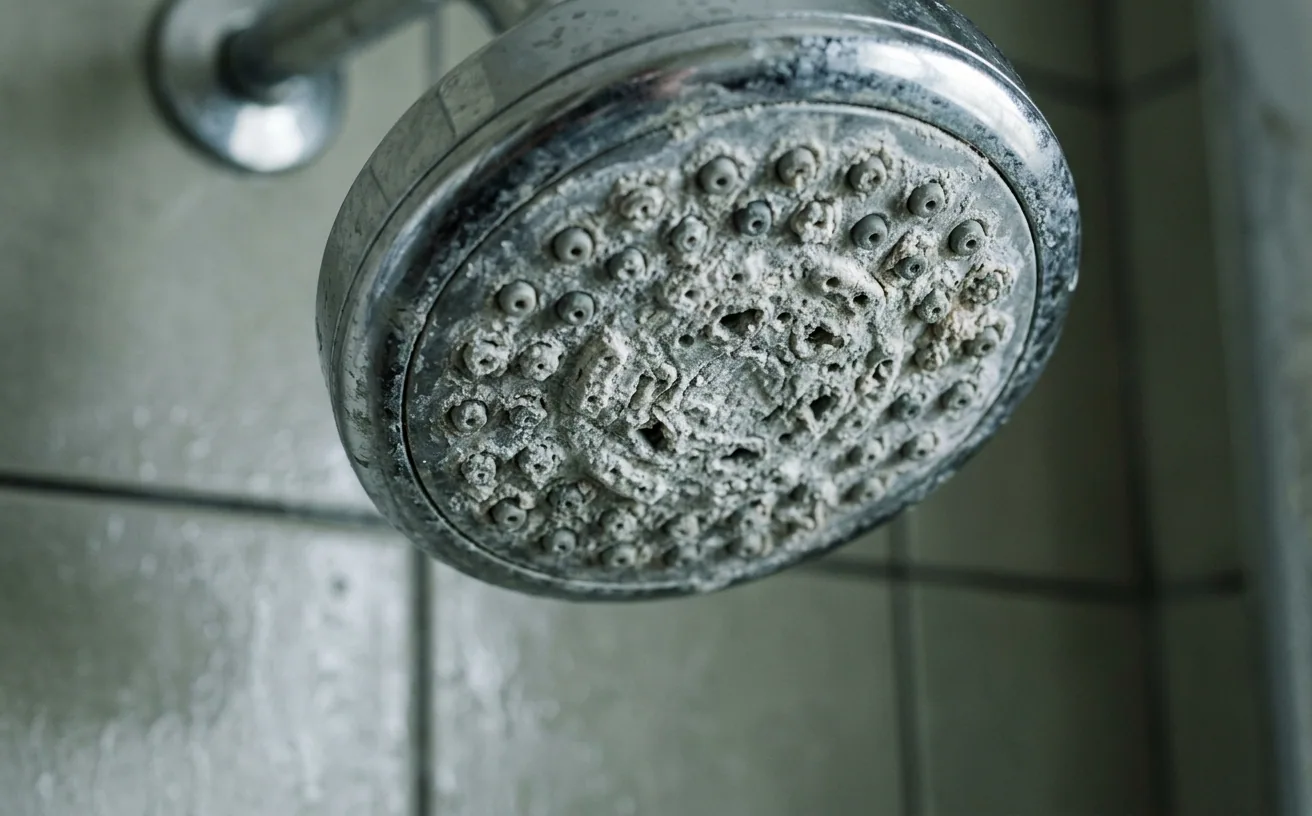
Crust on fixtures and aerators. Water Softeners in Las Vegas
Illustrative image, not a photo of our work

Crust on fixtures and aerators

Scale builds where water sits and evaporates, so showerheads, aerators and spouts crust over first. The deposit is calcium and magnesium left behind after the water is gone. Scrubbing removes it and the water puts it straight back.

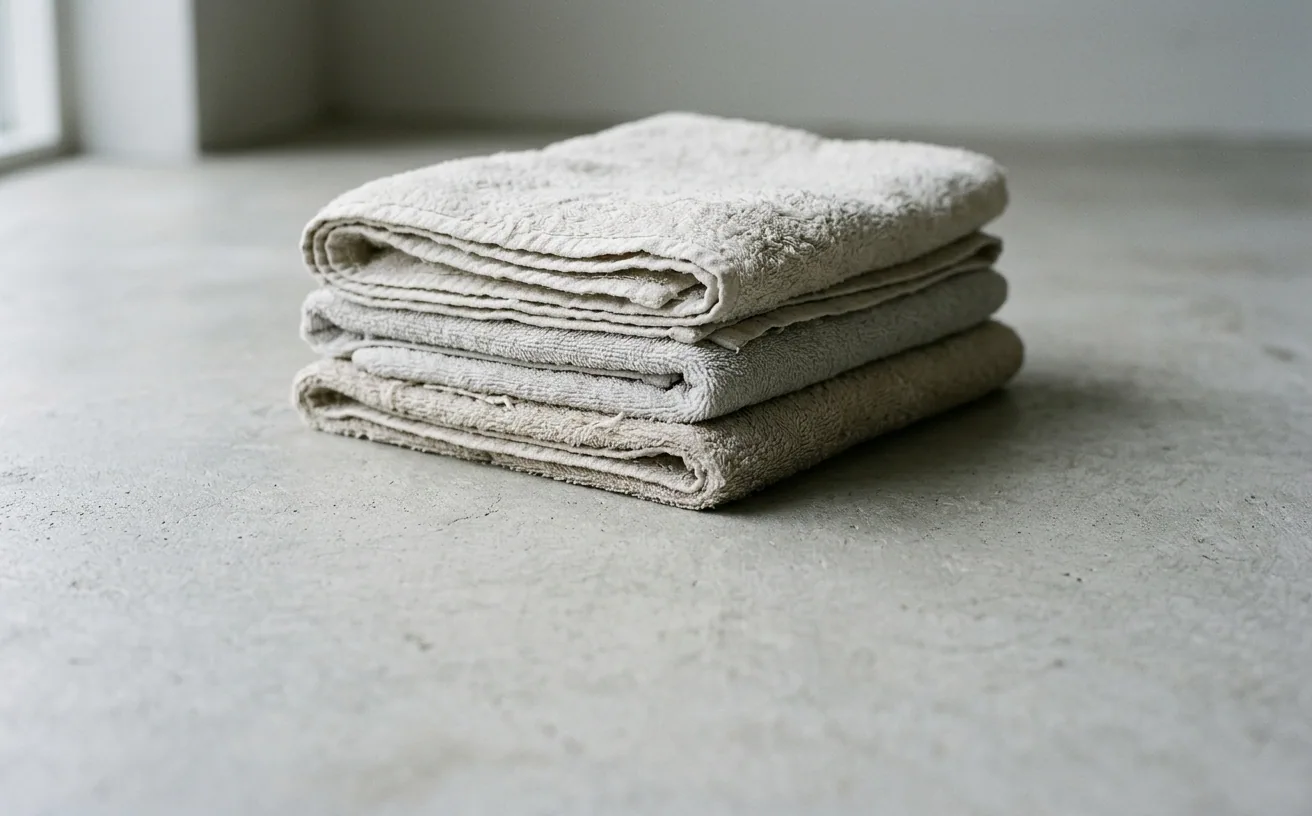
Laundry that never comes out soft. Water Softeners in Las Vegas
Illustrative image, not a photo of our work

Laundry that never comes out soft

Hardness minerals interfere with detergent, so soap works less well and residue stays in the fibers. That is what makes towels feel stiff and scratchy. It is the same chemistry that stops shampoo lathering in the shower.

Photography note

The pictures on this page are generated illustrations of the conditions described here. Photographs of our own completed work go up as they are approved for publication.

The fair questions people ask before buying one

Is hard water actually bad for me?

No. Calcium and magnesium in drinking water are not a health hazard. The water district reports valley water as meeting every federal and state standard.

The case for softening is about your plumbing and your appliances, not your body. That is the honest framing, and we are not going to dress it up as a health purchase.

I have heard softened water tastes salty

Ion exchange trades calcium and magnesium for a small amount of sodium. The amount is proportional to how hard the incoming water is.

Most people notice a change in feel rather than taste. If sodium is a medical concern, a potassium chloride fill or a separate unsoftened drinking tap are both normal ways around it.

My neighbor says a salt free system works just as well

A salt free conditioner does not remove hardness. A test downstream of one will still read close to 16 grains per gallon.

What it aims to do is change the form the minerals take, so they are less likely to stick. That is a real effect and a different one. We will not sell it to you as removal.

Do I have to get a permit for this?

For a water conditioning system in unincorporated Clark County, yes. It needs a permit and an inspection, whoever installs it.

Reverse osmosis carries its own permit, and the county issues both online with no plan review. The jurisdiction by jurisdiction detail sits on softener installation across Clark County.

Can I just install one myself?

Nevada exempts an owner improving their own residence, on conditions, and a permit is still required either way. The affidavit and the small job exemption are set out on water Softener Installation in the Las Vegas Valley.

The practical difference on this page is which option you picked. A conditioner or a prefilter is a simpler fit than a softener. Only the softener needs a drain, a brine tank and floor space for both.

How long before I notice a difference?

Lather and the feel of the water change immediately, within the first shower after the system runs a cycle.

Spotting and film take longer, because existing deposits have to be cleaned off once. Scale already inside a water heater does not come back out. That is the part people most often expect and do not get.
Where we do this work

Water Softeners across Clark County

We cover water softeners in every part of the valley listed below. Each area page names the office that issues the plumbing permit there and who owns the sewer line at the curb, because both genuinely differ from one city to the next.

The fastest way in

Ask about water softeners

Say it is about this when you call and you skip the sorting.

Reach Clark County Plumber

Service area
Clark County, Nevada, including Las Vegas, Henderson, North Las Vegas, Summerlin, Paradise, Spring Valley, Enterprise and Boulder City

We are a service area business. We come to you, so there is no counter to visit and no street address on this page. The number above is the fastest way in.

What to have ready

About a minute of detail changes what we can tell you on the call.

  • The address and ZIP code, so we know which end of the valley you are on.
  • What the symptom is, in your own words. "Water under the sink" beats a diagnosis.
  • When it started, and anything already tried.
  • On a water heater: gas or electric, and roughly how old it is.
  • You get the diagnostic fee as a figure on the phone, before anyone is sent.
  • Scope and price are agreed together, before any work starts.
  • Water moving right now? Shut the main off first, then call and say so.

Questions about this service

How hard is Las Vegas water?

The Las Vegas Valley Water District publishes tap water at 280 parts per million as calcium carbonate. That converts to 16 grains per gallon. The USGS calls anything above 180 milligrams per liter very hard, so the valley runs about 1.6 times that threshold.

The district FAQ page still shows an older figure of 291 parts per million, or 17 grains. Both numbers therefore appear on official pages at once. Either way the water sits firmly in the very hard band.

Why is the water hard here in the first place?

About 90 percent of valley drinking water comes from Lake Mead. That water begins as Rocky Mountain snowmelt. It picks up calcium and magnesium running down the Colorado River, so it arrives in the valley hard before any treatment happens at all.

The other 10 percent or so comes from a deep aquifer under the valley. Groundwater is used mainly between April and October for peak demand. Northwest valley homes can therefore be on a blend rather than straight Lake Mead water.

What do I need to know before sizing one?

Sizing is your hardness multiplied by your household's daily water use, then by the days you want between regenerations. The hardness input here is fixed at 16 grains per gallon, which is the part a valley home cannot lower.

Capacity is also the one specification that cannot be corrected later without swapping the unit. The arithmetic, with worked examples, sits on the water softener sizing guide.

Does a water softener remove chlorine?

No. A softener exchanges hardness minerals on a resin bed and leaves disinfectant alone. The valley is disinfected with free chlorine rather than chloramine. The published average residual is 0.99 parts per million, and that passes straight through a softener.

Carbon filtration is what targets chlorine. A softener and a carbon filter answer different complaints, which is why the table above compares them side by side.

Will a softener make my water heater last longer?

The strongest evidence is a 2009 Water Quality Research Foundation study run by Battelle. Gas storage water heaters on hard water built 528 grams of scale a year. The same heaters on softened water built 7 grams. Electric units built 907 grams against 14.

None of the heaters running unsoftened water in that study reached the end of the test, because scale blocked the outlet piping. Rheem separately puts a tank heater at 8 to 12 years and says hard water shortens it.

How long does a water softener last?

A resin bed typically lasts about 10 to 15 years. Chlorine in municipal water and higher hardness both shorten that, and Las Vegas water delivers both at once. The control valve is the other half of the system, and it usually fails first.

Whether an aging unit is worth a valve rebuild depends on what the resin has left in it. That comparison is laid out on our water softener replacement page, with both published ranges shown.

Is a water softener worth it in Las Vegas?

At 16 grains per gallon the real question is how long you plan to stay, and what equipment you are protecting. The appliance and water heater case is the measurable one. The Battelle study documents it, and the numbers are not close.

The comfort case is lather, spotting and stiff laundry. That is real but personal, and no study can decide it for you. We would rather you weighed both honestly than bought on a scare number.

Is any of this advice tied to a particular brand?

Service is not tied to one brand, and neither is the advice on this page. No option in the table above is recommended because of a relationship with a manufacturer, because there is no such relationship to disclose.

That extends to equipment you already own or buy elsewhere. A unit bought online is judged on its capacity for 16 grain water, not on the name on the tank.

Talk to someone about water softeners

Describe what is happening and we will tell you what it usually takes to fix.