Plumbing and water treatment across Clark County. Call (725) 337-3692

Repair against replace, both numbers namedClark County and the valley citiesOld unit removed and hauled away

When to replace a Las Vegas water softener instead of repairing it

Resin lasts roughly 10 to 15 years in service. Free chlorine, published here at an average of 0.99 parts per million, shortens that further.

  • We name the cheaper option even when it is repair
  • Permit and inspection handled where required
  • Nothing carries over unless it is sound
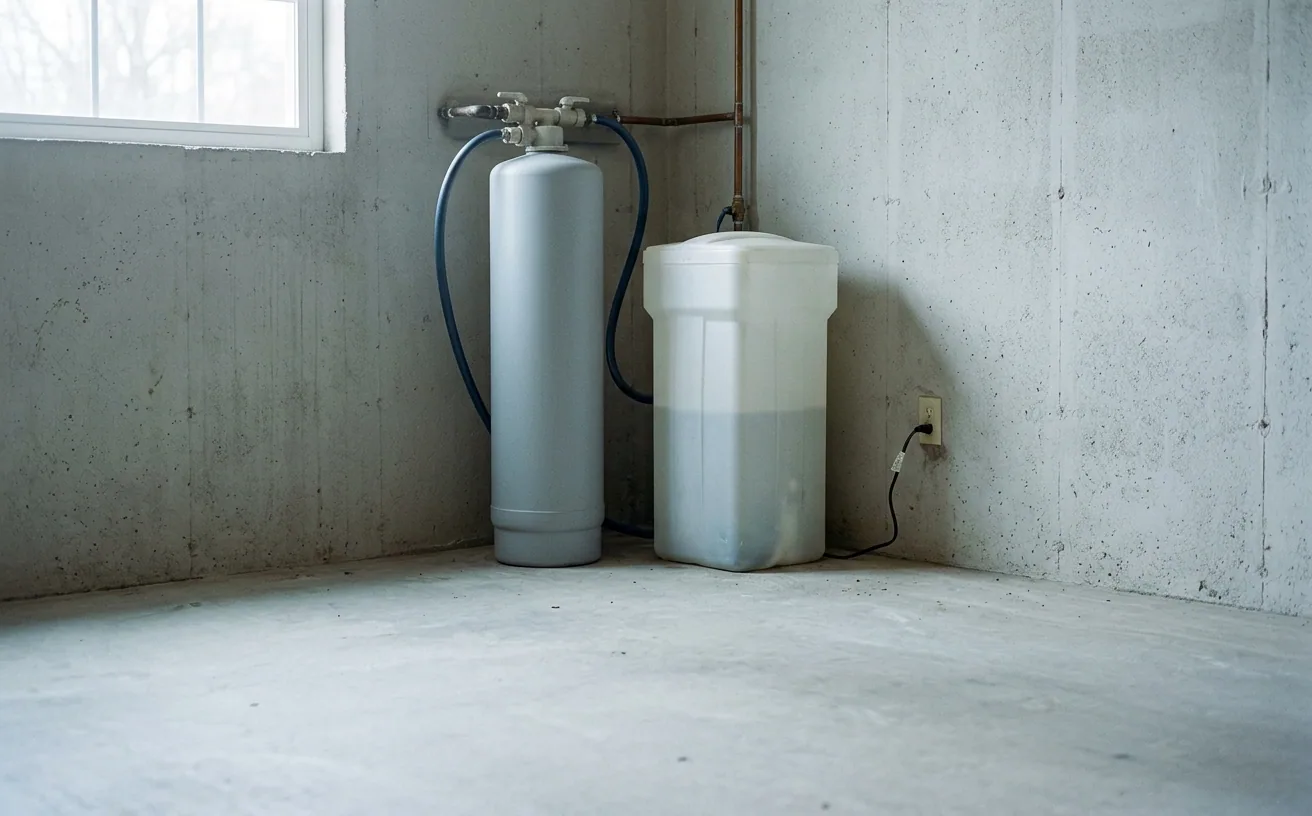
Water Softener Replacement in Las Vegas, Nevada
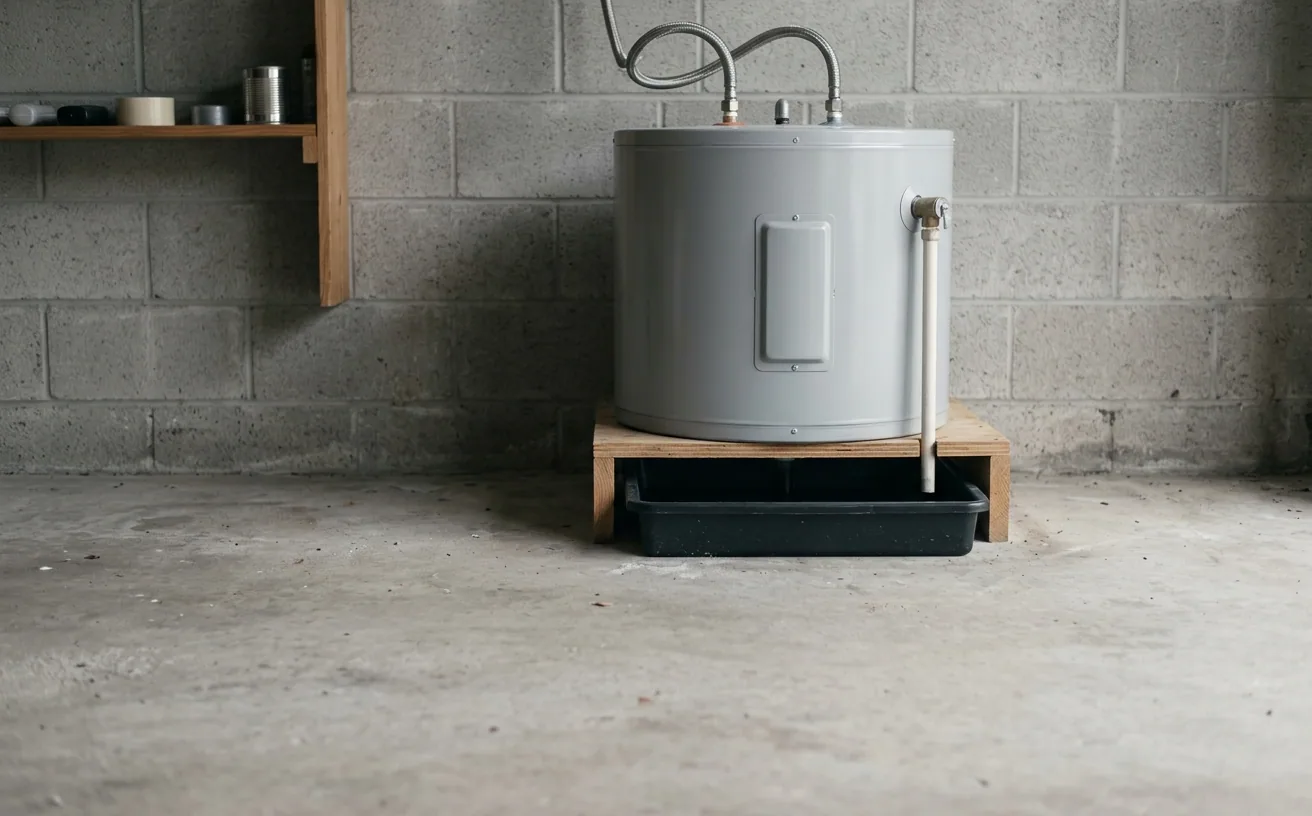
Illustrative image, not a photo of our work
10 to 15 yrsWorking life of a resin bed
1999Median year a Clark County home was built
47.3%Of county homes built in 2000 or later
$2,545Top of the published full valve rebuild range

Figures above are published third party data, not company claims. Sources: Water Quality Association, US Census ACS via Census Reporter, HomeAdvisor cost guides.

  • Age is the honest first questionResin loses exchange capacity gradually rather than failing outright. The age of the bed decides whether spending on the valve makes any sense.
  • Two numbers, side by sideYou get the published repair range and the published replacement range in the same conversation. The comparison is visible rather than implied.
  • Age of the housing stock mattersThe median Clark County home was built in 1999. A great many original builder fitted units are now past the expected life of their resin.
  • Permits do not disappear on a swapChanging one unit for another is still an installation as far as the county is concerned. The permit and the inspection are owed again, and they belong on the written scope.
The short answer

Replace a water softener when the resin bed is near the end of its published 10 to 15 year life. Replace it when the pressure tank is cracked, or when resin beads reach your faucets. A second major valve fault on an aging unit says the same thing. Below that, a valve repair is usually the cheaper answer.

This page covers water softener replacement across the Las Vegas Valley. If you are not sure this is the right service, start from All plumbing services.

Signs the decision has already been made for you

Some faults are a repair and some are a funeral. The difference is where the failure sits. Routine wear parts get replaced, and the tank and bed do not.

Housing age makes this a common conversation here. The median county home was built in 1999, and roughly 47 percent were built from 2000 onward. A lot of original equipment has run valley water for two decades.

  • The softener came with the house and nobody knows how old it actually is
  • This is the second repair in two years and I am tired of paying for it
  • There is a crack in the tank and water seeps down the outside of it
  • Little plastic beads are showing up in the faucet screens and the shower head
  • It goes through far more salt than it used to for the same amount of water
  • The control head is old enough that the parts are not made anymore
  • Two more people live here now and the unit cannot keep up with the demand
Is this you?

This page is for people weighing money against age. If the bed is near the end of its published 10 to 15 year life, the comparison is worth making carefully. The same applies if you are being asked to spend serious money on a valve.

It is also for anyone who inherited equipment with a house and has no service history. A date code on the tank usually settles the age question in under a minute.

When this is the wrong page

If your unit has one clear fault and is under about ten years old, water Softener Repair in Las Vegas will cost you far less. If the house has never had treatment at all, go to water Softener Installation for Las Vegas homes.

If the real complaint is drinking water quality rather than hardness, a new softener will not change it, and reverse Osmosis Drinking Water in Las Vegas is the right answer. Salt, cleaning and annual checks live on water Softener Maintenance and Service.

What carries over to the new system and what does not

A replacement is not a fresh installation, because most of the infrastructure is already there. Knowing which parts get reused is the difference between a fair quote and a padded one.

Reused and replaced parts in a water softener changeout
Part of the old setupWhat happens to it
The connection point on the mainThe existing tie in on the cold main stays exactly where it is. That is the main reason a replacement costs less than a first installation in a house with no loop.
The bypass valveA sound bypass is normally reused. Many new units arrive with their own bypass anyway. A corroded or seized one gets replaced while everything is already apart.
The drain line and air gapThe existing route usually stays, but it gets checked against the new unit's discharge requirement. An undersized or blocked drain line causes the same faults on new equipment.
The electrical outletThe outlet feeding the old control head is reused as it is. That keeps a second trade out of the job, unless the location itself is changing.
The resin tankThis does not carry over. The resin bed is the consumable at the heart of the system, and its age is usually the reason for replacing in the first place.
The control headThis does not carry over either. The valve and the tank are matched as a system, so a new valve on an old bed simply moves the failure date.
The brine tankSometimes reusable if it is clean and uncracked. Most replacements include a new one. A tank holding years of salt fines is not worth saving.
What this work looks like

The parts and conditions behind water softener replacement

Water Softener Replacement in Las Vegas, Nevada
Illustrative image, not a photo of our work
Water Softener Replacement in Las Vegas, Nevada
Illustrative image, not a photo of our work
What we commit to

What we promise on a replacement decision

A replacement is the larger sale, which is exactly why these commitments are written down.

  • Repair is priced firstWhere a repair is technically possible, it is quoted alongside the replacement. That happens even though the repair is worth less to us.
  • Age is evidenced, not guessedWe look for the date code on the tank rather than estimating from appearance. A guess about age is a guess about your money.
  • The old unit leaves with usRemoval and disposal of the old tanks is written into the scope. You are not left with two heavy tanks waiting for bulk pickup.
  • Nothing reused that should not beA bypass, drain or brine tank is only carried over if it is sound. If we reuse something, we say so on the scope.
How it works

How the changeout runs

A like for like swap is a shorter day than a first installation, because the hard part was done years ago.

  1. Age and history, over the phone

    You read us the date code or model number off the tank if you can find one. You also describe what has been repaired before. That tells us whether this is really a replacement conversation.

    On the phone
  2. Assessment against your household today

    You say how many people live there now, not when the unit went in. A plumber tests hardness and checks the existing drain and bypass. Capacity is then sized for the house as it is used now.

    On site, before any quote
  3. Both options written down

    You get the repair option and the replacement option as separate written figures, wherever a repair is technically possible. If it is not possible, you are told exactly which part makes it impossible.

    Same visit
  4. Swap day and disposal

    You clear access to the unit. A plumber isolates the main, then drains and removes the old equipment. The new system goes on the existing connection, gets programmed, and the old tanks leave with us.

    On the agreed swap day
  5. Permit close out

    You need someone at the house for the inspection window where the jurisdiction requires one. The permit is not finished until the inspection is signed off. We treat that as part of the job.

    After the swap

The replacement price is fixed once the existing drain, bypass and connection have been inspected on site. Those three decide how much of the old setup survives.

What it costs

Repair cost against replacement cost

Both ranges below are published market figures from the sources named. They are gathered so you can hold them up against any quote, ours included.

This is the one page on the site where two ranges matter more than either alone. The decision is the ratio between them, and the age of what you already own.

How the estimate works

The visit starts with a repair assessment even when you called about replacement. That order is deliberate. The only way to compare fairly is to know what the repair would actually cost.

You then get both figures in writing on the same page. Take them away and compare if you want to. Nothing is removed, ordered or disconnected until you have picked one.

Published market ranges for replacing against repairing water treatment equipment
JobTypical Las Vegas rangeWhat moves the number
Water softener, installed$200 to $6,000National average about $1,500. A whole home system sized for Las Vegas hardness sits in the middle of that range, not the bottom.
Water softener repair$162 to $982Average about $557. Simple fixes start around $65 and a full valve rebuild runs to about $2,545.
Whole house filtration$1,129 to $3,541Average about $2,275. A carbon filter runs $800 to $1,500, a UV unit $500 to $1,500.
Service call or diagnostic fee$75 to $150The broader trade range runs about $50 to $200. Emergency and after hours dispatch is higher, commonly $150 to $350 or more.

Every figure in this table is a published Las Vegas or national market range from the source named beside it. It is not a quote and it is not this company's price list. Your number comes from the on site estimate. Sources: <a href="https://www.homeadvisor.com/cost/plumbing/" rel="nofollow noopener" target="_blank">HomeAdvisor cost guides, 2026</a>, <a href="https://www.housecallpro.com/resources/marketing/how-to/how-to-price-plumbing-jobs/" rel="nofollow noopener" target="_blank">Housecall Pro 2026 Plumbing Price Guide</a>.

What changes your number

  • The age of the resin bed changes nothing about the price and everything about the value. Money spent on a valve over a spent bed buys very little time.
  • Capacity that was wrong from the start pushes the new unit up a size. That raises equipment cost and lowers both regeneration frequency and long run salt use.
  • A brine tank and bypass in good condition can stay. Every part that survives the swap takes cost out of the job.
  • A drain line that was marginal for the old unit may need upgrading for the new one. That is labor a like for like quote can easily miss.
  • Moving the system to a better location turns a swap back into an installation. That means new pipe, possibly a new drain, and possibly an electrician.
  • Removal and disposal of two old tanks is real work and real weight. It belongs on the written scope rather than appearing as a surprise.
Repair against replace

A full control valve rebuild is published as high as about $2,545. A complete installed system averages near $1,500 nationally. That gap is the clearest case there is for replacing rather than rebuilding an aging unit.

Service call and diagnostic fee

The visit that settles this question is a repair assessment, even when you called about replacement. Published market data puts a plumbing service call or diagnostic visit at roughly $75 to $150. The wider trade range sits at about $50 to $200.

That figure is a market range and not this company's, because no fee policy here has been independently verified. Ours is given to you as a number on the call, along with whether it comes off a replacement, before anyone drives out.

Ranges last reviewed September 2026.

What the job looks like

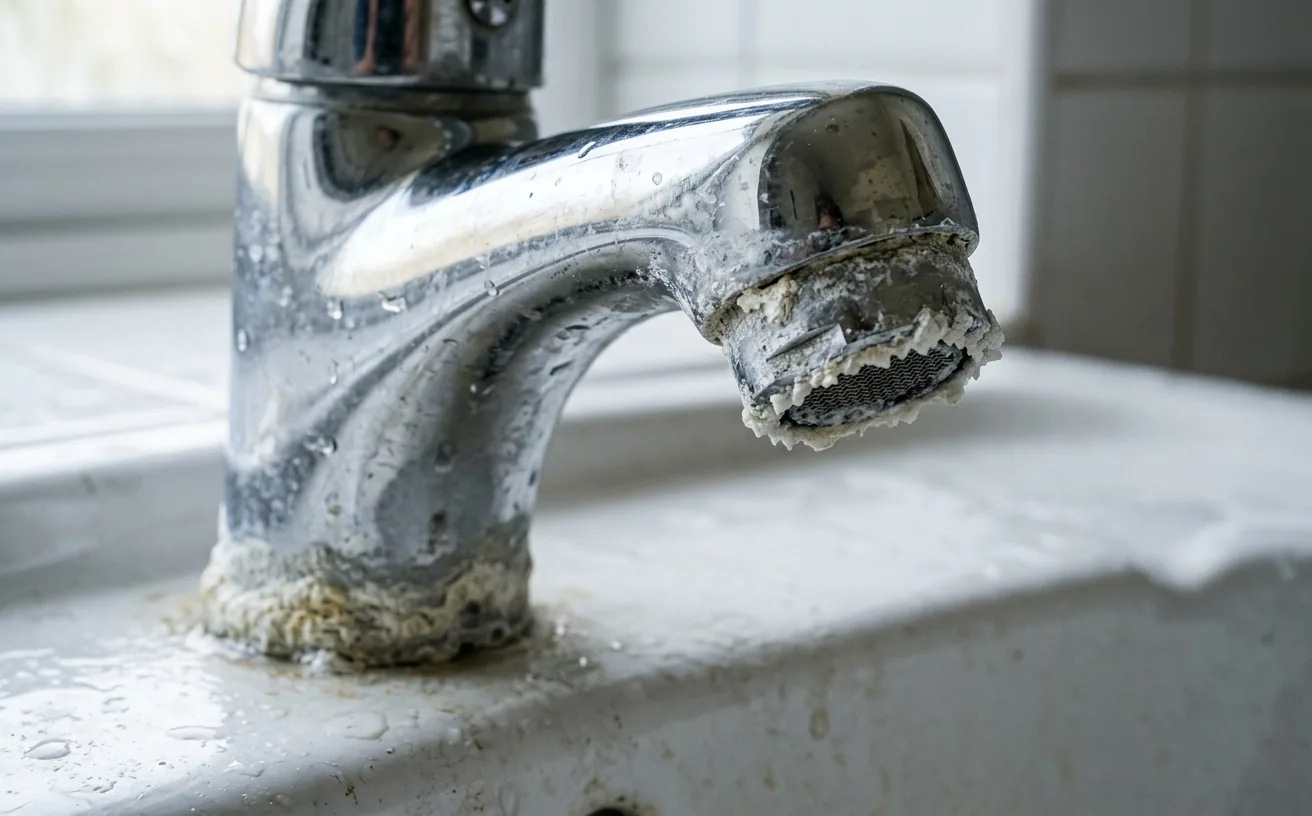
What years of untreated water do downstream

Replacement timing matters because the softener is not the only thing at stake. Every month a unit runs poorly is a month of 16 grain water reaching everything else.

Neither condition is visible while the equipment is still running. Both are what someone sees only after a pipe or a heat exchanger has been opened.

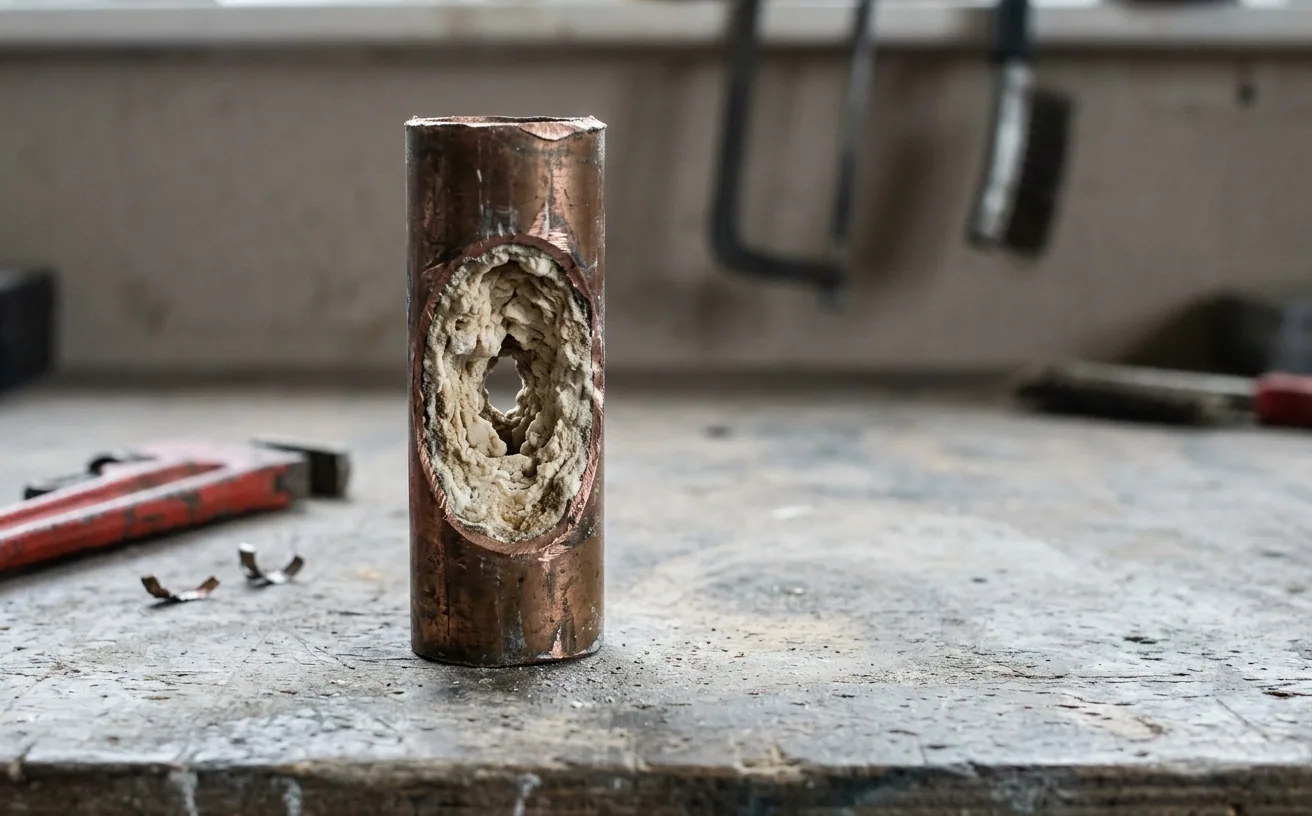
Mineral narrowing inside the pipe. Water Softener Replacement in Las Vegas
Illustrative image, not a photo of our work

Mineral narrowing inside the pipe

Scale forming water lays deposits on the inside wall of supply lines over years. The bore narrows and flow drops. The effect is invisible until someone cuts a section out. Valley water carries a positive saturation index, so it deposits rather than dissolves.

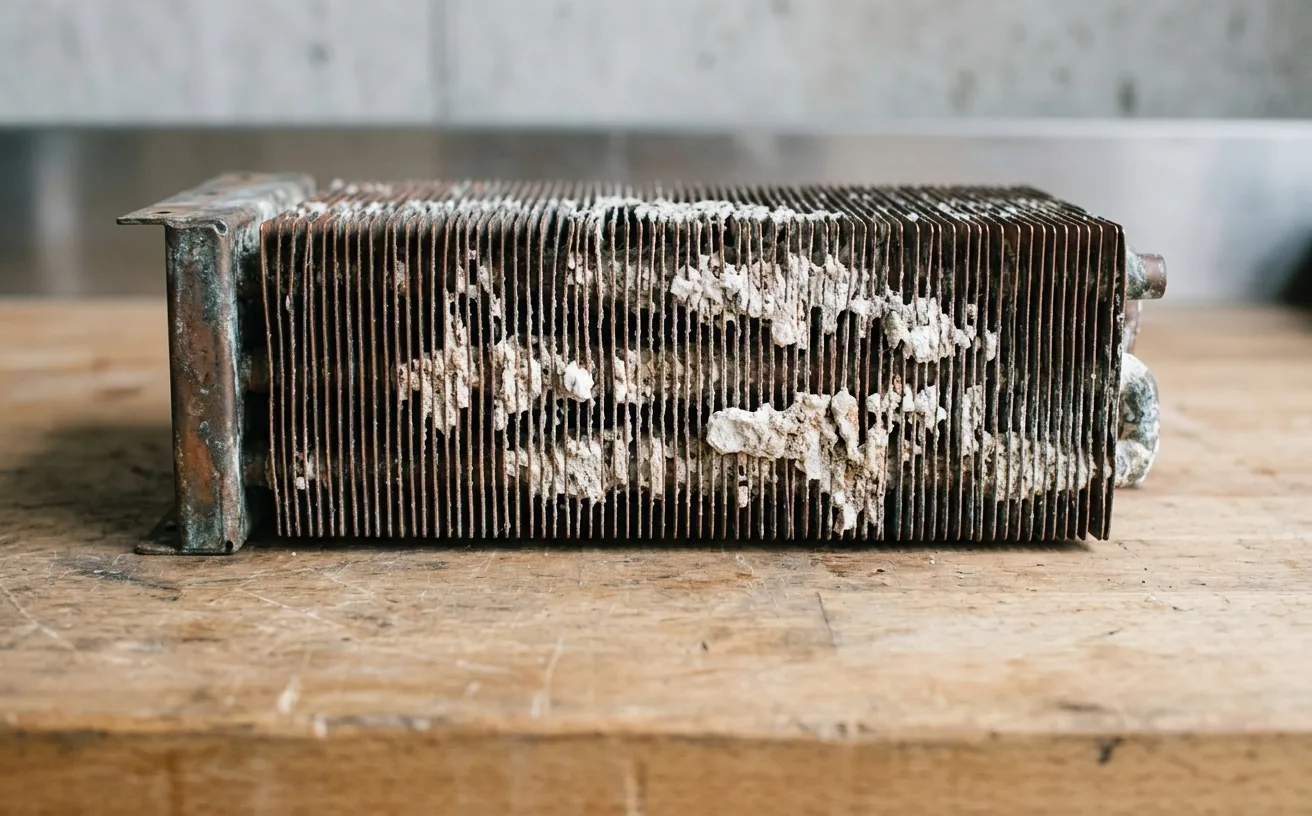
Scale inside a heat exchanger. Water Softener Replacement in Las Vegas
Illustrative image, not a photo of our work

Scale inside a heat exchanger

Tankless heaters concentrate the problem, because water is heated fast across narrow passages. Rinnai says to flush at least once a year. Navien says to descale at least annually, and more often where mineral content is higher.

Photography note

Images on this page are generated illustrations of the conditions we describe. Real photographs of our completed work are added once they have been approved for publication.

The arguments worth having before you spend

Why not just rebuild the valve and get a few more years?

That is genuinely the right call on a younger unit. The question is what the resin underneath the valve has left in it. A new valve does not restore exchange capacity.

Published repair figures run to about $2,545 for a full rebuild. An installed system averages near $1,500 nationally. At that ratio, a rebuild on an old bed is poor value.

The unit still makes soft water some of the time

Intermittent softening is what a bed near the end of its life looks like. Capacity falls, the unit exhausts before the next cycle, and hardness returns between regenerations.

Turning up the salt dose masks it for a while. The cost is more salt and more water down the drain. That is a workaround, not a fix.

I do not want to pay for a permit on a straight swap

We understand the frustration, and it is not our rule. A water conditioning system in unincorporated Clark County requires a permit and an inspection, regardless of who installs it.

The county issues this permit online with no plan review, so it is paperwork rather than a delay. Skipping it puts an unpermitted alteration on a house you will eventually sell.

Should I switch to a salt free system this time?

You can, as long as you know what you are buying. A salt free conditioner does not remove calcium and magnesium. The hardness reading afterward is the same as before, because nothing was taken out of the water.

If your reason for replacing is that you are tired of hauling salt, that is a fair reason to consider one. If your reason is scale on fixtures, understand the result will be different.

Can I just buy a bigger one to be safe?

Oversizing is safer than undersizing here, but it is not free. A very large unit on modest water use regenerates rarely, and the bed can sit unused for long stretches.

Sizing to your actual household at 16 grains per gallon is the aim. Your own water bill supplies the usage number, so the arithmetic can be done without guessing.

How do I know the new one will not fail as fast?

Two things shorten resin life here, and the valley delivers both. Hardness is one. Free chlorine, published at an average residual of 0.99 parts per million, is the other.

Carbon filtration ahead of the softener removes the chlorine before it reaches the resin. Correct sizing handles the other half, because an undersized unit regenerates itself to death.
Where we do this work

Water Softener Replacement across Clark County

We cover water softener replacement in every part of the valley listed below. Each area page names the office that issues the plumbing permit there and who owns the sewer line at the curb, because both genuinely differ from one city to the next.

The fastest way in

Ask about water softener replacement

Say it is about this when you call and you skip the sorting.

Reach Clark County Plumber

Service area
Clark County, Nevada, including Las Vegas, Henderson, North Las Vegas, Summerlin, Paradise, Spring Valley, Enterprise and Boulder City

We are a service area business. We come to you, so there is no counter to visit and no street address on this page. The number above is the fastest way in.

What to have ready

About a minute of detail changes what we can tell you on the call.

  • The address and ZIP code, so we know which end of the valley you are on.
  • What the symptom is, in your own words. "Water under the sink" beats a diagnosis.
  • When it started, and anything already tried.
  • On a water heater: gas or electric, and roughly how old it is.
  • You get the diagnostic fee as a figure on the phone, before anyone is sent.
  • Scope and price are agreed together, before any work starts.
  • Water moving right now? Shut the main off first, then call and say so.

Questions about this service

How old is too old for a water softener?

Resin typically gives 10 to 15 years of service before exchange capacity drops off, and Las Vegas conditions push that toward the lower end. Past twelve years, money spent on the valve buys very little extra life. That is the practical cutoff most of the time.

Age alone is not a verdict. A twelve year old unit with clean resin and a single failed injector can be worth fixing. A ten year old unit with a cracked tank is not worth anything.

Is it cheaper to repair or replace a water softener?

Published repair figures run from about $162 to $982, with simple fixes starting near $65. A full valve rebuild reaches roughly $2,545. Installed systems average near $1,500 nationally, which is where the two paths cross over. All of those are published national figures rather than quotes.

So a single fault on a young unit is almost always the cheaper path. A major valve job on an aging bed almost never is. The published ranges make that comparison for you before anyone visits.

Does replacing a softener need a permit in Clark County?

Yes. A swap counts as an installation, so the permit and the inspection are owed again. That catches people out on equipment that has stood in the garage for years. It is the county's rule rather than ours, and it belongs in the budget for the job.

The permit is issued online without plan review, one item per permit. City addresses in Las Vegas, North Las Vegas, Henderson and Boulder City go through their own building departments instead.

How do I find out how old my softener is?

Look for a date code or serial number on a label. The likely places are the resin tank, the control head, or under the brine tank lid. Many manufacturers encode the year and week directly into the serial number. Take a photo of the label before you call.

If there is no label, the age of the house is a rough guide for original builder fitted equipment. The median Clark County home was built in 1999, which makes a lot of original units overdue.

What happens to my old water softener?

It gets isolated, drained, disconnected and carried out, and both tanks leave with us. Resin tanks are heavy when wet, and brine tanks are awkward rather than heavy. Neither is a one person job in a tight garage. Plan for two people and a clear path out.

Removal and haul away should be written on the scope you sign. If a quote you are comparing does not mention disposal, ask about it. Those tanks are not going in a household bin.

Can I keep my old brine tank to save money?

Sometimes. If the tank is uncracked and the grid plate is intact, reusing it is reasonable. The inside must also be free of caked salt fines. Plenty of tanks outlive the equipment they were sold with. Look inside the tank before you decide either way.

Most of the time the saving is small and the risk is not. A tank holding old sludge will keep feeding fines into a brand new valve. That undoes the point of the replacement.

Was my old softener the wrong size all along?

It is common. Units get specified against average national hardness, and Las Vegas runs at 16 grains per gallon. The USGS puts anything above 180 milligrams per liter in the very hard band, so the valley is well inside it.

The tell is regeneration frequency and salt use out of proportion to household size. Replacement is the natural moment to correct capacity, because the arithmetic gets done again from scratch.

Will a new softener bring back my water pressure?

It can help if the old unit had a partially blocked valve or a fouled bed restricting flow. That improvement is usually noticeable straight after the swap, because the restriction leaves with the old equipment. The only way to know is to measure the pressure first.

It will not help if the restriction is elsewhere, such as a failing pressure regulator or scaled supply pipe. Those are separate problems and should be measured rather than assumed.

Talk to someone about water softener replacement

Describe what is happening and we will tell you what it usually takes to fix.