Plumbing and water treatment across Clark County. Call (725) 337-3692

Homes from the 1940s through last yearSlab built valley, no basementsSourced ranges, never a guess

Residential plumbing in Las Vegas, matched to your home's vintage

About 16.7 percent of Clark County homes were built before 1980, and 47.3 percent went up in 2000 or later. What is in your walls, and what fails first, follows that date.

  • Permit and inspection where the county requires it
  • Pipe material identified before anything is quoted
  • Published market ranges with the source named
Residential Plumbing in Las Vegas, Nevada
Illustrative image, not a photo of our work
1999Median year a Clark County home was built
16.7%Clark County homes built before 1980
1978-1995Years polybutylene pipe was manufactured
16 gpgHardness the district tells you to set a softener to

Figures above are published third party data, not company claims. Sources: US Census ACS via Census Reporter, US Environmental Protection Agency, LVVWD Water Quality Report.

  • The house tells us where to lookA home built in 1985 carries different pipe and different failure points than one built in 2005, and the inspection order follows that.
  • Softener work needs a permit and an inspectionInstalling a water conditioning system in unincorporated Clark County requires a permit and an inspection, whether a homeowner does it or a company does.
  • Polybutylene gets identified, not ignoredPipe stamped PB2110, most often gray, was made between 1978 and mid 1995, and the class action claim window closed a long time ago.
  • Prices here are published rangesEvery number on this page is a published market range with its source named, so you can check it before anyone comes to the house.
The short answer

Residential plumbing in Las Vegas depends on when the house was built. The median Clark County home dates to 1999, 16.7 percent predate 1980, and 47.3 percent went up after 2000. Galvanized steel, polybutylene, copper and PEX each fail differently, so the vintage decides the sensible plan.

This page covers residential plumbing across the Las Vegas Valley. If you are not sure this is the right service, start from the full plumbing services list.

Household symptoms, not single fixture faults

Whole home symptoms behave differently from a single dripping tap. When several fixtures misbehave at once, the cause is usually upstream: the water itself, the pressure, or the pipe running through the house.

Las Vegas adds a factor most cities do not. Tap water here is published at 16 grains per gallon. The US Geological Survey calls water very hard above 180 milligrams per liter, and the valley runs about 1.6 times that.

  • Every faucet in the house runs weaker than it used to
  • White crust builds back on showerheads and aerators
  • Towels come out of the wash stiff and scratchy
  • The shower glass spots over a day after cleaning
  • Hot water at the far end of the house takes forever
  • There is gray plastic pipe in the attic and nobody knows what it is
  • Two different fixtures started leaking within a month
  • Soap will not lather no matter how much goes in
Is this you?

Yes, if you own or manage a house, condo or townhome and the problem shows up in more than one room. Yes, if you have just bought an older home and want to know what is actually behind the drywall.

No, if a single fixture is the whole story, because that is a smaller and cheaper conversation. A whole home assessment earns its keep when the answer changes what you spend over the next five years.

When this is the wrong page

If the building has tenants, a commercial kitchen, a grease interceptor or a fire service line, the code path and the inspection path are different. That work belongs on commercial plumbing.

If the only thing you want solved is hardness, go straight to water softeners, where the permit and the sizing are covered properly. If a plumber has already told you the supply pipe is done, the decision you are actually making is on whole Home Repiping in Las Vegas.

What a whole home assessment covers

The point of a residential assessment is to stop guessing. By the end of it you should know what material carries your water and roughly how old it is. You should also know which component is nearest the end of its life.

Whole home scope, and why each line is on the list
What is includedWhat that means
Year built and material inventoryThe build year narrows the likely supply material to galvanized steel, copper, polybutylene or PEX before anything gets opened up.
Supply pipe conditionVisible runs in the garage, attic and under sinks get checked, since those are the places the material can be identified without cutting.
Drain and waste reviewCast iron below ground is listed at 50 to 60 years, so a house from the 1960s gets a different conversation than one from 2015.
Fixtures and angle stopsShutoff valves rated for 8 to 20 years get tested, because they are the cheapest component to replace and the most expensive one to ignore.
Water heater age and conditionRheem puts a tank at 8 to 12 years and a tankless at 15 to 20 or more. Hard water shortens both of those figures.
Treatment equipment and permitsSoftener or filtration work is scoped with the Clark County permit and inspection requirement included rather than treated as optional.
A written order of priorityEverything found gets ranked by what fails next and what costs most to leave, so you can spend across years instead of all at once.
What this work looks like

The parts and conditions behind residential plumbing

Residential Plumbing in Las Vegas, Nevada
Illustrative image, not a photo of our work
What we commit to

How we would rather handle a whole house

Four commitments that stand on process rather than on credentials.

  • A ranked list, priced per itemYou get findings ordered by what fails next, with a separate number on each one. Nothing has to be bought as a package to get the good price.
  • The material gets namedYou are told what your supply pipe actually is, where that was identified, and what the published life expectancy for that material is.
  • Permit requirements stated up frontSoftener, reverse osmosis, water heater and re-pipe work all require a Clark County permit, and that is said before booking rather than after.
  • No credential we cannot show youThis site publishes no rating, no review count and no claim about how long this business has operated. None of that has been verified.
How it works

How a whole home visit runs

Four stages, and you end up with a list rather than a sales pitch.

  1. Give the year and the address

    You say when the house was built and which community it sits in. The person taking the call can already narrow the likely pipe material, because valley construction eras track closely to material changes.

    On the phone
  2. Walk the house and read the materials

    You open the garage, the attic hatch and the cabinets under the sinks. A plumber identifies the supply material, the drain material and the age of the heater and any treatment equipment.

    First 30 minutes on site
  3. Get a ranked list, not a bundle

    You receive findings ordered by urgency, with the reason each item sits where it does. A plumber marks which items are safety, which are failure risk, and which are comfort or cost of running.

    Before anything is quoted
  4. Choose what happens now

    You decide which items get done this visit and which get scheduled or deferred. A plumber confirms which of the chosen items require a Clark County permit and an inspection before the work is booked.

    Before any work starts

The price becomes final when you approve the written scope for the items you chose, after the walkthrough rather than during it.

What it costs

What residential plumbing work costs in Las Vegas

These are published market ranges, gathered from HomeAdvisor and Angi cost guides and named beside each figure. They are not a quote for your house and they are not this company's price list.

Whole home work has a much wider spread than single repairs, because the size of the house drives it. A 1,400 square foot single story and a 3,200 square foot two story are different jobs with the same job title.

How the estimate works

The estimate for whole home work follows the walkthrough. A plumber counts fixtures, measures the runs that are visible, and notes the attic or slab routing. A written scope then follows for each item you picked off the priority list.

You get a number per item rather than one lump. That matters because it lets you take the water heater now and the repipe next year without renegotiating everything. The price for each item is agreed in writing before that item is started.

Published market ranges for the whole home work Las Vegas houses need most
JobTypical Las Vegas rangeWhat moves the number
Whole home repipe, PEX$4,000 to $10,000Las Vegas contractors commonly publish $4,500 to $8,000 for 1,500 to 2,000 square feet, rising with the size of the house.
Tank water heater, installed$882 to $1,826National average about $1,347. A 50 gallon unit runs about $800 to $2,500 depending on venting and code upgrades.
Water softener, installed$200 to $6,000National average about $1,500. A whole home system sized for Las Vegas hardness sits in the middle of that range, not the bottom.
Toilet installation$224 to $533Average about $374, not counting the toilet itself.
Garbage disposal replacement$200 to $625Average around $550 including the unit.

Every figure in this table is a published Las Vegas or national market range from the source named beside it. It is not a quote and it is not this company's price list. Your number comes from the on site estimate. Sources: <a href="https://www.angi.com/articles/how-much-does-repiping-house-cost.htm" rel="nofollow noopener" target="_blank">Angi cost guides, 2026</a>, <a href="https://www.homeadvisor.com/cost/plumbing/" rel="nofollow noopener" target="_blank">HomeAdvisor cost guides, 2026</a>.

What changes your number

  • Square footage and bathroom count drive a repipe more than anything else, which is why the published range runs from $4,000 to $10,000 for PEX.
  • A two story house costs more to repipe than a single story of the same area, because the vertical runs and the drywall repairs multiply.
  • Routing matters enormously here, since valley homes sit on slabs and rerouting through the attic avoids breaking concrete that sits on caliche.
  • The original material sets the demolition cost, because galvanized threads seize and old fittings frequently fail as soon as they are disturbed.
  • Whether drywall patching, texture and paint are included changes the total noticeably, so ask which of those three is in the number.
  • Permit and inspection fees apply to water heaters, softeners, reverse osmosis and re-pipes, and Clark County issues those particular permits online.
Repair against replace

Published ranges put a PEX repipe at $4,000 to $10,000 against a copper repipe at $8,000 to $18,000.

Service call and diagnostic fee

Published guides put a standard service or diagnostic visit at $75 to $150, with a broader trade range of $50 to $200. That figure comes from the Housecall Pro 2026 price guide. A whole home assessment sits at the upper end of that because it takes longer than a single fixture call.

Whether that fee is credited against work booked on the same visit is a company policy. This site will not publish one that has not been confirmed. Ask for the fee and the credit answer on the call, before anyone is dispatched, and expect a direct reply.

Ranges last reviewed September 2026.

What the job looks like

Two things valley houses are hiding

Roughly 975,834 housing units sit in Clark County. A large share of them went up in the window that produced the most troublesome plumbing material of the last fifty years.

The other thing every house here shares is the water. It leaves marks on the outside of fixtures long before it causes a failure inside them.

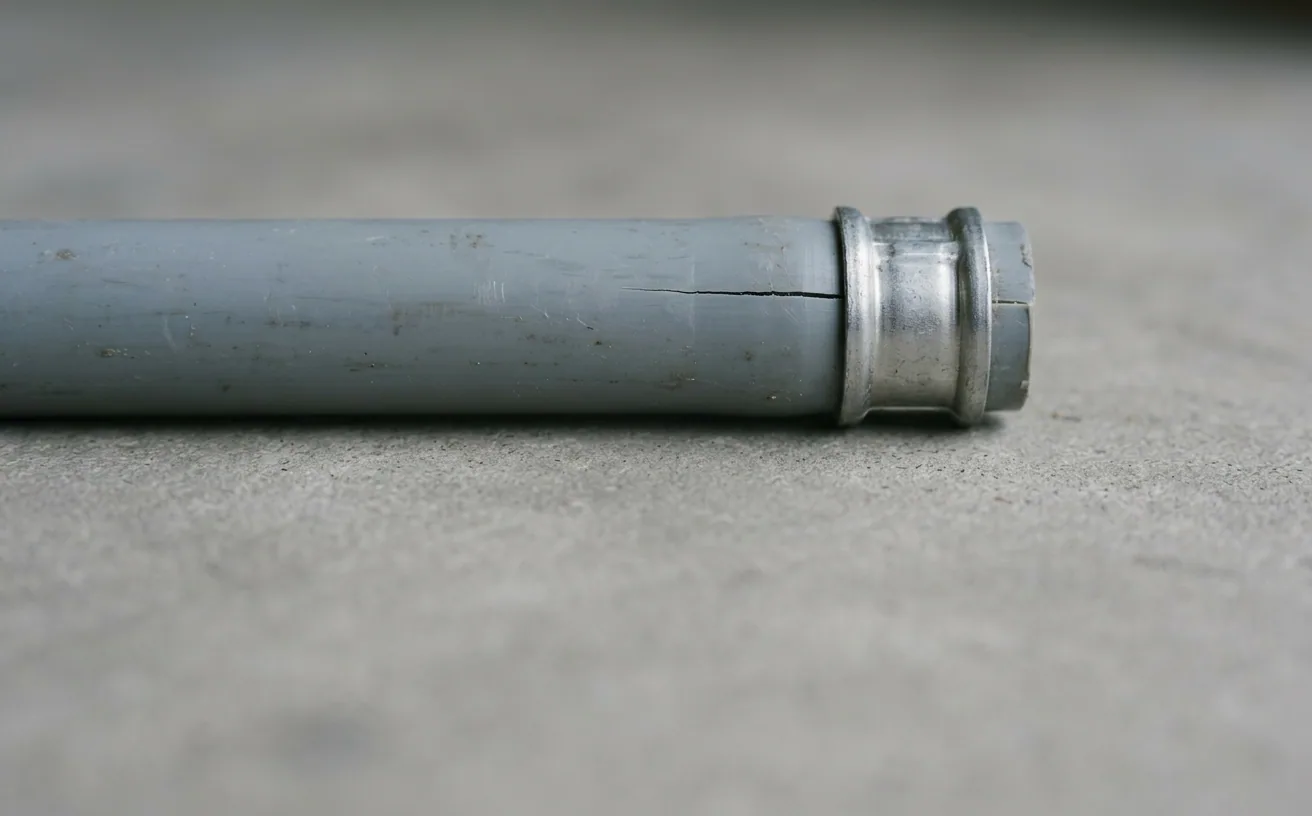
Gray plastic pipe from the polybutylene years. Residential Plumbing in Las Vegas
Illustrative image, not a photo of our work

Gray plastic pipe from the polybutylene years

Polybutylene was made from 1978 to mid 1995 and went into as many as 10 million US homes, usually stamped PB2110 and most often gray. Disinfectants in city water react with the plastic and flake it apart from the inside, so fractures deepen until they reach the outer wall. The $950 million class action settlement was approved in 1995 and the claim window closed long ago.

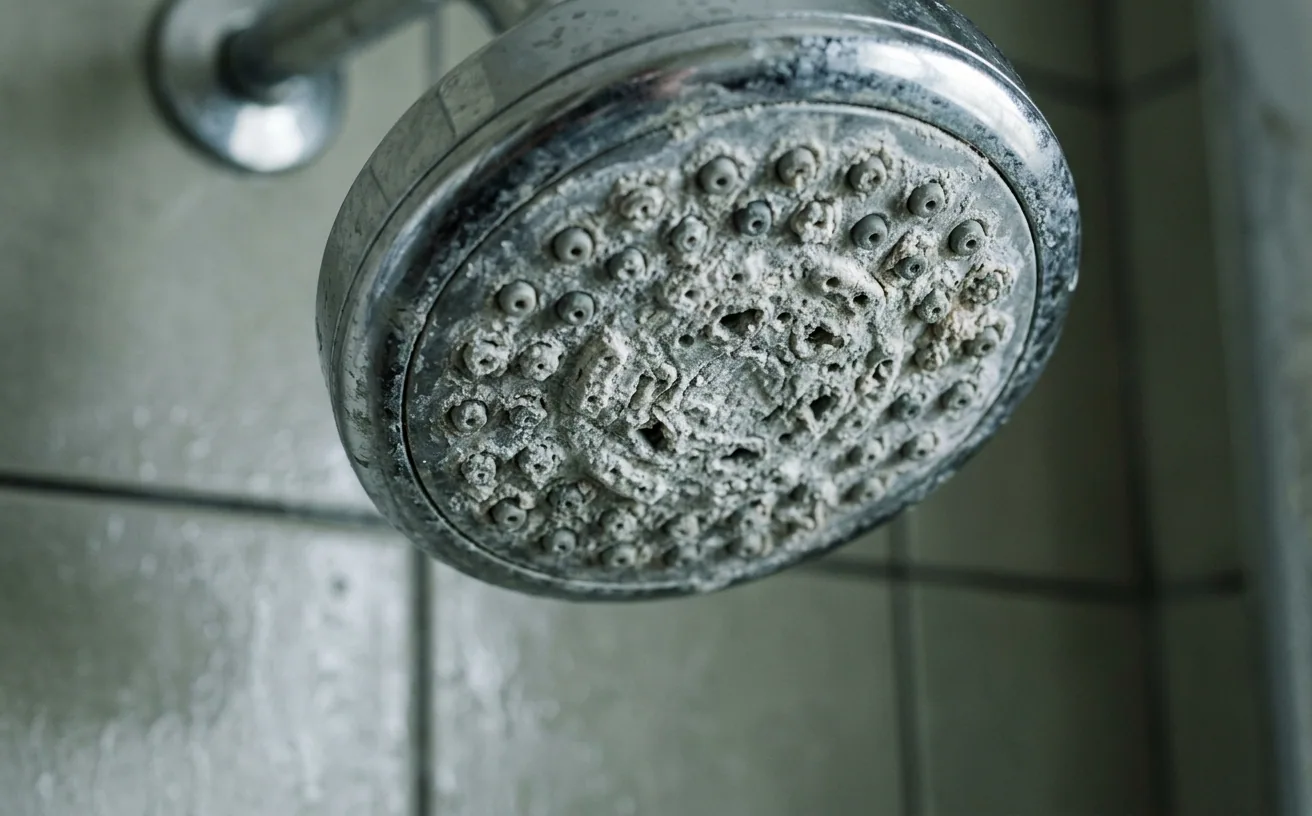
The crust on the showerhead is the pipe's future. Residential Plumbing in Las Vegas
Illustrative image, not a photo of our work

The crust on the showerhead is the pipe's future

Las Vegas tap water is published at 280 parts per million, which is 16 grains per gallon. The US Geological Survey sets its very hard threshold at 180. What you scrub off a showerhead is the same deposit forming on valve seats, heating elements and appliance inlets. The image illustrates that build up rather than documenting a particular house.

Photography note

The polybutylene and showerhead pictures here are generated illustrations of the materials described. No image on this page documents a particular Las Vegas house.

What homeowners push back on

My house is only fifteen years old, so plumbing is not my problem yet

The pipe probably is not, and PEX is credited with a 40 to 50 year life. The components attached to it are a different story.

Angle stops run 8 to 20 years, and a tank water heater runs 8 to 12 by Rheem's own figure. A house built in 2011 is right in that replacement window now.

Why is there no contractor number anywhere on this site?

Because nothing about this business has been verified for publication yet. No contractor number, no rating and no review count appears anywhere on these pages until it is confirmed.

Nevada plumbing contractors hold a Nevada State Contractors Board C-1 license. Anyone can check one free on the board's public search by number, company name or principal. Ask for the number on the call and check it yourself before booking.

I just want the leak fixed, not a whole home plan

That is a completely reasonable request and it should be honored without argument. A single repair is a single repair.

The only thing worth saying is what gets noticed along the way. If the supply pipe turns out to be polybutylene or corroded galvanized, you should hear that once, plainly, and then be left to decide.

A water softener sounds like an upsell

It is a real cost with a real payback question, and the honest version includes both sides. The water district itself tells customers to set a softener to 16 grains per gallon, which is the hardness it publishes.

The counterweight is the permit: a water conditioning system in unincorporated Clark County requires a permit and an inspection either way. Anyone who tells you otherwise is not saving you money, they are skipping a step.

You want to repipe my whole house when only one line leaks

One leak is one leak. The case for a repipe is a pattern, not an incident, and the pattern usually looks like repeated pinholes in the same run.

Material and age carry the argument, not opinion. Galvanized steel is credited with 20 to 30 years and polybutylene fails from the inside regardless of care, while copper runs about 50 years.

This is a rental. I need the cheap fix, not the right fix

Both numbers should be on the table, and the cheap one is legitimate when the property is being sold or the tenant is leaving.

The exception is anything that can flood an occupied unit while nobody is home. A seized angle stop or a water heater past twelve years is a cheap replacement now and a claim later.
Where we do this work

Residential Plumbing across Clark County

We cover residential plumbing in every part of the valley listed below. Each area page names the office that issues the plumbing permit there and who owns the sewer line at the curb, because both genuinely differ from one city to the next.

The fastest way in

Ask about residential plumbing

Say it is about this when you call and you skip the sorting.

Reach Clark County Plumber

Service area
Clark County, Nevada, including Las Vegas, Henderson, North Las Vegas, Summerlin, Paradise, Spring Valley, Enterprise and Boulder City

We are a service area business. We come to you, so there is no counter to visit and no street address on this page. The number above is the fastest way in.

What to have ready

About a minute of detail changes what we can tell you on the call.

  • The address and ZIP code, so we know which end of the valley you are on.
  • What the symptom is, in your own words. "Water under the sink" beats a diagnosis.
  • When it started, and anything already tried.
  • On a water heater: gas or electric, and roughly how old it is.
  • You get the diagnostic fee as a figure on the phone, before anyone is sent.
  • Scope and price are agreed together, before any work starts.
  • Water moving right now? Shut the main off first, then call and say so.

Questions about this service

What kind of pipe is in a 1990s Las Vegas home?

Most likely copper, but polybutylene is a real possibility. Polybutylene was manufactured from 1978 until mid 1995. The median Clark County home dates to 1999, so houses from the late 1980s and the early 1990s sit right inside that manufacturing window.

Identification is straightforward once you look. Polybutylene is usually gray, flexible, and stamped PB2110, though it also came in white, silver, black and blue. Check under a sink, at the water heater and at the attic manifold if there is one.

Do I need a permit to install a water softener in Clark County?

Yes. Installing a water conditioning system in unincorporated Clark County requires a permit and an inspection, whether a homeowner does the work or a company does. That applies to Paradise, Spring Valley, Sunrise Manor, Enterprise, Winchester, Whitney and Summerlin South.

The permit is not a burden in practice. Clark County issues water softener permits start to finish online with no plan review, one item per permit. Water heater, reverse osmosis, gas re-tag and residential re-pipe permits work the same way.

How do I know if I have polybutylene pipe?

Look for flexible plastic pipe, usually gray, stamped PB2110 along its length. Common places to see it are under kitchen and bathroom sinks, at the water heater connections, and where the main line enters the house. It also came in white, silver, black and blue.

If you find it, the class action route is closed. The $950 million settlement was approved in November 1995 and the claim window ended long ago, so replacement is a homeowner expense now. That makes it a budgeting question rather than an emergency.

How long does PEX last, and is it better than copper here?

PEX is credited with a 40 to 50 year life inside its pressure and temperature ratings. PEX for potable water must also show a minimum extrapolated 50 year lifetime under ASTM F2023. InterNACHI puts a copper water line at about 50 years.

In a slab built valley the practical difference is routing. PEX runs in flexible lengths with fewer joints, which suits an attic reroute that avoids breaking concrete sitting on caliche. Published repipe ranges also favor it at $4,000 to $10,000 against $8,000 to $18,000 for copper.

Why do my fixtures scale up so quickly?

Because the water arrives loaded and inclined to deposit. Hardness is published at 280 parts per million, calcium averages 75 and magnesium 24, and the saturation index is plus 0.25. A positive index means the water lays scale down rather than dissolving it.

The origin is upstream of the valley entirely. About 90 percent of the supply comes from Lake Mead. That water starts as Rocky Mountain snowmelt and collects calcium and magnesium down the Colorado River.

How much does it cost to repipe a house in Las Vegas?

Published market ranges put a PEX repipe at $4,000 to $10,000 and a copper repipe at $8,000 to $18,000. Las Vegas contractors commonly publish $4,500 to $8,000 for PEX in a 1,500 to 2,000 square foot home, rising with size.

Two questions change the number most. Ask whether drywall patch, texture and paint are included, and ask whether the run goes through the attic or through the slab. Those two answers explain most of the spread between quotes.

Why do Las Vegas homes not have basements?

Caliche is the main reason. It is a hardened calcium carbonate layer under the desert soil, roughly as hard as concrete. Digging it out is slow and expensive, so building on a slab avoids that cost, which is why valley homes have no basements.

It matters for plumbing because the supply lines run in or under that slab in many homes. That is why a leak under concrete is diagnosed from above before anything gets opened, and why attic reroutes are so common here.

Talk to someone about residential plumbing

Describe what is happening and we will tell you what it usually takes to fix.