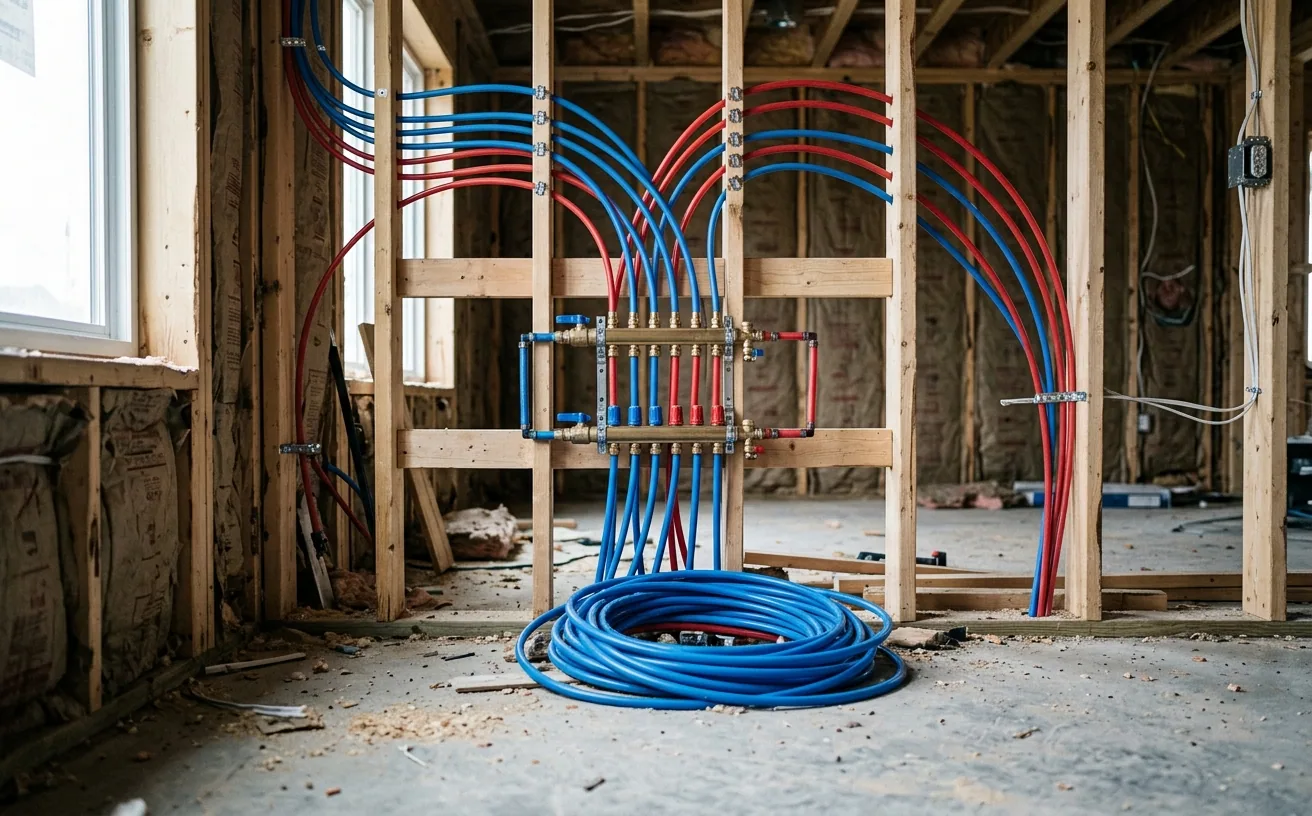
Plumbing and water treatment across Clark County. Call (725) 337-3692

Permit and inspection where requiredProgrammed to 16 grains per gallonUnincorporated county and the valley cities

Water softener installation, sized for 16 grain Clark County water

A water conditioning system in unincorporated Clark County needs a permit and an inspection. That applies whether a homeowner installs it or a company does.

  • The permit is pulled before the pipe is cut
  • Sizing arithmetic shown to you, not hidden
  • Written fixed price before the water goes off
Water Softener Installation in Las Vegas, Nevada
Illustrative image, not a photo of our work
PermitRequired for a softener in unincorporated Clark County
16 gpgThe setting the water district tells customers to use
OnlineSoftener permits issued with no plan review
2024 UPCThe plumbing code the valley moved to

Figures above are published third party data, not company claims. Sources: Clark County Building and Fire Prevention, LVVWD Water Quality Report.

  • Permit first, pipe secondClark County requires a permit and an inspection for a water conditioning system. We pull it rather than leaving it as your problem afterward.
  • Five cities, one county, different desksUnincorporated addresses go to Clark County Building and Fire Prevention on West Russell Road. A city address goes to that city's own building department.
  • Sizing you can check yourselfThe arithmetic uses your hardness, your household water use off your own bill, and the days between regenerations. We show all three.
  • The code changed this yearThe valley moved to the 2024 Uniform Plumbing Code. Clark County applies it to applications filed from January 11, 2026, and the City of Las Vegas from January 5, 2026.
The short answer

A new water softener needs four things: a tie in on the cold main, a drain for brine discharge, a power outlet and a permit. Unincorporated Clark County requires a permit and an inspection. The valve is then programmed to 16 grains per gallon, the published valley hardness.

This page covers water softener installation across the Las Vegas Valley. If you are not sure this is the right service, start from the full plumbing services list.

Reasons people call about a first softener

Installation calls rarely start with a broken appliance. They start with a homeowner deciding that 16 grain water has cost them enough. Others start with a builder loop that has sat empty since the house was finished.

Roughly 47 percent of Clark County homes were built in 2000 or later. Many of those were plumbed with a soft water loop in the garage that nobody ever filled.

  • We just bought the house and there is a loop in the garage with nothing connected to it
  • There are two capped pipes sticking out of the garage wall and I do not know what they are for
  • The house is brand new and came with no treatment on the water at all
  • I already bought a softener online and I need someone to plumb it in properly
  • We are remodeling and I want this done while things are already open
  • Another appliance just died and I want to stop the next one going the same way
  • We moved here from somewhere with soft water and cannot get used to this
Is this you?

This page is for a house with no working treatment on it. That covers a new build, a resale with an empty loop, or a home where nothing was ever fitted.

You do not need to have picked a unit already. Sizing comes out of the site visit and your own water use. Buying the wrong capacity is the most common first mistake.

When this is the wrong page

If a softener is already there and behaving badly, you want water softener repair instead. If the existing unit is simply old, and you are weighing a rebuild against a fresh system, start at water Softener Replacement in Las Vegas.

If the goal is better tasting drinking water at one tap, that is reverse Osmosis Drinking Water. If it is chlorine smell through the whole house, that is whole house water filtration. Softening addresses hardness and nothing else.

What a softener installation actually involves

An install is four connections and a permit. What makes one job cost more than another is distance. Every foot between the unit and those four things adds labor.

The parts of a water softener installation in a Las Vegas home
What is includedWhat that means
Connection to the main lineThe unit is plumbed into the cold main after the meter and ahead of the water heater. That order is what makes hot water and every fixture downstream treated water.
Bypass valveA bypass lets the unit come out of service without shutting the house down. That matters for service work and for filling the brine tank. Irrigation lines are often left outside it deliberately.
Drain line with an air gapRegeneration flushes brine and hardness to a drain. That discharge has to reach an approved drain through an air gap, so nothing can be siphoned back into the water system.
Power at the control headThe control valve needs a standard outlet nearby. If the chosen spot has none, that is electrical work to schedule before the plumbing day rather than during it.
Programming to local hardnessThe valve is set to 16 grains per gallon, the figure the water district tells valley customers to use. The salt dose and cycle timing are then set from there.
Permit and inspectionIn unincorporated Clark County a water conditioning system needs both. The permit is issued online with no plan review. The inspection is a separate appointment someone has to be home for.
First salt fill and start upThe brine tank gets its first load of salt and the unit runs a full manual regeneration. Hardness is then retested at a treated tap to confirm the system works.
What this work looks like

The parts and conditions behind water softener installation

Water Softener Installation in Las Vegas, Nevada
Illustrative image, not a photo of our work
Water Softener Installation in Las Vegas, Nevada
Illustrative image, not a photo of our work
What we commit to

How we handle an installation

These are the parts of an installation a homeowner cannot inspect afterward, so they are written down here instead.

  • The permit is ours to pullWhere a jurisdiction requires a permit and an inspection, we file it and schedule the inspection. You are not handed the paperwork after the fact.
  • The sizing math is shownYou see the hardness figure, the daily usage off your own water bill, and the days between regenerations. Anyone can check the capacity we recommend.
  • We will install equipment you boughtIf you already own a unit, we will plumb it in. We will also say plainly whether its capacity suits 16 grain water.
  • No brand claims we cannot backWe claim no dealer status, no factory certification and no manufacturer partnership. No relationship of that kind has been verified for this business.
How it works

From phone call to passed inspection

An installation is normally three appointments: the estimate, the install and the inspection.

  1. The call and the address check

    You give the address, describe the house, and say whether there is a garage loop. We work out which building department covers you. That decides the permit path and how the inspection gets scheduled.

    On the phone
  2. Site visit and sizing

    You show where the main comes in, and where you would accept equipment standing. A plumber tests hardness and measures the run to the nearest drain and outlet. The capacity arithmetic gets done in front of you.

    Before anything is quoted
  3. Permit pulled before anything is cut

    You approve the written scope first. We then file the permit with the correct jurisdiction. For unincorporated Clark County that is done online, with no plan review needed.

    After you sign, before install day
  4. Install day

    You keep pets and cars clear of the garage, and expect the water off for part of the day. A plumber isolates the main, cuts in the loop and sets the unit level. The drain, the air gap and the programming follow.

    Once the permit is issued
  5. Inspection

    You or someone you trust needs to be at the house for the inspector's window. The inspector checks the connection, the air gap and the installation. It is judged against the adopted code and the Southern Nevada Amendments.

    Scheduled after the install

The price is fixed when you sign the written scope after the site visit. It is not fixed on the phone, and it is not settled after the work is done.

What it costs

What a softener installation costs here

An installed price covers equipment and labor together, which is why the published range below is so wide. Each figure comes from the source named beside it, and none of them is this company's price list.

A whole home system sized for 16 grain water sits in the middle of the published range, not at the bottom. The bottom of that range is point of use equipment rather than whole house capacity.

How the estimate works

The estimate happens at your house, because four physical things decide the number. Those are the connection point, the drain distance, the outlet and the space. None of them can be judged from a phone call or a photo.

A plumber measures each one and tests your hardness. You get a fixed scope and price on the spot. Permit fees are named separately, so you can see what is our labor and what is the county's.

Published market ranges for water treatment installation in the Las Vegas market
JobTypical Las Vegas rangeWhat moves the number
Water softener, installed$200 to $6,000National average about $1,500. A whole home system sized for Las Vegas hardness sits in the middle of that range, not the bottom.
Whole house filtration$1,129 to $3,541Average about $2,275. A carbon filter runs $800 to $1,500, a UV unit $500 to $1,500.
Reverse osmosis, installed$1,000 to $4,800Average around $2,200 for a full system. An under sink point of use unit runs $200 to $800 installed.
Service call or diagnostic fee$75 to $150The broader trade range runs about $50 to $200. Emergency and after hours dispatch is higher, commonly $150 to $350 or more.

Every figure in this table is a published Las Vegas or national market range from the source named beside it. It is not a quote and it is not this company's price list. Your number comes from the on site estimate. Sources: <a href="https://www.homeadvisor.com/cost/plumbing/" rel="nofollow noopener" target="_blank">HomeAdvisor cost guides, 2026</a>, <a href="https://www.housecallpro.com/resources/marketing/how-to/how-to-price-plumbing-jobs/" rel="nofollow noopener" target="_blank">Housecall Pro 2026 Plumbing Price Guide</a>.

What changes your number

  • A builder installed soft water loop in the garage is the single biggest saver, because the pipework is already there waiting to be connected.
  • Grain capacity drives the equipment cost. At 16 grains per gallon a valley home needs more capacity than the same house in a soft water city.
  • Every foot between the unit and an approved drain adds pipe and labor. A spot with no drain at all may rule itself out entirely.
  • Needing an electrician to add an outlet turns one trade into two. That adds a separate appointment to the schedule as well as cost.
  • Adding carbon filtration ahead of the softener raises the total. It also shields the resin from the free chlorine the valley disinfects with.
  • Permit fees vary by jurisdiction and are set by the building department. They are listed as a pass through on the written scope.
Repair against replace

Connecting a new system to an existing garage loop costs a fraction of creating a connection point from scratch. That is why the site visit decides more than the brand you pick.

Service call and diagnostic fee

On an installation the first visit is a survey rather than a diagnosis: hardness, the connection point, the drain run and the outlet. Published market data puts a plumbing service call or diagnostic fee at about $75 to $150. The broader trade range runs roughly $50 to $200.

Nothing about this company's own fee policy has been independently verified, so it is not printed here as though it were. You are given the figure, and told whether it comes off the installation price, before anyone is booked in.

Ranges last reviewed September 2026.

What the job looks like

The two things that decide where a unit can go

Most disappointing installations trace back to a location chosen for convenience rather than for plumbing. The equipment has to reach the main, a drain and power all at once.

One of the two decides whether this is a connection or a small construction project. The other decides whether the equipment physically fits where you want it.

The main shutoff and the connection point. Water Softener Installation in Las Vegas
Illustrative image, not a photo of our work

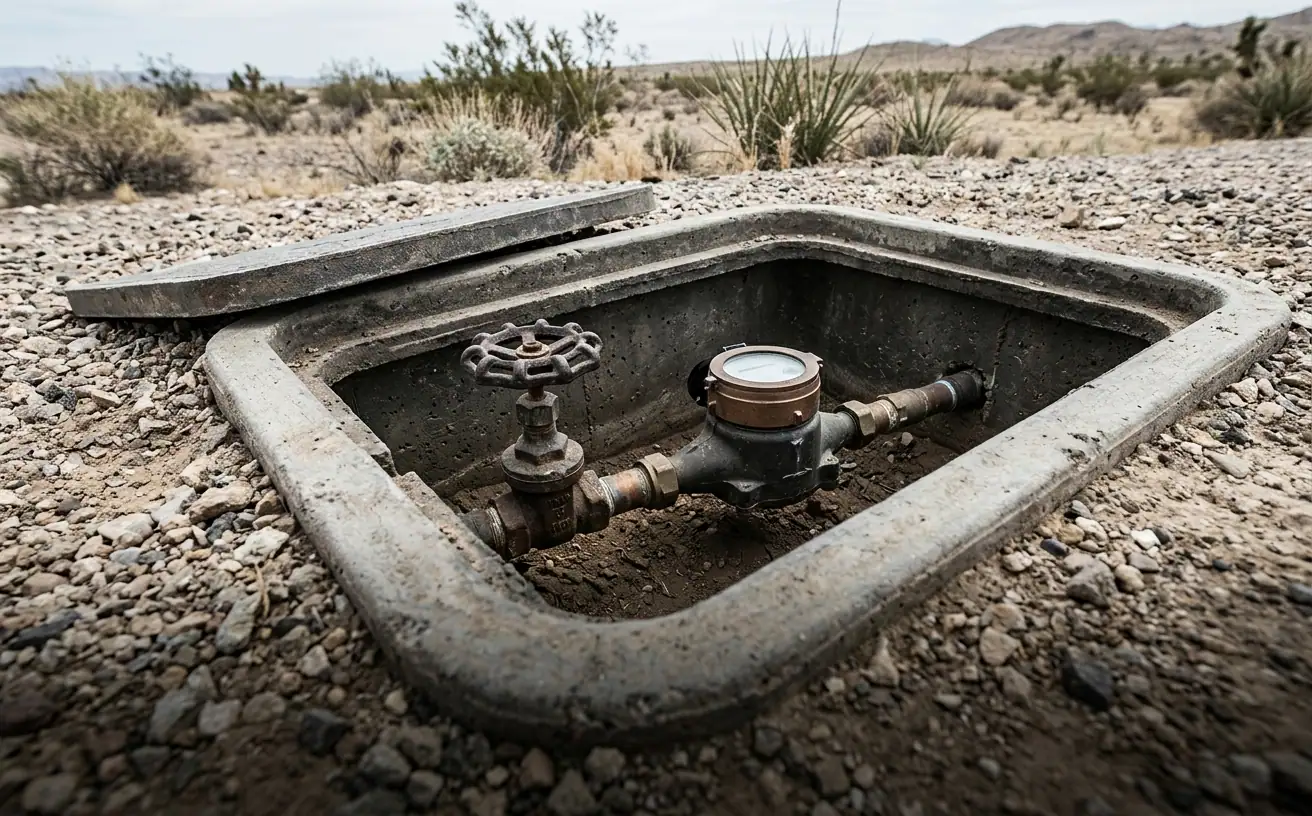
The main shutoff and the connection point

Treatment has to sit on the cold main after the meter, so everything downstream benefits. That includes the water heater. Finding that point and confirming it is reachable is the first thing a plumber does on site.

Space for two tanks, not one. Water Softener Installation in Las Vegas
Illustrative image, not a photo of our work

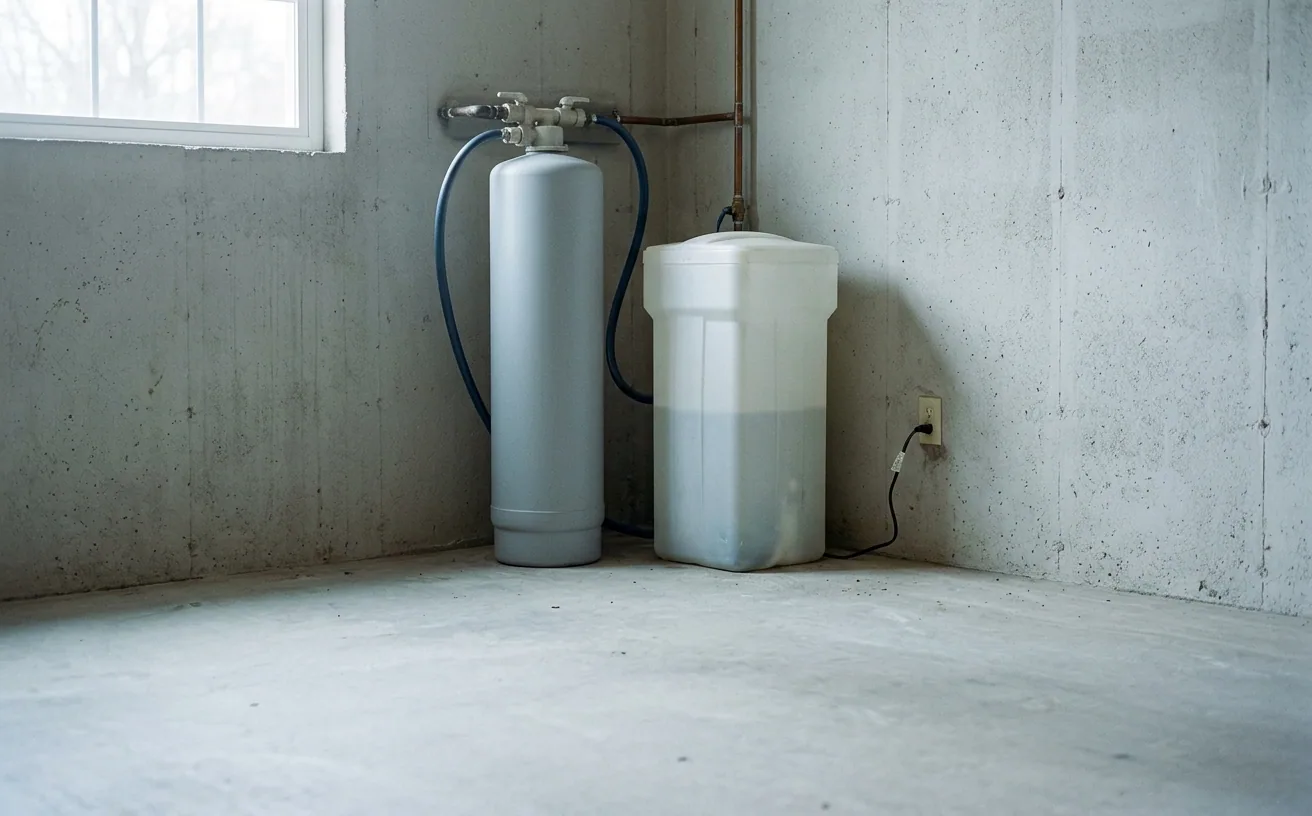
Space for two tanks, not one

A salt based system is a resin tank and a brine tank standing side by side. The brine tank has to be reachable to fill with salt. People plan for the slim tank and forget the wide one.

Photography note

Every image on this page is a generated illustration of the conditions being described. Photographs of our own installations are published once they are approved.

What homeowners push back on

Do I really need a permit for a water softener?

Yes, and the requirement is the county's rather than a line a plumber added. A water conditioning system is permitted and inspected work in unincorporated Clark County.

What the inspection checks is narrow: the connection, the air gap on the drain, and the installation against the adopted code. It is a short appointment rather than a plan review.

Can I just do this myself on a Saturday?

Nevada allows an owner to improve their own residence. The exemption requires an Owner-Builder Affidavit of Exemption filed with the building department, plus your direct supervision of the work.

The under $1,000 small job exemption does not rescue a self install. It does not apply when a permit is required. The permit and the inspection are still owed either way.

The big box store quoted me much less

Retail quotes usually assume a straightforward connection to an existing loop, with a drain and an outlet already at the spot.

Ask specifically whether the quote includes the permit, the inspection, and any drain or electrical work. Those three items are where a low number becomes a normal number.

Can you connect the softener I bought online?

Yes. We will install owner supplied equipment and treat it the same way as anything else, permit and inspection included.

We will also tell you honestly if the capacity is wrong for 16 grain water. That conversation is worth having before the box is opened rather than after.

Will my water pressure drop?

Any equipment in the line causes some pressure loss. A correctly sized unit on a normal residential service keeps that small enough that most people never notice it.

An undersized unit is the usual cause of a real pressure complaint. If pressure is already poor before the install, that is a separate problem worth solving first.

How long will my water be off?

Expect the main shut off for part of the working day. A connection into an existing garage loop is quick. Creating a new connection point takes longer.

Fill a few jugs beforehand if someone will be home all day. We will give you the realistic window at the site visit rather than a hopeful one.
Where we do this work

Water Softener Installation across Clark County

We cover water softener installation in every part of the valley listed below. Each area page names the office that issues the plumbing permit there and who owns the sewer line at the curb, because both genuinely differ from one city to the next.

The fastest way in

Ask about water softener installation

Say it is about this when you call and you skip the sorting.

Reach Clark County Plumber

Service area
Clark County, Nevada, including Las Vegas, Henderson, North Las Vegas, Summerlin, Paradise, Spring Valley, Enterprise and Boulder City

We are a service area business. We come to you, so there is no counter to visit and no street address on this page. The number above is the fastest way in.

What to have ready

About a minute of detail changes what we can tell you on the call.

  • The address and ZIP code, so we know which end of the valley you are on.
  • What the symptom is, in your own words. "Water under the sink" beats a diagnosis.
  • When it started, and anything already tried.
  • On a water heater: gas or electric, and roughly how old it is.
  • You get the diagnostic fee as a figure on the phone, before anyone is sent.
  • Scope and price are agreed together, before any work starts.
  • Water moving right now? Shut the main off first, then call and say so.

Questions about this service

Do you need a permit to install a water softener in Clark County?

Yes. Installing a water conditioning system in unincorporated Clark County requires both a permit and an inspection. That requirement does not change if the homeowner does the work. The county treats a homeowner install and a contractor install the same way here.

Clark County issues the softener permit online with no plan review. Water heater, reverse osmosis, gas re-tag and residential re-pipe permits work the same way. Each permit covers one item, so two devices mean two permits.

Which office issues my plumbing permit?

It depends on the address. Unincorporated areas such as Paradise, Spring Valley, Sunrise Manor, Enterprise, Winchester, Whitney and Summerlin South go to Clark County Building and Fire Prevention. That office is at 4701 West Russell Road.

City addresses go to their own building departments instead. Las Vegas, North Las Vegas, Henderson and Boulder City each run one, so confirm which jurisdiction covers your address before filing anything.

Where does a water softener get installed in a Las Vegas house?

Almost always the garage, on the cold main after the meter and ahead of the water heater. Valley homes sit on slabs rather than basements, largely because of caliche. There is no utility level underneath to hide equipment in. The garage is the default answer here.

Many homes built from the late 1990s onward have a soft water loop roughed into the garage wall. That is exactly what it is for. Where no loop exists, a connection point has to be created.

What size water softener do I need in Las Vegas?

Capacity comes from three numbers multiplied together. Those are hardness in grains per gallon, household water use per day, and the days you want between regenerations. Here the hardness input is 16, which is high by any standard. Nothing about that arithmetic is secret.

Your daily use comes off your own water bill rather than a guess. Sizing to national average hardness is the classic mistake in this valley. It produces a unit that regenerates far too often and wears out early.

Does a water softener need a drain and an electrical outlet?

Yes to both. Regeneration discharges brine and hardness to an approved drain through an air gap. The control valve runs on a standard household outlet next to the unit. Neither requirement can be skipped or worked around. Both get measured on the site visit.

A location with neither is the most common reason a preferred spot gets ruled out. That is why the site visit measures the distance to both. Guessing at it is how installations turn into change orders.

How long does a water softener installation take?

A connection into an existing garage loop is typically a half day job. That includes the first salt fill and a manual regeneration cycle. A drain and outlet already at the spot are what make it that quick. Most valley garages are already set up for it.

Creating a connection where none exists takes longer, and so does running a new drain line. Adding an outlet can bring in a second trade. The inspection is then a separate appointment on another day.

What is a soft water loop?

It is a pair of capped pipes a builder leaves in the garage wall. One takes cold water out of the main and one returns it. Treatment equipment can then be added later without opening any walls. Builders left them for exactly this purpose.

If your garage has two stubbed pipes with caps, you almost certainly have one. It makes installation dramatically simpler and cheaper. A house with no provision at all is a much bigger job.

Should I add filtration at the same time?

It is worth deciding at the same visit. The valley disinfects with free chlorine at an average residual of 0.99 parts per million. Chlorine is one of the two things that shortens resin life, and hardness is the other. The chlorine reaches the resin either way.

Carbon filtration placed ahead of the softener handles chlorine taste and smell. It also protects the resin bed behind it. Doing both in one trip costs less than doing them a year apart.

Talk to someone about water softener installation

Describe what is happening and we will tell you what it usually takes to fix.