Plumbing and water treatment across Clark County. Call (725) 337-3692

Annual check with the readings written downNothing that renews itself automaticallyServing Clark County and the valley

Water softener maintenance and service across the Las Vegas Valley

A softener is one of the few appliances in a valley home that needs a consumable added by hand. Most units that fail early were never looked at.

  • Hardness measured at two taps and recorded
  • We tell you what the softener does not cover
  • Published market ranges shown with sources
Water Softener Maintenance and Service in Las Vegas, Nevada
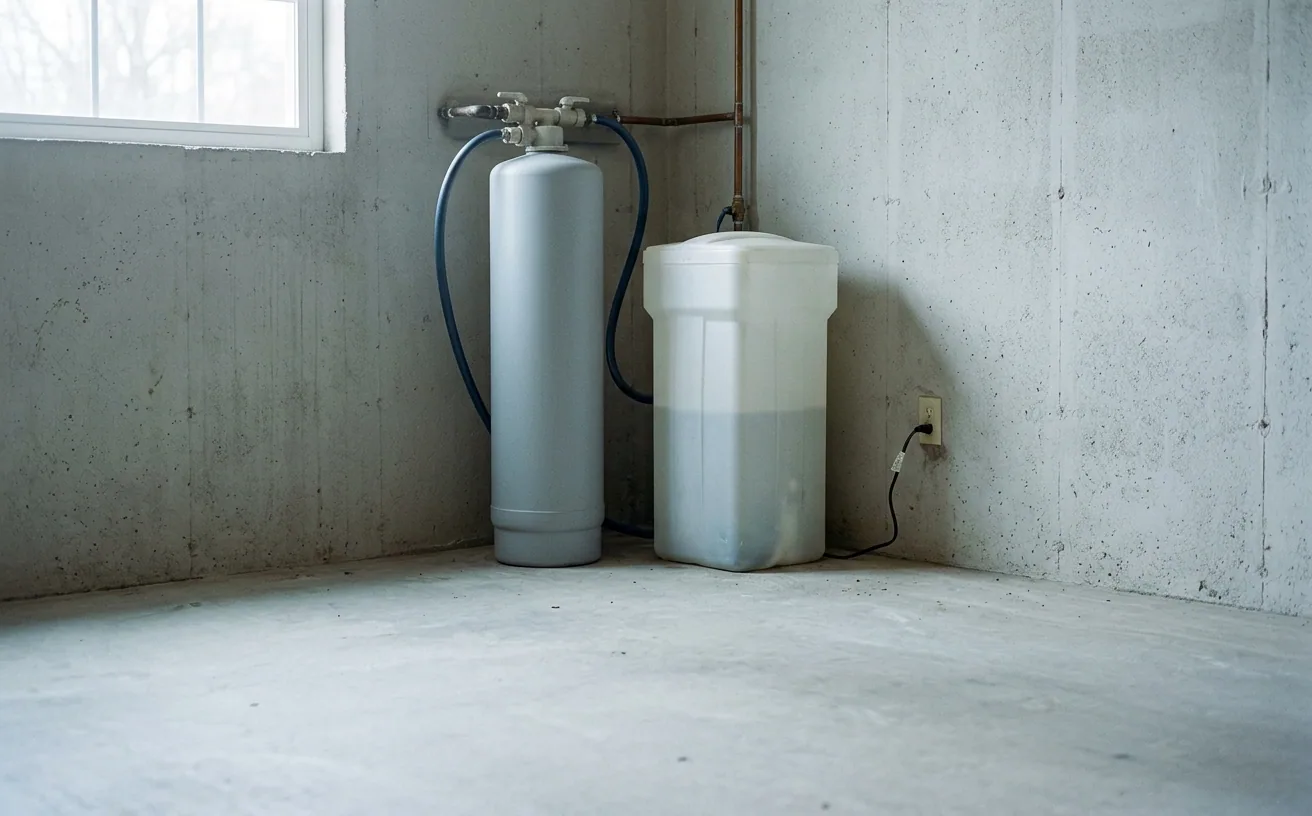
Illustrative image, not a photo of our work
591 ppmDissolved solids a softener does not remove
16 gpgWhat an untreated tap should read here
Once a yearRinnai's minimum tankless flush interval
0.99 ppmFree chlorine working on the resin year round

Figures above are published third party data, not company claims. Sources: LVVWD Water Quality Summary, LVVWD Water Quality Report, Rinnai.

  • Nothing renews itselfThere is no membership to join and nothing that charges your card next year. A yearly visit only makes sense if you choose to book it.
  • You keep the numbersThe readings from the treated and untreated taps get written down and left with you. Next year's visit then has something to compare against.
  • Honest about the limitsA softener handles hardness and nothing else. We tell you plainly what it leaves behind, rather than letting you assume it covers everything.
  • Homeowner work stays homeowner workAdding salt, breaking a crust and reading a test strip are things you can do yourself. We will talk you through any of them on the phone.
The short answer

Water softener upkeep is four habits. Keep the brine tank between one third and two thirds full, and use clean pellet salt. Break up any crust that forms, and test your hardness once a year. A tank that has gathered sludge should be emptied and washed out every year or two.

This page covers water softener maintenance and service across the Las Vegas Valley. If you are not sure this is the right service, start from our Las Vegas plumbing services.

Questions people call about between repairs

Most maintenance calls are not emergencies. They come from people who inherited equipment with a house and were never told what it needs. Others suspect their softener has quietly stopped pulling its weight.

None of these means anything is broken. They mean the system is due for attention. That is a much cheaper conversation than a failure.

  • I have no idea what kind of salt I am supposed to be buying for this thing
  • The salt has sat at the same level for weeks and I cannot tell if that is normal
  • There is a layer of brown sludge in the bottom of the salt tank
  • Nobody has touched this unit since we moved in four years ago
  • The water still feels soft but the glasses have started spotting again
  • There is a salty smell around the equipment out in the garage
  • I want somebody to check it over before we go away for the summer
  • I bought a test kit and I do not know what the reading is telling me
Is this you?

This page is for a system that basically works and needs looking after. If yours has stopped producing soft water entirely, that is a fault rather than a service item.

It is also the right page if you have just bought a house with a softener in the garage. Somebody showing you how to run it is a reasonable thing to ask for.

When this is the wrong page

A unit that is leaking, cycling nightly or no longer softening needs softener repair across Clark County, not a service visit. A unit past its resin life belongs on water Softener Replacement in the Las Vegas Valley.

If your real goal is better drinking water, no amount of upkeep gets you there. Reverse osmosis across Clark County is the equipment that does. Chlorine taste and smell through the whole house is handled by whole House Water Filtration in Las Vegas.

The upkeep list, and how often each item comes round

Very little of this is technical. Most of it is a five minute look in the brine tank. The rest is an annual check that catches what a homeowner cannot see.

Water softener maintenance tasks and their intervals
TaskHow often, and why it matters
Check the salt levelLook in the tank monthly and keep the salt between one third and two thirds full. Filling to the brim encourages the salt to fuse. Leaving it empty means no brine is made at all.
Use the right saltClean pellet or solar salt dissolves predictably. Cheap rock salt carries more insoluble material, which settles out. That residue is the sludge people find years later in the bottom of the tank.
Break up any crustIf the salt has formed a solid layer, push a broom handle gently through it in several places. Work away from the tank wall. Then check that the level actually drops over the following week.
Wash out the brine tankEvery year or two the tank should be emptied, rinsed of accumulated fines and refilled. This is the single most skipped job on any residential water treatment system.
Use a resin cleanerWhere iron or heavy scale is fouling the bed, a proper resin cleaner used to the label instructions restores some exchange capacity. It supplements good salt rather than replacing it.
Test the hardnessOnce a year, test an untreated outside spigot and a treated inside tap. The untreated side should read close to the published 16 grains per gallon, and the treated side far lower.
Annual professional checkOne visit a year covers the parts you cannot inspect. That means the injector, the drain line and air gap, the bypass position, the programmed settings, and the salt dose against real water use.
What this work looks like

The parts and conditions behind water softener maintenance and service

Water Softener Maintenance and Service in Las Vegas, Nevada
Illustrative image, not a photo of our work
Water Softener Maintenance and Service in Las Vegas, Nevada
Illustrative image, not a photo of our work
What we commit to

How we handle routine service

  • The visit is scoped before it is bookedYou are told which items are on the list before anyone comes out. Nothing is added to that scope on the day without you agreeing to it first.
  • A repair found is a separate decisionAnything wrong is quoted on its own and you are free to decline it. The service you booked still gets finished either way.
  • The cycle gets run, not describedA regeneration is started while someone is there to watch the draw, the rinse and the refill. A fault that only appears mid cycle cannot be caught any other way.
  • The tank gets opened upSalt is judged from inside the tank, not from the level showing at the top. A tank that looks full can be hiding both a crust and a bed of fines.
How it works

What happens on an annual service visit

One visit, and a written record of the readings that stays at the house.

  1. Two hardness readings first

    You are asked for two taps: one outside that the equipment never touches, and one inside that it does. Both readings get written down, because that is the only objective measure of whether the system still earns its keep.

    First thing on site
  2. Into the brine tank

    You get told what the salt looks like underneath, which you cannot see from the doorway. A plumber checks for a crust and for sludge at the base. The level is confirmed against the water line.

    Same visit
  3. Settings and a live cycle

    You are shown the programmed hardness and capacity on the control head. A plumber then runs a regeneration. The draw, the rinse and the refill can all be watched rather than assumed.

    Same visit
  4. Drain, air gap and connections

    You do not need to be present for this part. The drain line is checked for restriction and the air gap is confirmed. Every connection is looked over for the slow weeps that soak a floor unnoticed.

    Before leaving
  5. The readings stay with you

    You keep the written record of hardness, salt condition and settings. Anyone can compare against it next year, including another company. That is the point of writing it down.

    End of the visit

A service visit has a known scope before anyone arrives, so the figure is confirmed with you on the call. Any repair found during the visit is quoted separately, and only done if you agree to it.

What it costs

What upkeep and service cost

Maintenance is the only page here where the smallest number is the one that matters. The ranges below are published by the sources named next to them, and none of them is our price list.

Maintenance sits at the cheap end of everything on this site. That is the entire argument for doing it. The expensive numbers on this page are what it helps you avoid.

How the estimate works

A service visit is one of the few plumbing jobs that can be priced honestly before anyone arrives. The scope is known in advance and does not depend on what gets found.

If something turns out to be wrong during the visit, that becomes a separate quoted repair. You are told the figure and you decide. Declining it still leaves you with the service you booked.

Published market ranges for water treatment service and related equipment
JobTypical Las Vegas rangeWhat moves the number
Service call or diagnostic fee$75 to $150The broader trade range runs about $50 to $200. Emergency and after hours dispatch is higher, commonly $150 to $350 or more.
Water softener repair$162 to $982Average about $557. Simple fixes start around $65 and a full valve rebuild runs to about $2,545.
Whole house filtration$1,129 to $3,541Average about $2,275. A carbon filter runs $800 to $1,500, a UV unit $500 to $1,500.
Reverse osmosis, installed$1,000 to $4,800Average around $2,200 for a full system. An under sink point of use unit runs $200 to $800 installed.

Every figure in this table is a published Las Vegas or national market range from the source named beside it. It is not a quote and it is not this company's price list. Your number comes from the on site estimate. Sources: <a href="https://www.housecallpro.com/resources/marketing/how-to/how-to-price-plumbing-jobs/" rel="nofollow noopener" target="_blank">Housecall Pro 2026 Plumbing Price Guide</a>, <a href="https://www.homeadvisor.com/cost/plumbing/" rel="nofollow noopener" target="_blank">HomeAdvisor cost guides, 2026</a>.

What changes your number

  • Whether the brine tank needs a full clean out changes the length of the visit more than anything else on the list.
  • Access to the unit matters. Equipment boxed in behind storage or a water heater has to be reached before anything can be inspected.
  • Adding a resin cleaning treatment to the visit is a materials cost on top of the labor. It is not needed on every system.
  • Salt is a running cost you buy yourself. An undersized unit regenerating too often can cost more in salt each year than the visit does.
  • Combining the softener check with a water heater flush on the same trip costs less than booking two separate visits months apart.
Repair against replace

The published service call range in this market is about $75 to $150. Published softener repair runs $162 to $982, and a full valve rebuild reaches about $2,545. That spread is the whole case for looking before something fails.

Service call and diagnostic fee

A service visit is booked work rather than a diagnostic, so the fee question comes up differently here. The published market band for a plumbing call out of any kind is roughly $75 to $150. The wider trade range runs about $50 to $200, and after hours figures go higher again.

No fee policy of this company's has been through independent verification, so none is printed here as a fact. What a service visit costs, and what happens to that money if a repair is found, is settled on the call when you book.

Ranges last reviewed September 2026.

What the job looks like

Two things worth looking at yourself

Both of these are visible without tools. Both tell you something useful before you pick up the phone.

One is a five minute look with the brine tank lid off. The other is a fixture you already walk past every day.

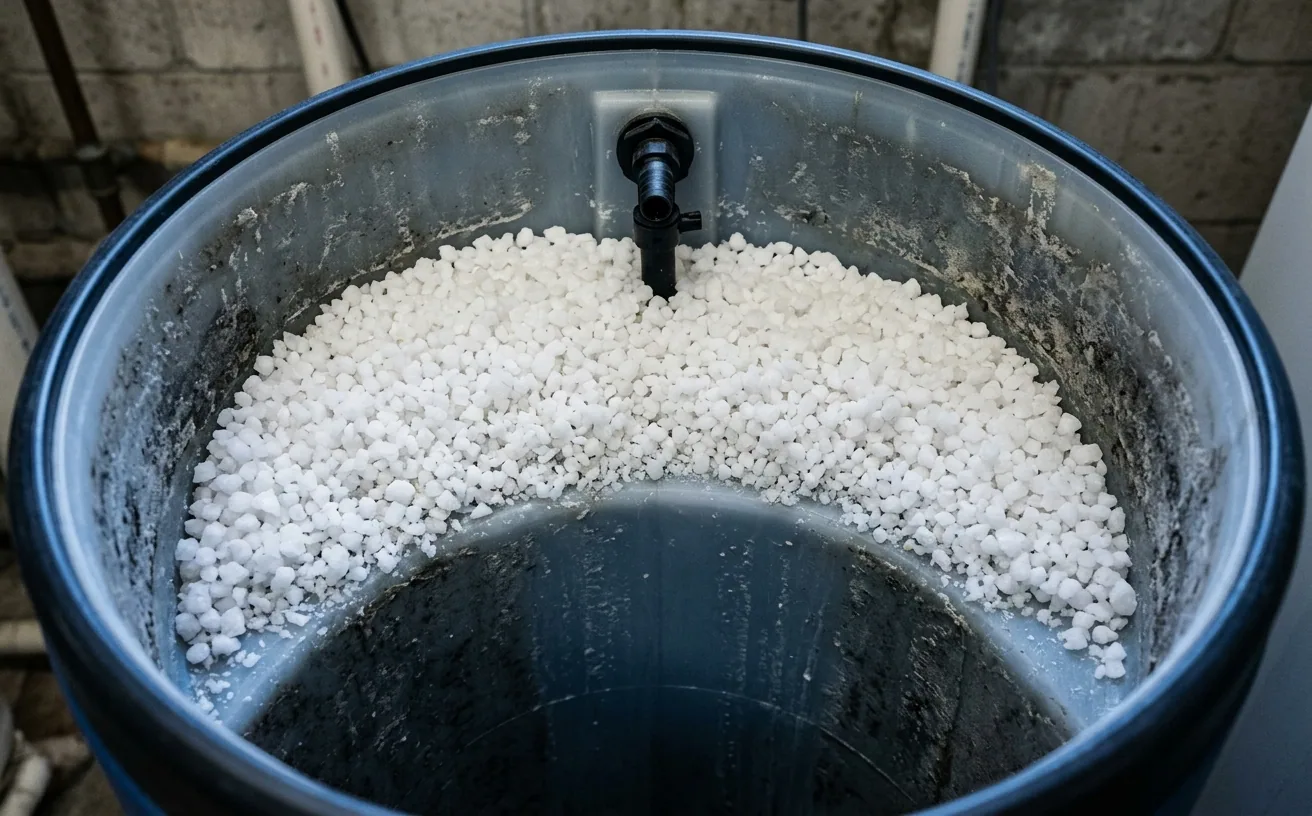
What good salt looks like in the tank. Water Softener Maintenance and Service in Las Vegas
Illustrative image, not a photo of our work

What good salt looks like in the tank

Clean pellets should sit loose and separate, with the level dropping steadily between fills. Salt fused into a solid mass means trouble. So does a layer of fine brown residue at the base. Neither is a breakdown, and both get worse if ignored.

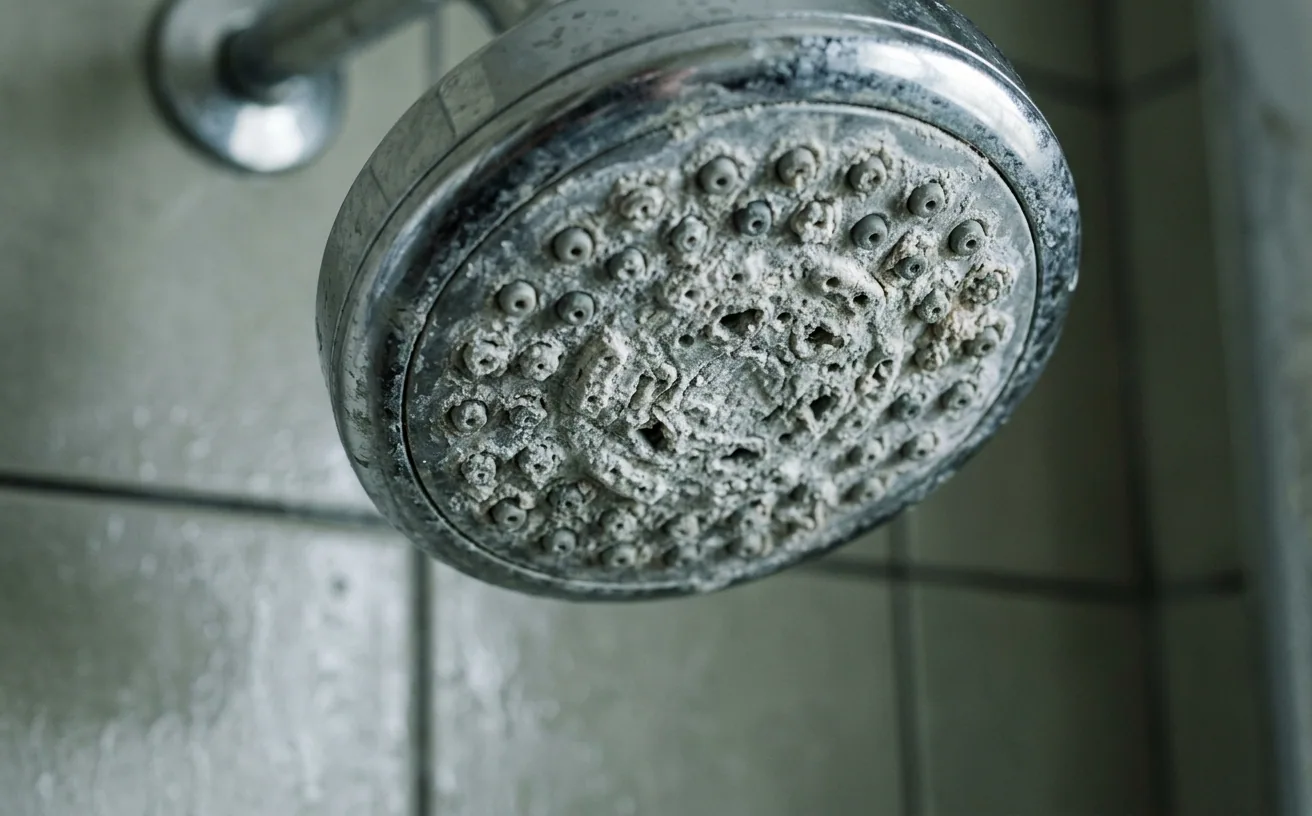
Scale creeping back onto fixtures. Water Softener Maintenance and Service in Las Vegas
Illustrative image, not a photo of our work

Scale creeping back onto fixtures

Fixtures are the earliest warning that softening has slipped. Deposits reappear long before anything obvious fails. If a showerhead you descaled six months ago is crusting over again, test the water before assuming it is normal.

Photography note

Every picture on this page is a generated illustration of the condition being described. Photographs of our own service work will be published once they are approved.

Reasonable pushback on annual servicing

Ours went ten years with nobody touching it and it was fine

That happens. A well sized unit on decent salt can run a long time with only refills, and nobody should pretend otherwise.

What you cannot see is how much capacity the bed has left. A system quietly softening less each year still feels fine, right up until the spots come back.

This sounds like a subscription I will forget to cancel

There is nothing to cancel. We do not enroll anyone in anything, and we do not keep a card on file for a future visit.

If a year goes by and you do not call, nothing happens and nothing gets charged. That is a deliberate policy, and it is one you can hold us to.

Can I not just do all of this myself?

Most of it, yes. Checking the level, buying the right salt, breaking a crust and running a test strip are all homeowner jobs. We would rather you did them.

The parts worth a second pair of eyes are the injector, the drain line and the air gap. Whether the settings still match your household water use is the other one.

Does the type of salt really matter?

It matters mostly for what gets left behind. Cleaner pellet and solar salts dissolve more completely. Cheaper rock salt carries more insoluble material into the tank.

That residue becomes sludge at the bottom and fines in the valve. Paying slightly more per bag is usually cheaper than a tank cleanout and a fouled injector.

My water still feels soft, so why check anything?

Feel is a poor instrument. Softness is obvious at the extremes and vague in the middle. The middle is exactly where a bed losing capacity lives.

A hardness test is objective and takes a minute. If your treated tap reads well below the untreated one, you have your answer and can stop worrying.
Where we do this work

Water Softener Maintenance and Service across Clark County

We cover water softener maintenance and service in every part of the valley listed below. Each area page names the office that issues the plumbing permit there and who owns the sewer line at the curb, because both genuinely differ from one city to the next.

The fastest way in

Ask about water softener maintenance and service

Say it is about this when you call and you skip the sorting.

Reach Clark County Plumber

Service area
Clark County, Nevada, including Las Vegas, Henderson, North Las Vegas, Summerlin, Paradise, Spring Valley, Enterprise and Boulder City

We are a service area business. We come to you, so there is no counter to visit and no street address on this page. The number above is the fastest way in.

What to have ready

About a minute of detail changes what we can tell you on the call.

  • The address and ZIP code, so we know which end of the valley you are on.
  • What the symptom is, in your own words. "Water under the sink" beats a diagnosis.
  • When it started, and anything already tried.
  • On a water heater: gas or electric, and roughly how old it is.
  • You get the diagnostic fee as a figure on the phone, before anyone is sent.
  • Scope and price are agreed together, before any work starts.
  • Water moving right now? Shut the main off first, then call and say so.

Questions about this service

What kind of salt should I use in my water softener?

Clean pellet salt or solar salt is the usual recommendation. Both dissolve predictably and leave less insoluble residue behind than cheap rock salt does. That residue is what eventually fouls the valve and settles in the tank. Both are widely sold in valley hardware stores.

Potassium chloride is the alternative where someone wants to avoid adding sodium, though it costs noticeably more per bag. Whichever you pick, stick with one type rather than mixing them in the same tank.

How full should the brine tank be?

Aim to keep the salt between a third and two thirds full, and always above the water line inside the tank. That range gives the unit plenty to work with, without packing the tank solid from top to bottom. Check it monthly and you will not be surprised.

Filling to the very top is a common mistake here. Tightly packed salt in a warm garage is exactly what fuses into a crust. Once that happens, no brine gets made at all.

How often should a brine tank be cleaned out?

Every one to two years for most homes. The job is emptying the remaining salt, rinsing out the fine residue that has settled at the bottom, and refilling with fresh salt. None of it needs tools. A bucket and a hose are enough for it.

Homes using lower grade salt need it more often, because the insoluble content is what builds up. If you have never done it and the unit is years old, it is almost certainly overdue.

How do I test whether my softener is still working?

Use an inexpensive hardness test kit at two points. Test an outside spigot upstream of the equipment, and a cold tap inside the house. The untreated reading should land near the published 16 grains per gallon. Test strips cost a few dollars at most.

The treated reading should be dramatically lower. If the two readings are close together, the unit is not doing its job. The reason needs finding before anything else is spent.

What does a water softener not protect against?

It does not remove chlorine, which the valley uses at an average residual of 0.99 parts per million. It does not reduce total dissolved solids either, published at 591 parts per million against a Nevada secondary standard of 1,000. Those limits are worth knowing up front.

It also does not fix water pressure, does not clear drains, and does not undo scale already formed inside a water heater. Irrigation lines are usually bypassed deliberately, so outside taps stay hard.

Do I still need to flush my water heater if I have a softener?

Yes, though softened water makes the job easier. Rinnai puts the minimum flush interval for a tankless unit at once a year, and Navien sets the same annual floor for descaling.

Softened water slows the deposit rather than stopping it, so the interval does not go away. What changes is how much scale is waiting inside the heat exchanger when you get there.

How often does a water softener need professional service?

Once a year covers it for most households. That visit is mainly about the parts you cannot inspect from outside. The injector, the drain line, the air gap and the programmed settings are the four that matter. The rest of the year is on you.

Between visits the work is yours, and it is genuinely small. Check the salt monthly, keep any crust broken up, and test your hardness annually so you have a number rather than a feeling.

Will servicing my softener make my water taste better?

Probably not. Taste and smell complaints in the valley usually trace back to chlorine rather than to hardness. Softening leaves the disinfectant completely untouched as it passes through the resin bed. That is worth knowing before you spend money on it.

Carbon filtration is what addresses that. Reverse osmosis is what addresses dissolved solids at a drinking tap. A well maintained softener changes how water feels, not how it tastes.

Talk to someone about water softener maintenance and service

Describe what is happening and we will tell you what it usually takes to fix.