16 grains per gallon, valley wideWorked from your own bill
What size water softener a Las Vegas home needs
Capacity is measured in grains, not gallons, and the arithmetic behind it is short. One water bill and the hardness figure on record give you the daily grain load your household puts on a system.
- Grains, not gallons
- Read your water bill
- Leave irrigation out
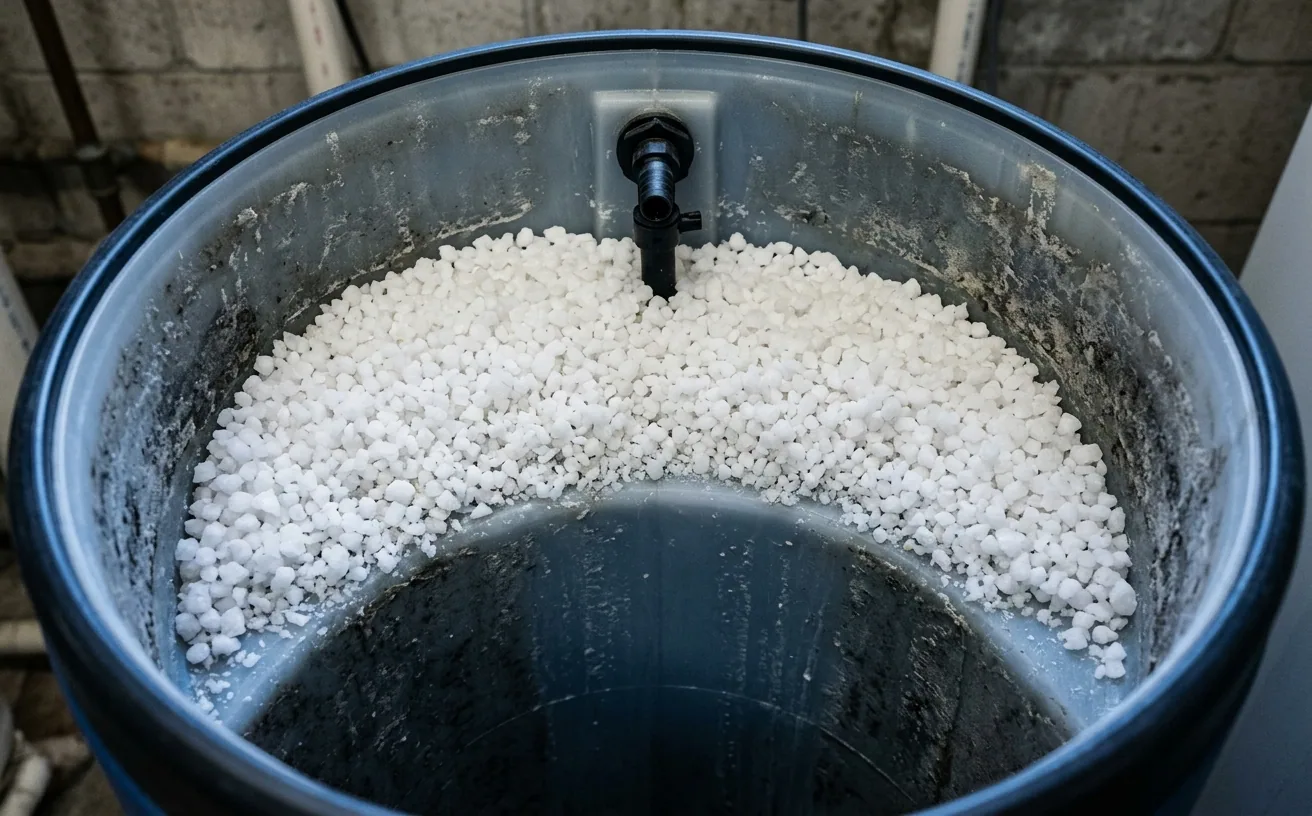
Size means capacity in grains, not the size of the tank. Multiply your household's daily indoor water use in gallons by 16, the grains per gallon the water district publishes for the valley. That daily grain load, times the days you want between regenerations, is the capacity a system has to carry.
Last updated 2026-09-15. Written for homeowners in Las Vegas and Clark County, Nevada.
What size means on a water softener
Softeners are not sold by volume the way water heaters are. They are rated by the grains of hardness the resin can strip out before it has to regenerate. That grain rating is printed on the unit, and it is the number worth comparing between models.
Sizing is therefore a question about capacity over time, not about how much water a tank holds. Two inputs settle it: how hard the water is, and how much water the household runs through the system.
In this valley the first input is already decided for you, which makes the arithmetic unusually easy to check.
The two numbers, and the arithmetic
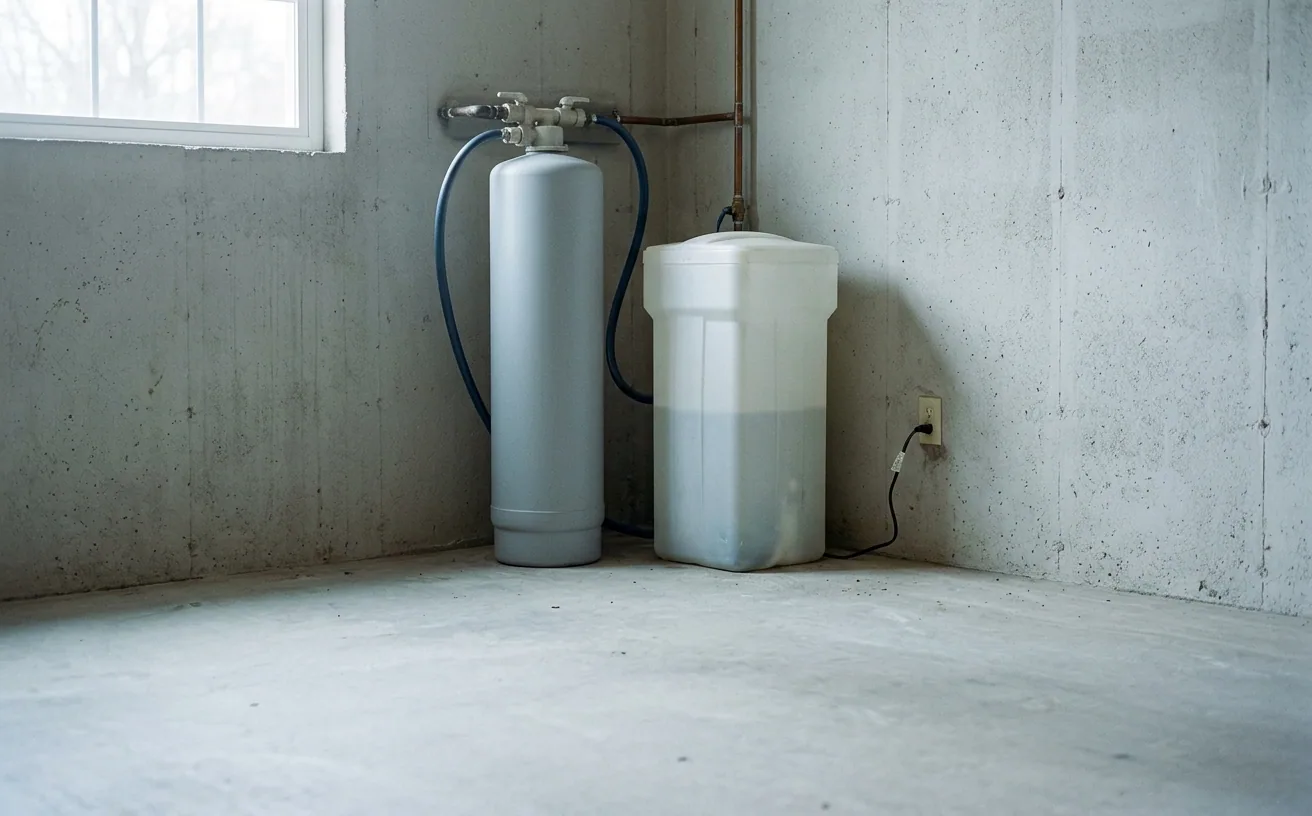
Hardness is published. The water district lists valley tap water at 280 parts per million, which converts to 16 grains per gallon. It tells customers to program a softener to 16.
Daily use is on your water bill. Take the gallons billed for the period and divide by the number of days in it. That gives gallons per day for the whole property.
Now subtract irrigation, because landscape water never passes through the softener. Setting a summer bill beside a winter bill gives you a rough split, since winter demand here is mostly indoors.
Multiply indoor gallons per day by 16 and you have grains per day. Multiply that by the number of days you want between regenerations and you have the capacity the unit must carry. The table below works it at a seven day interval.
A household using 200 gallons a day indoors puts about 3,200 grains a day through the system, or 22,400 grains across a week. A unit rated below 22,400 grains will regenerate more than once a week in that house. The margin you want sits above that figure, not at it.
One caution on rated capacity. A published rating assumes a heavy salt dose, so running a unit at its full rating burns far more salt per grain removed. Installers usually pick a size that leaves headroom and then set a lower, more efficient dose.
| Indoor use per day | Grains per day | Grains across seven days |
|---|---|---|
| 100 gallons | 1,600 | 11,200 |
| 150 gallons | 2,400 | 16,800 |
| 200 gallons | 3,200 | 22,400 |
| 250 gallons | 4,000 | 28,000 |
| 300 gallons | 4,800 | 33,600 |
| 400 gallons | 6,400 | 44,800 |
What makes the valley different from the chart in the box
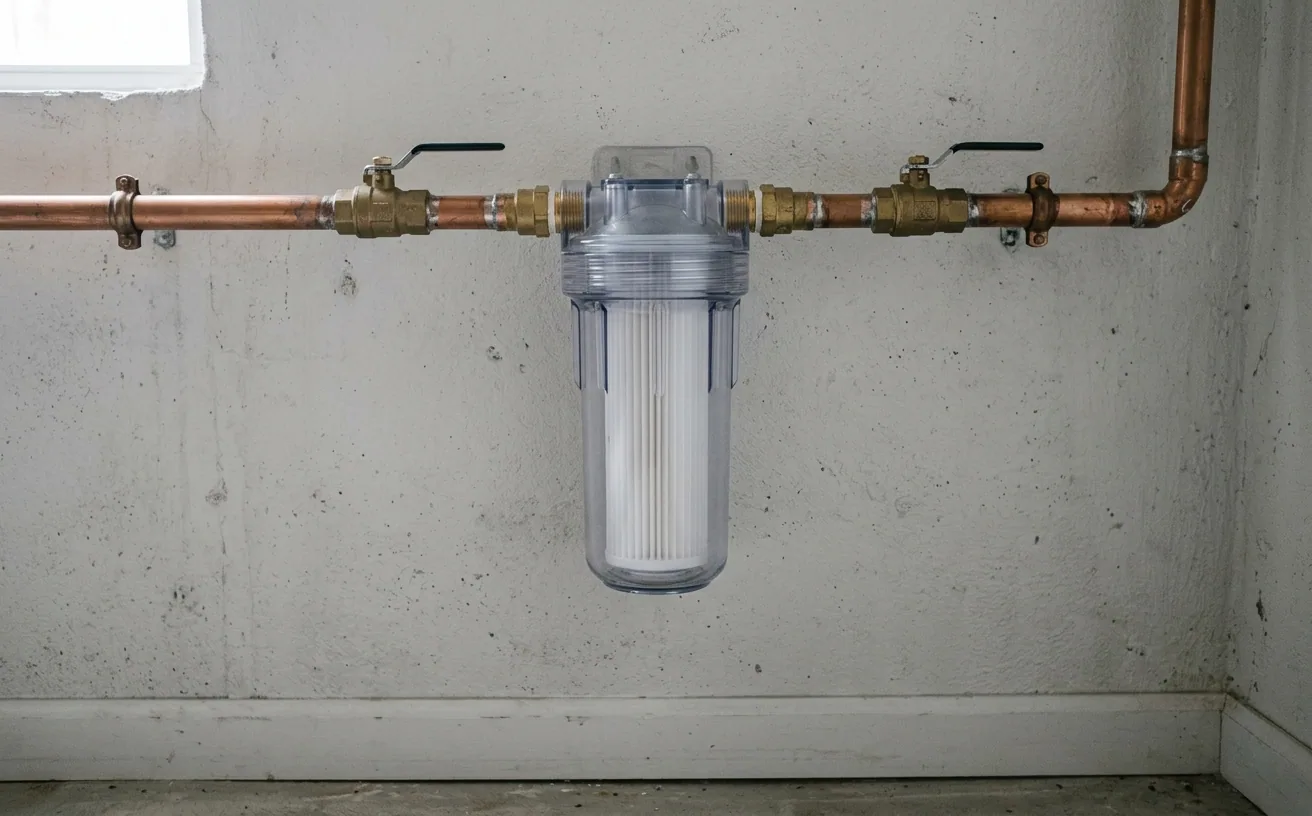
Most sizing charts printed on a carton assume moderate hardness. The USGS very hard band starts at 180 milligrams per liter, and the valley is well past it. A unit chosen off a generic chart therefore lands small here, because the chart was drawn for water carrying far fewer grains.
Irrigation on the same meter is the second local trap. Desert landscape water can dwarf indoor use in July, and sizing from the total bill produces a system far larger than the household needs.
Source blending is a third wrinkle. The aquifer under the valley carries about a tenth of the supply and is worked hardest in summer. A northwest address can therefore sit on a seasonal mix. Sizing with a little headroom absorbs that without any reprogramming.
Chlorine is the last one. The disinfectant left in valley water, averaging 0.99 parts per million, slowly degrades resin. A bed cycling hard because the unit was sized tight wears out sooner than one with room to spare.
What gets checked before a model is chosen
Capacity is the headline number, but flow rate decides how the house feels. A unit undersized for peak demand drops pressure when a shower, a dishwasher and a washing machine all run at once.
Location matters in a slab market. Valley homes sit on slabs rather than basements, largely because of caliche under the desert soil. The softener normally goes in the garage or against an exterior wall near the main line.
The system also needs a drain for brine discharge and power for the control valve. Where a tankless water heater sits downstream, softened water is one of the things that keeps its heat exchanger clear of mineral.
Anyone naming a size without asking about occupants, bathrooms, irrigation and the water heater is guessing. The water Softener Installation for Las Vegas homes covers what the work involves, and (725) 337-3692 is the number to call to arrange a sizing visit.
What goes wrong when the size is off
An undersized system regenerates too often. That means more salt, more water down the drain, and a resin bed running more cycles per year than it was built to handle.
An oversized system costs more at purchase and can sit for long stretches between regenerations. Resin that rarely cycles is not doing anything useful, and the surplus capacity is money parked in the garage.
Programming mistakes cause the same trouble quietly. Set at 10 grains per gallon in a valley home, a unit runs out of capacity early. Hard water then slips past between cycles while the display still looks normal.
The setting to use is the one the district publishes: 16 grains per gallon. If your valve is programmed in parts per million, 280 is the equivalent entry.
Sources
- Hardness of 280 ppm as calcium carbonate and a free chlorine residual of 0.99 ppm LVVWD Water Quality Summary
- The instruction to set a softener to 16 grains per gallon, and the Lake Mead and groundwater split LVVWD Water Quality Report
- The older 291 ppm, 17 grains per gallon figure still published on the district FAQ LVVWD Water Quality FAQs
- Water above 180 milligrams per liter is classed as very hard USGS, Hardness of Water
- Typical resin bed life of 10 to 15 years, shortened by chlorine and higher hardness Water Quality Association
- Caliche under the desert soil and why valley homes are built on slabs US Geological Survey
- Water conditioning systems need a permit and an inspection, issued online with no plan review Clark County Building and Fire Prevention
Where to go from here
The service this covers
Related guides
Want someone to look at yours?
Reading about it only gets you so far. One call gets you an answer about your house.
Reach Clark County Plumber
- Phone
- (725) 337-3692
- Service area
- Clark County, Nevada, including Las Vegas, Henderson, North Las Vegas, Summerlin, Paradise, Spring Valley, Enterprise and Boulder City
We are a service area business. We come to you, so there is no counter to visit and no street address on this page. The number above is the fastest way in.
What to have ready
About a minute of detail changes what we can tell you on the call.
- The address and ZIP code, so we know which end of the valley you are on.
- What the symptom is, in your own words. "Water under the sink" beats a diagnosis.
- When it started, and anything already tried.
- On a water heater: gas or electric, and roughly how old it is.
- You get the diagnostic fee as a figure on the phone, before anyone is sent.
- Scope and price are agreed together, before any work starts.
- Water moving right now? Shut the main off first, then call and say so.
Related questions
What hardness number do I program into the softener?
Sixteen grains per gallon is the figure the Las Vegas Valley Water District tells customers to use. Its published hardness is 280 parts per million as calcium carbonate. An older district page still shows 291 parts per million, or 17 grains, and that difference does not change the sizing.
If your control valve asks for parts per million instead of grains, enter 280. Check which unit the display expects before you save the setting.
How do I find my indoor water use?
Your water bill lists gallons for the billing period, so divide that by the days in the period. Winter bills sit close to indoor use in this valley, because landscape irrigation drops off. Comparing a January bill with a July bill shows how much of your total goes outdoors.
The meter works as well. Read it before bed and again in the morning with every tap closed, which also tells you whether water is leaking somewhere.
Is a bigger softener always the safer choice?
No. Oversizing costs more up front and leaves resin idle between regenerations, which does not extend its life. Undersizing is worse, because the unit cycles constantly and untreated water slips through. The target is a size that clears the weekly grain load with a modest margin.
That margin is where salt efficiency lives, because a unit run below its full rating removes more grains per pound of salt.
Does a water softener need a permit in Clark County?
In the unincorporated county, yes: a water conditioning system needs a permit and an inspection. The thing to settle first is which department that is. The desk follows the address, not the mailing city, so a Las Vegas postmark does not decide it.
A sizing visit is the natural moment to settle that, because the address is already on the table. The guide to which plumbing jobs need a permit in Clark County has the contact details for each desk.
How long will the resin last on Las Vegas water?
Ten to fifteen years is the typical range for a resin bed, and conditions here push it toward the lower end. Hardness and free chlorine both wear the beads, and the valley has plenty of each at 16 grains per gallon and 0.99 parts per million.
Resin can be replaced without replacing the whole system, which is often the real decision on a unit that is already ten years old.
Talk it through with someone
Describe what you are seeing and we will tell you what it usually turns out to be.