The parts people push back on
Can I not just pour a bottle of drain cleaner down it?
Store drain cleaner can open a small soft clog in a sink trap. It works by heat and caustic chemistry, and it needs to reach the clog to do anything at all.
In a line that is already standing full of water, the chemical sits in the trap instead. That leaves a pipe full of caustic liquid for whoever opens it next, which is worth mentioning when you call.
My drain is slow again four months after the last cleaning.
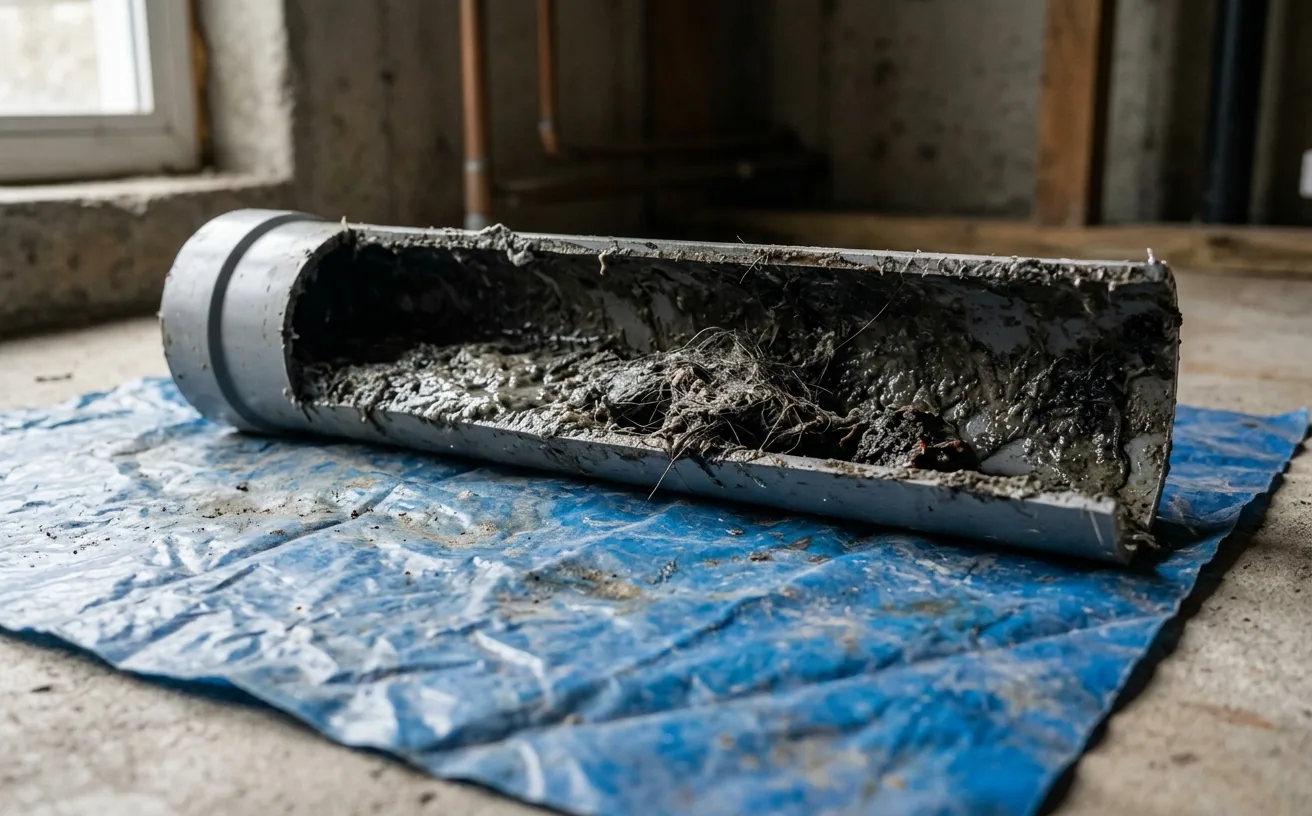
A line that closes on a schedule is usually telling you about a defect, not about your habits. Common causes are a belly in the pipe, a broken section or root intrusion at a joint.
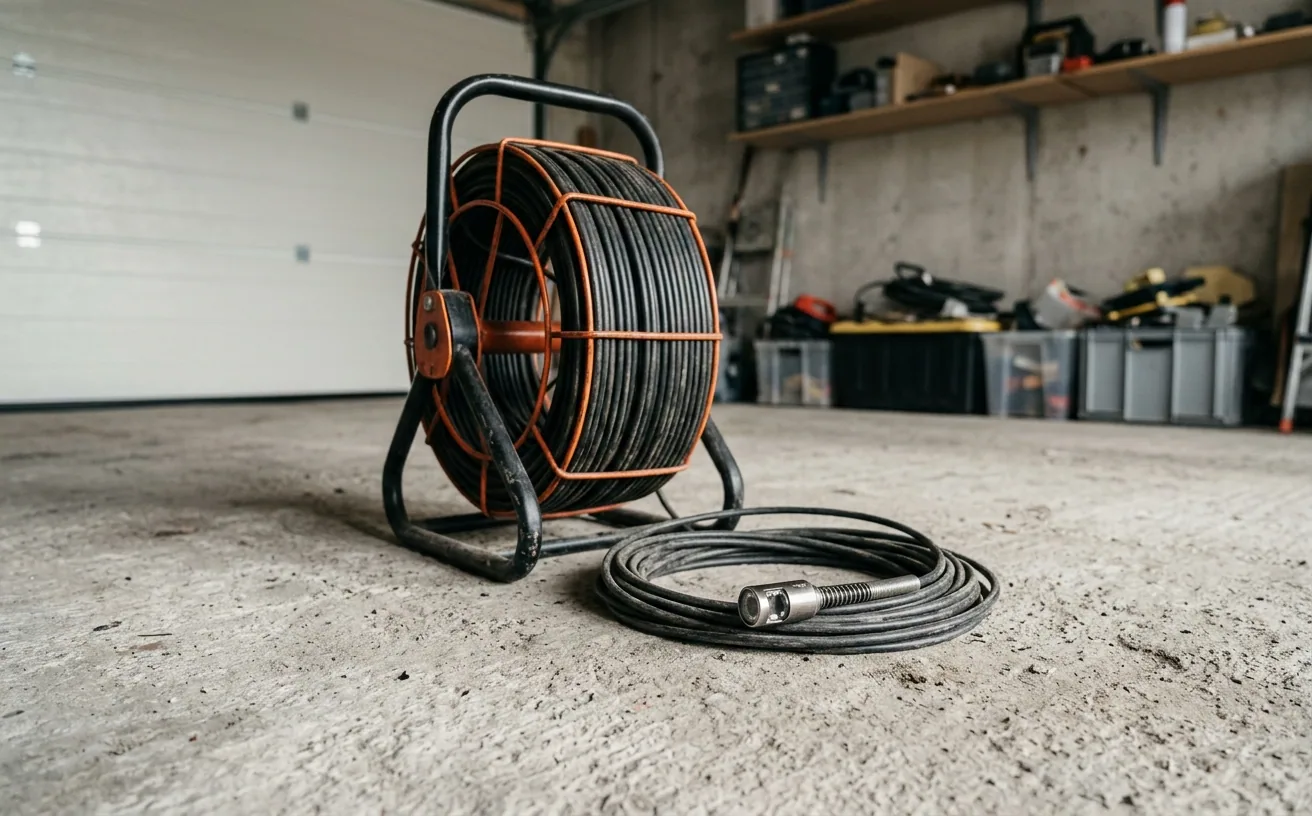
The useful next step is looking inside rather than cabling it a third time. A camera run costs less than repeated visits that keep buying you one more season.
Do I need a permit to have a drain cleared?
No. Clark County Code 22.02.195 lists clearing stoppages among the plumbing work that requires no permit at all.
The same section covers stopping leaks in drain, soil, waste or vent pipe. It also covers removing and reinstalling a toilet, as long as concealed piping is not rearranged.
Will cabling the line damage my old pipe?
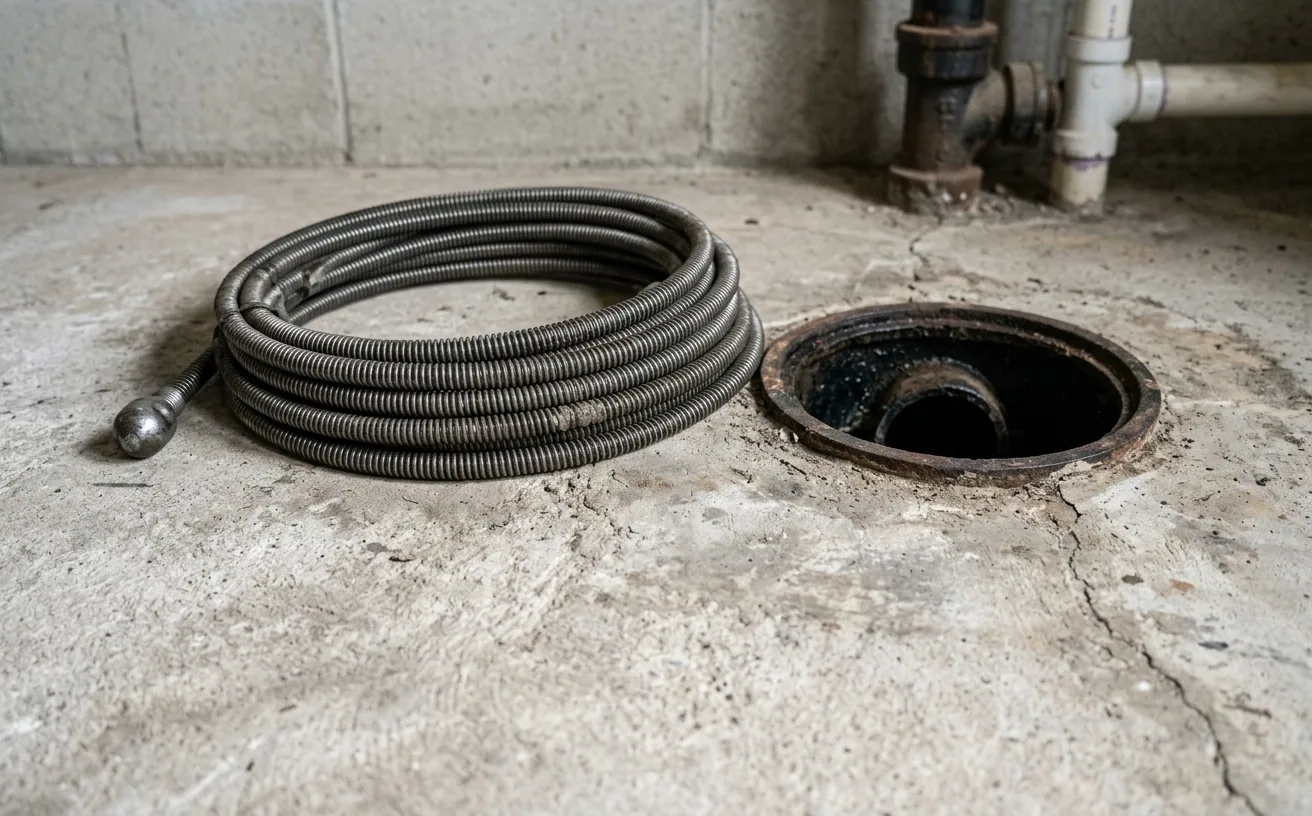
A cable is worked at the speed the pipe can take, and the head is chosen for what is in the line. In sound pipe it cuts buildup off the wall without touching the pipe itself.
In pipe that is already cracked or badly corroded, any tool can find that weakness. That is a reason to look inside an old line first, not a reason to leave it blocked.
The house is only ten years old, so why is anything building up?
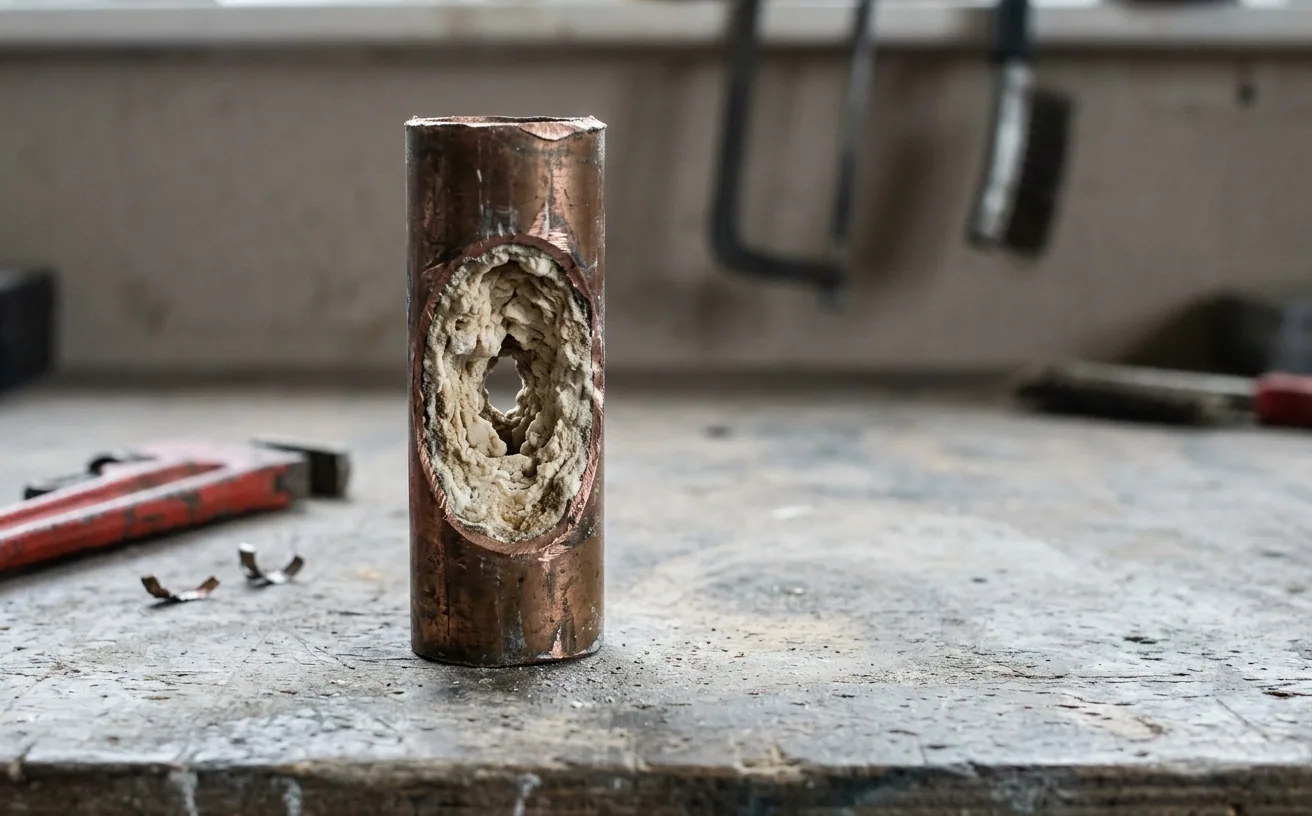
Age of the house matters less than what goes down the drain and what the water leaves behind. Valley water is published at 16 grains per gallon in new construction and old alike.
Kitchen lines in newer homes collect grease the same way. About 47 percent of Clark County homes were built in 2000 or later, and they still get slow kitchen drains.