What operators push back on
We have never had a problem, so why start paying for this now?
Because the failure mode is sudden and expensive. A trap that has never been serviced does not degrade in a way you notice at the pass. It backs up during a busy service.
There is also the record. An inspector asking when the interceptor was last pumped is a much easier conversation when you can hand over dated documentation.
Can my kitchen staff empty the trap themselves?
Handling and disposing of grease waste is a regulated matter. The disposal side is where an informal approach creates a problem rather than solving one.
There is also the practical issue that a partial removal loads back up quickly. Scraping the walls and baffles is the part most often skipped when it is done in house.
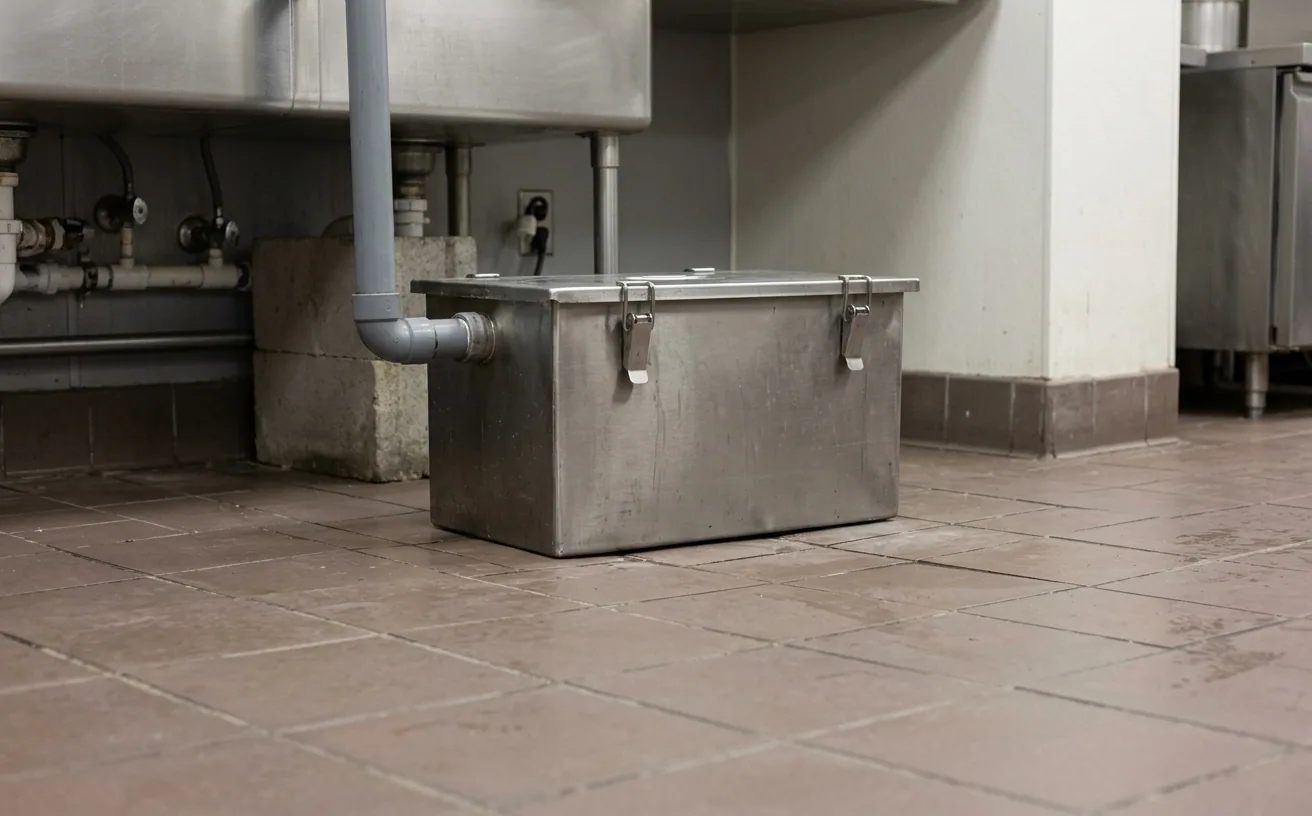
Our trap is under the prep sink, so is that not a problem?
It might be, depending on how and when the space was approved. The Southern Nevada Health District requires the grease trap or interceptor to sit outside the food establishment wherever possible.
The rule is specific about never placing it where food is prepared or where utensils are washed and stored. If yours sits in one of those areas, raise it before a plan review or a remodel makes it unavoidable.
How often does the trap actually need pumping?
It depends on the unit size and how fast your kitchen loads it. That is why a first visit is worth treating as a measurement rather than a routine.
Setting the interval from what came out is more accurate than copying a schedule from another restaurant. A fryer heavy operation and a bakery on the same street can need very different frequencies.
Can this be done during the day while we are open?
Realistically, no. Opening an interceptor near a working kitchen creates odor and a wet work area that has no place around food service.
The work gets scheduled outside service hours, and that window is agreed with you before booking. After hours labor is priced higher across the trade, which is part of the quote you approve.
Do we need a permit for grease trap work in Clark County?
Routine cleaning and pumping are maintenance, and Clark County Code 22.02.195 exempts clearing stoppages and repairing leaks in pipes, valves or fixtures from permitting.
Installing or relocating an interceptor is a different matter and involves plan review. For an unincorporated address, including most of the Strip corridor, the department is Clark County Building and Fire Prevention at 4701 West Russell Road.