Plumbing and water treatment across Clark County. Call (725) 337-3692

Lining and pipe bursting explainedAccess pits instead of a full trenchRuled in or out by camera evidence

Trenchless sewer repair in Las Vegas, and when it will not work

Trenchless methods rebuild a sewer line from the inside, or pull new pipe along the old path using access pits. They are not universal, and the conditions that rule them out are knowable before you spend anything.

  • We say plainly when lining is not possible
  • Published market price ranges, sourced on the page
  • Compared on total cost, not cost per foot
Trenchless Sewer Repair in Las Vegas, Nevada
Illustrative image, not a photo of our work
$90 to $250Published market range per foot for cured in place lining
$1,388 to $5,323Published market range for conventional sewer replacement
22,500 acresSize of Summerlin, a valley community started in 1990
1940s to 1970sEra of Orangeburg pipe, a common candidate for bursting

Figures above are published third party data, not company claims. Sources: HomeAdvisor cost guides, Clark County Comprehensive Planning, InterNACHI.

  • Qualification comes before the quoteA line is either a candidate for lining or it is not, and that answer comes from footage rather than from a preference.
  • Surface disruption is mapped firstWhere the access pits go, and what has to be cut to place them, is agreed before anyone breaks ground.
  • Compared as a total, not per footLining costs more per foot and less in restoration, so the only fair comparison is the finished total of both options.
  • Grade problems are namedA liner follows the pipe it is installed in, so a sagging line does not come out level just because it is relined.
The short answer

Trenchless sewer repair rebuilds a damaged line without excavating its whole length. Cured in place lining forms a new pipe inside the old one, and pipe bursting pulls new pipe through the old path. Published market ranges run $90 to $250 per foot. Call (725) 337-3692 to see whether your line qualifies.

This page covers trenchless sewer repair across the Las Vegas Valley. If you are not sure this is the right service, start from every plumbing service in one place.

Situations where trenchless is worth asking about

Trenchless is chosen for what sits above the pipe far more often than for what is wrong with the pipe. When the line runs under concrete, mature landscape or a structure, the restoration cost of an open trench can exceed the pipe work itself.

That is a common valley situation. Established communities have decades of hardscape over their laterals, and Summerlin alone covers 22,500 acres of development that began in 1990.

  • The sewer runs right under my driveway and I do not want it cut
  • We just finished the backyard and the line goes under the new pavers
  • There is a mature tree directly over the pipe that I want to keep
  • The camera found cracks along the pipe but it has not collapsed
  • My house sits close to the neighbor and there is no room for a trench
  • The lateral runs under a covered patio slab we added years ago
  • I was quoted a full replacement and want to know if lining is possible
Is this you?

If the camera shows a continuous pipe with cracks, root intrusion at joints or general deterioration, lining is worth pricing against an open cut.

It is also worth asking about when the surface above the line is expensive to restore. That is where trenchless recovers its higher per foot cost.

If nobody has run a camera yet, this question cannot be answered. The qualification depends entirely on the condition of the existing pipe.

When this is the wrong page

A collapsed line, a severe offset or a belly that needs re-grading cannot be solved from the inside, and those go to sewer line repair across Clark County.

If the line has not been filmed, get that done first on sewer Camera Inspection in Clark County, NV, because no honest trenchless quote exists without it.

If the pipe is structurally fine and simply full of roots or grease, cleaning may be the entire answer, and that is hydro Jetting in Clark County, NV.

A blocked fixture inside the house has nothing to do with the buried line, and belongs on clogged Drain Repair in the Las Vegas Valley.

The two trenchless methods, and what each one does

People say trenchless as though it is one thing. It is two, they suit different failures, and the difference decides both the price and whether your line qualifies at all.

Cured in place lining and pipe bursting compared
What is includedWhat that means
Cured in place liningA resin saturated liner is pulled or inverted into the existing pipe and cured hard, forming a continuous new pipe inside the old one.
What lining requiresThe host pipe must be continuous and reasonably round, because the liner takes the shape of whatever it is pressed against.
Pipe burstingA bursting head is pulled through the old pipe, breaking it outward into the soil while towing new pipe into the space behind it.
What bursting requiresPits at both ends and soil that will accept the fragments, which makes it the usual choice for Orangeburg and badly failed pipe.
Access pitsBoth methods need an entry and exit point, so some excavation happens even though the length between them stays untouched.
Diameter effectsLining slightly reduces the inside diameter, while bursting can install the same size or larger than the pipe it replaces.
Reinstating connectionsWhere branch lines join the lateral, those connections have to be reopened after lining rather than being left sealed over.
What this work looks like

The parts and conditions behind trenchless sewer repair

Trenchless Sewer Repair in Las Vegas, Nevada
Illustrative image, not a photo of our work
What we commit to

How we intend to handle the comparison

Trenchless is easy to sell badly, because the per foot number sounds alarming and the total often does not.

  • Both options, priced as totalsOpen cut and trenchless are presented as finished prices including restoration, so you compare like with like.
  • A clear no when it is a noWhere the footage shows collapse, severe offset or a belly, we will tell you lining cannot fix it rather than quoting it anyway.
  • Connections accounted for up frontThe number of branch connections that must be reinstated is counted from the footage and included in the scope before you agree.
  • Final footage every timeA camera pass through the completed line, including every reinstated connection, is part of the job rather than an extra.
How it works

How a trenchless job is qualified and installed

Most of the decisions happen before any equipment arrives.

  1. Film the line and judge the host pipe

    You see whether the pipe is continuous, round enough and holding grade. The plumber is looking for collapse, severe offsets and sags, because any of those disqualifies lining.

    Before anything is quoted
  2. Compare the two finished totals

    You get open cut and trenchless priced as complete jobs, including restoration. Trenchless costs more per foot and less in surface repair, so the totals are what matter.

    At the decision point
  3. Plan the pits and the access

    You agree where the entry and exit pits go and what has to be moved or cut to place them. The line is cleaned and filmed again immediately before installation.

    Before any work starts
  4. Install and cure

    You keep water out of the line for the duration. The liner is placed and cured, or new pipe is pulled through the old path, then connections are reinstated.

    Installation day
  5. Film the finished pipe

    You see a final camera pass through the new or lined pipe, including every reinstated branch connection. That footage is the record that the job did what it promised.

    At completion

The price becomes final once the pre-installation camera run confirms the host pipe is a candidate. That inspection rules out the conditions lining cannot handle.

What it costs

What trenchless work costs against an open cut

Trenchless is the only work here quoted per foot, which is exactly what makes the published figures below easy to misread. They are cost guide ranges, not our prices.

Lining is commonly published at $90 to $250 per foot. Conventional replacement is commonly priced at $60 to $250 per foot, with a national average near $3,319. Comparing only those numbers is misleading, because they cover different amounts of surface repair.

How the estimate works

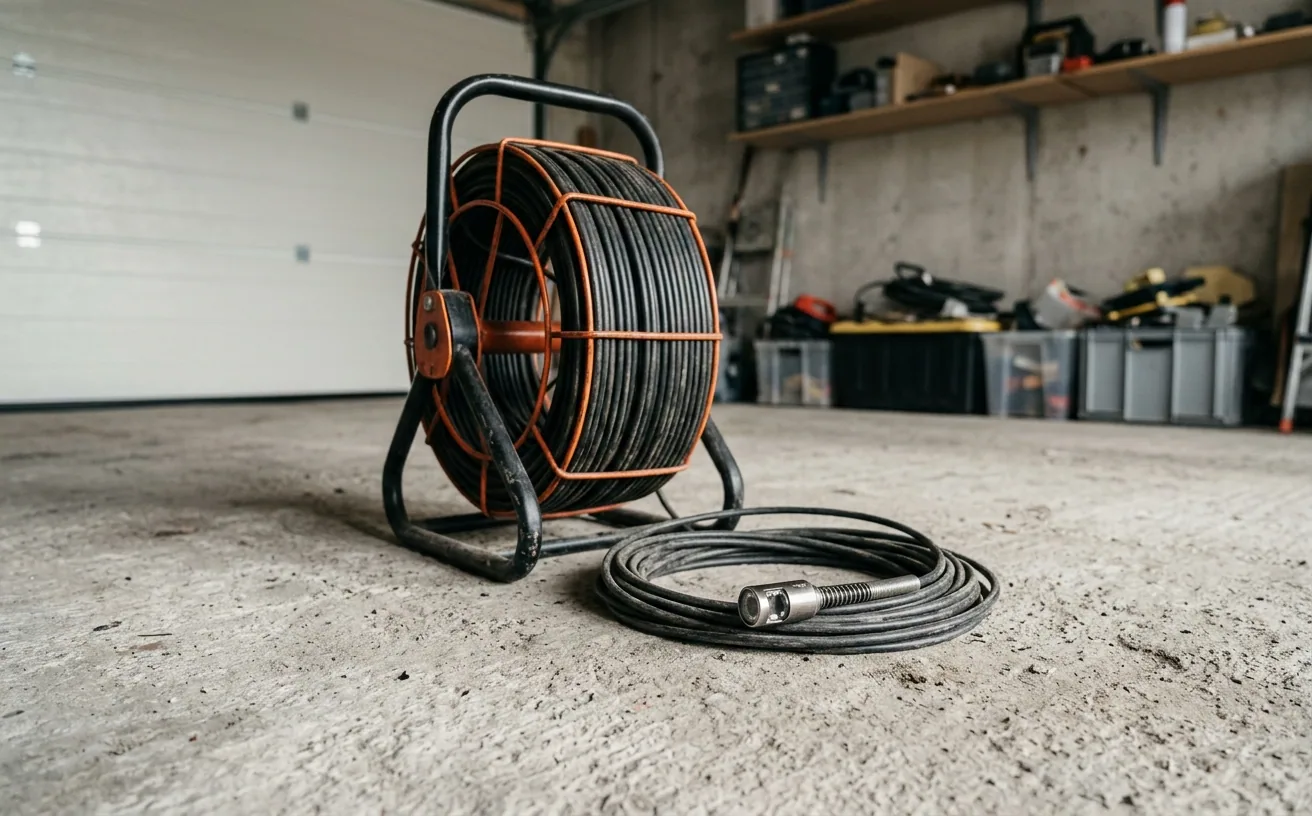
A trenchless estimate requires a camera run first, then a locate. The inspection establishes whether the host pipe qualifies. The locate establishes depth, path and what sits above the line where the pits are needed.

From that, both options can be priced as finished totals including restoration. The number is agreed before work starts, and the pre-installation camera pass is the last checkpoint where the method can still change.

Published market ranges for trenchless and conventional sewer work
JobTypical Las Vegas rangeWhat moves the number
Trenchless pipe lining, CIPP$90 to $250 per footAn option when the pipe has not collapsed. It costs more per foot and less in restoration, so the comparison is total, not per foot.
Sewer line replacement$1,388 to $5,323National average about $3,319, commonly priced at $60 to $250 per linear foot.
Sewer line spot repair$600 to $1,050One broken or cracked section, dug and replaced.
Sewer camera inspection$100 to $500That is the range when it is run as part of diagnosing a sewer problem. A standalone full survey runs higher.

Every figure in this table is a published Las Vegas or national market range from the source named beside it. It is not a quote and it is not this company's price list. Your number comes from the on site estimate. Sources: <a href="https://www.homeadvisor.com/cost/plumbing/" rel="nofollow noopener" target="_blank">HomeAdvisor cost guides, 2026</a>.

What changes your number

  • Surface type above the line drives the comparison, and a concrete driveway or mature hardscape is where trenchless recovers its higher per foot price.
  • Length is priced directly per foot, so a long lateral to a street main scales the lining cost in a straight line.
  • The number of branch connections adds work, because each one has to be reinstated after a liner cures over it.
  • Access pit locations affect cost, since a pit landing in a planter is cheap and one landing in a slab is not.
  • Bends and offsets slow installation, and a line with several tight turns may need sectional work rather than one continuous liner.
  • Depth still matters even in trenchless work, because the pits themselves get deeper and wider as the line runs further down.
Repair against replace

Lining a serviceable pipe costs more per foot than digging it up, and usually less in total once restoration is included.

Service call and diagnostic fee

The camera inspection that qualifies a line for trenchless is published at $100 to $500 as part of diagnosis. A standalone survey costs more. A general service call sits at about $75 to $150 per the Housecall Pro 2026 Plumbing Price Guide.

Whether the qualifying inspection is credited toward a lining job is not a policy this page will state unverified. Both numbers, the inspection and the install, are agreed with you on the phone.

Ranges last reviewed September 2026.

What the job looks like

Why the valley asks about trenchless so often

Two local conditions push this conversation. The first is what sits on top of the pipe in established communities. Decades of concrete, pavers and irrigation accumulate over the lateral path.

The second is what sits under it. Caliche, a hard calcium carbonate layer beneath the desert soil, is about as hard as concrete. It is why valley excavation runs slower and costlier than the same trench would elsewhere.

Hardscape over the lateral path. Trenchless Sewer Repair in Las Vegas
Illustrative image, not a photo of our work

Hardscape over the lateral path

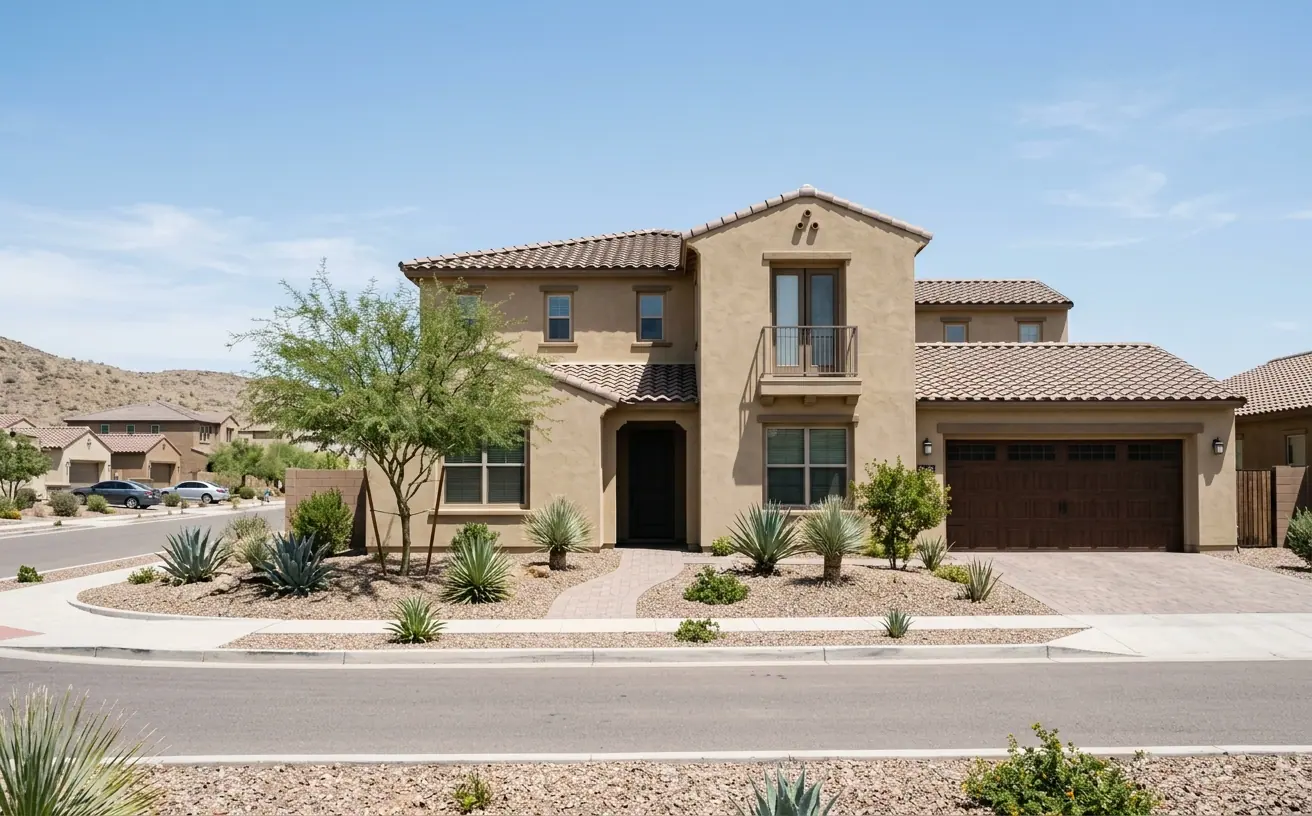
Valley homes commonly have the sewer running under a driveway, a walkway or a paved side yard. Cutting and replacing those surfaces can cost as much as the pipe work. Trenchless keeps that surface intact between the two access pits.

Diameter is part of the decision. Trenchless Sewer Repair in Las Vegas
Illustrative image, not a photo of our work

Diameter is part of the decision

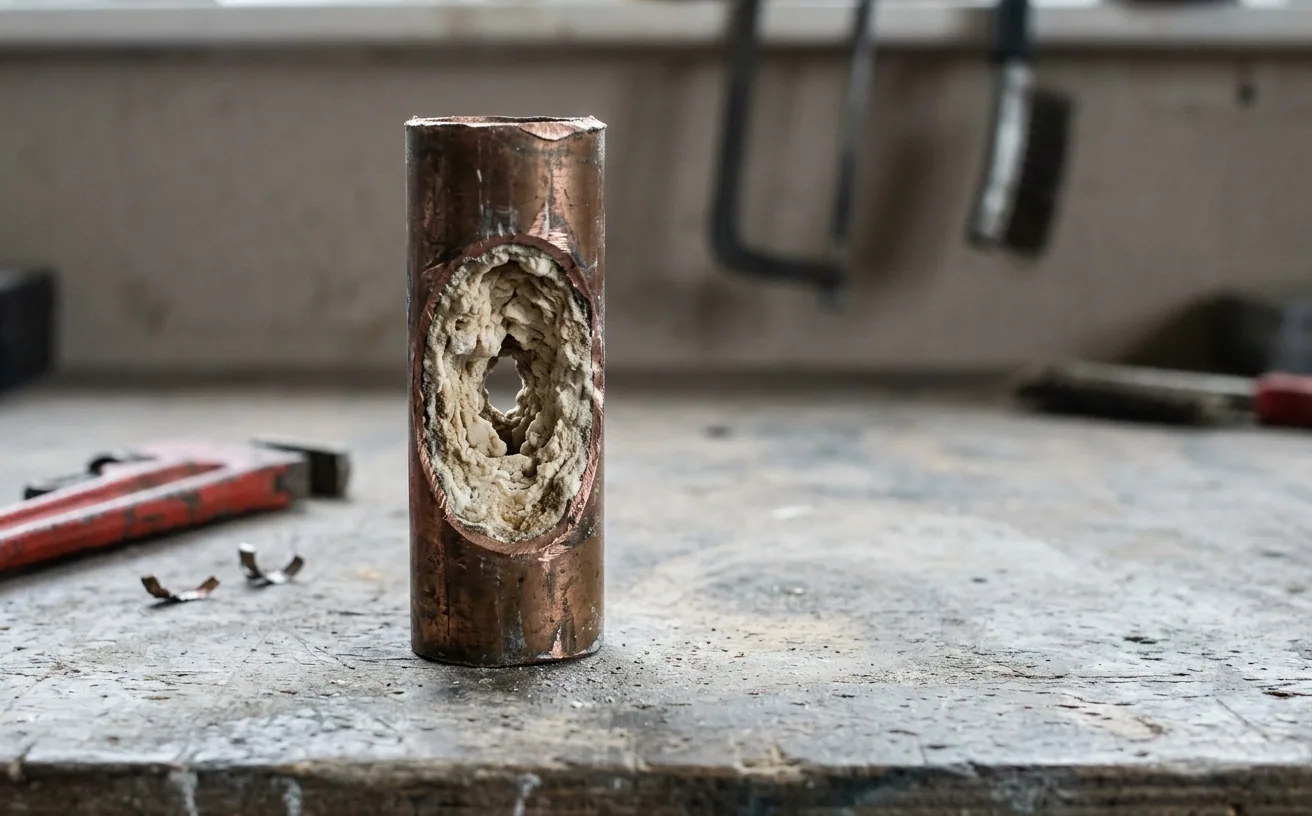
A cured liner forms a new wall inside the old pipe, which slightly reduces the inside diameter. On a line already narrowed by heavy scale, that loss matters and needs to be weighed. Pipe bursting avoids the issue because it installs full size or larger.

Photography note

The stucco home and the scaled pipe section above illustrate hardscape and diameter, the two things that decide this choice. Neither shows a lining job carried out through this site.

Where the trenchless pitch deserves pushback

Trenchless sounds expensive per foot compared to digging.

Per foot it usually is, at a published $90 to $250 against $60 to $250 for conventional replacement. That comparison leaves out the part that actually varies.

The honest number is the finished total with restoration included. Where the line runs under lawn and nothing else, digging often wins. Where it runs under a driveway, lining often wins by a wide margin.

Is a liner as good as a new pipe?

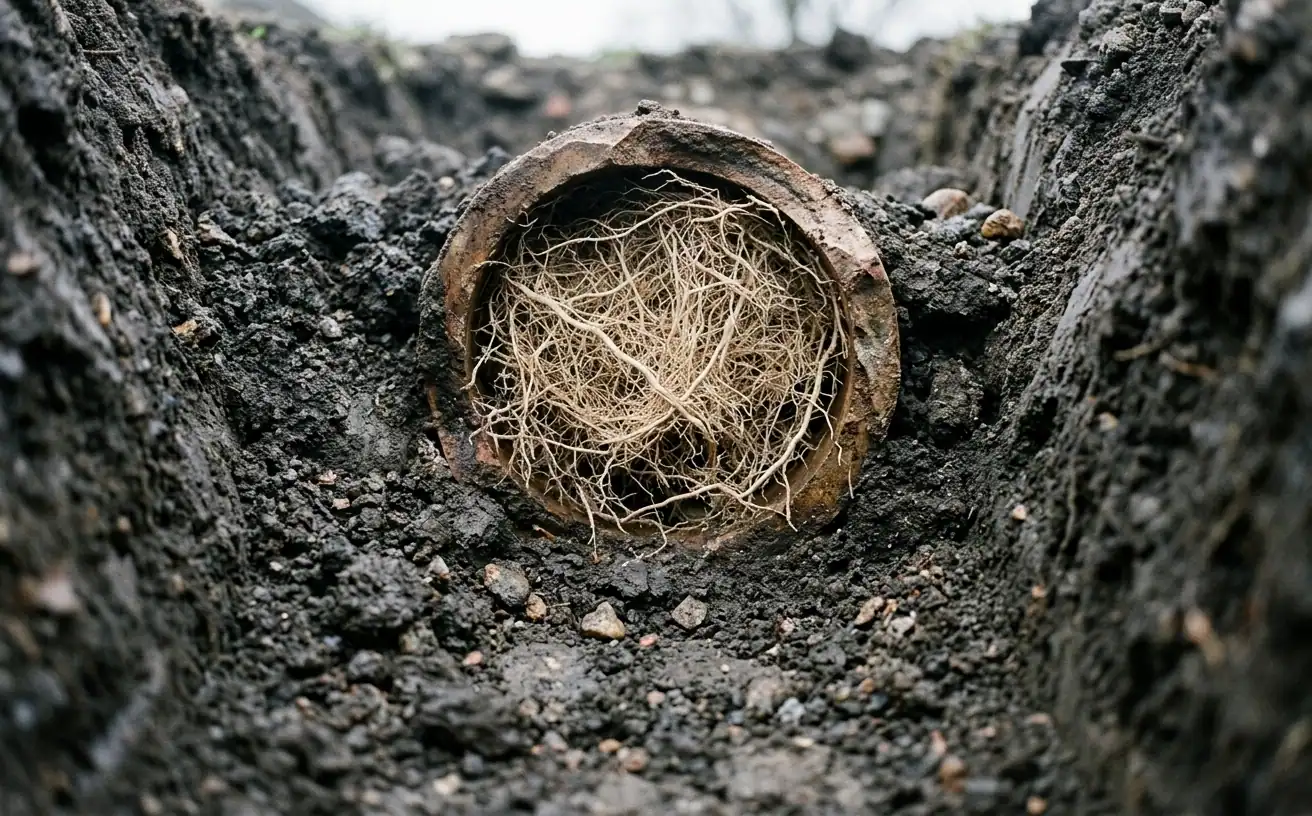
A cured liner forms a continuous, jointless pipe inside the old one, and jointless matters because roots enter at joints. In that specific sense it removes the most common failure path.

What it does not do is change the geometry. If the host pipe sags, the liner sags with it, and any grade problem you had before the work will still be there afterward.

My contractor says my line cannot be lined. Is that a sales tactic?

It might be correct, and the way to find out is to look at the footage yourself. The disqualifying conditions are visible: a collapsed section, a joint offset far enough that the liner cannot pass, or standing water showing a belly.

If the footage does not show any of those, ask for the specific reason. A clear answer names the defect and the footage distance where it appears.

Will you still have to dig in my yard?

Yes, at the access points. Both lining and bursting need an entry pit and usually an exit pit, so there is real excavation at each end of the run.

The saving is everything between them. On a long lateral under hardscape, that means two contained holes instead of a trench across the whole property.

How long does the lined pipe last?

Manufacturers publish long design lives for cured in place products. We are not going to repeat a number we cannot source to your specific installation.

What can be said plainly is that the liner removes the joints where roots enter. A lined pipe still depends on the grade and bedding of the host pipe around it.

Do I need a permit for trenchless work in Clark County?

It depends on the jurisdiction and on whether the work counts as replacing concealed piping rather than repairing a leak. County Code 22.02.195 exempts specific repairs and does not exempt everything.

For an unincorporated address the department is Clark County Building and Fire Prevention at 4701 West Russell Road. Henderson, North Las Vegas, Boulder City and the City of Las Vegas each run their own.
Where we do this work

Trenchless Sewer Repair across Clark County

We cover trenchless sewer repair in every part of the valley listed below. Each area page names the office that issues the plumbing permit there and who owns the sewer line at the curb, because both genuinely differ from one city to the next.

The fastest way in

Ask about trenchless sewer repair

Say it is about this when you call and you skip the sorting.

Reach Clark County Plumber

Service area
Clark County, Nevada, including Las Vegas, Henderson, North Las Vegas, Summerlin, Paradise, Spring Valley, Enterprise and Boulder City

We are a service area business. We come to you, so there is no counter to visit and no street address on this page. The number above is the fastest way in.

What to have ready

About a minute of detail changes what we can tell you on the call.

  • The address and ZIP code, so we know which end of the valley you are on.
  • What the symptom is, in your own words. "Water under the sink" beats a diagnosis.
  • When it started, and anything already tried.
  • On a water heater: gas or electric, and roughly how old it is.
  • You get the diagnostic fee as a figure on the phone, before anyone is sent.
  • Scope and price are agreed together, before any work starts.
  • Water moving right now? Shut the main off first, then call and say so.

Questions about this service

What is trenchless sewer repair?

Trenchless sewer repair rebuilds or replaces a buried line without excavating its entire length. The two main methods are cured in place lining and pipe bursting. Lining forms a new pipe inside the existing one. Bursting fractures the old pipe outward while pulling new pipe into its place.

Both use access pits at each end rather than a continuous trench. That is the whole point: the surface between the pits, whether driveway, patio or landscape, stays where it is.

When is trenchless sewer repair not an option?

Lining is ruled out when the host pipe has collapsed, or when a joint is offset far enough that the liner cannot pass. It is also ruled out when a belly means the line has lost its fall. A liner follows the shape it is installed into, so it cannot correct grade.

Pipe bursting handles worse conditions but needs soil that will accept the fragments and enough clearance from nearby utilities. Both need viable pit locations at each end of the run.

Does lining a sewer pipe make it smaller?

Yes, slightly. The cured liner forms a wall inside the existing pipe, so the finished inside diameter is a little smaller than the host pipe. In most residential laterals this reduction is minor and the smooth new surface improves flow characteristics.

It becomes a real consideration on a line already narrowed by heavy scale or on an undersized lateral. In those cases pipe bursting, which can install the same size or larger, is the better fit.

How long does a trenchless sewer repair take?

A typical residential lining job runs one to two days on site. That covers cleaning the host pipe, installing and curing the liner, and reinstating the branch connections. Pipe bursting is often a single day once the access pits are open.

Preparation adds to that. Camera work, locating, permit handling where required and pit excavation happen before installation day, and valley caliche can slow the pit digging.

Can tree roots grow back into a lined sewer pipe?

Roots enter a sewer line through joints and cracks, and a cured liner has neither. That removes the usual entry path along the lined section. It is why lining is a common answer to repeat root problems in older valley neighborhoods.

The risk moves to the ends. Connections that were reinstated and the transition points where the lining stops are the places to check on a follow up camera run.

Is trenchless cheaper than digging up the sewer line?

Sometimes, and it depends almost entirely on what covers the pipe. Published ranges put lining at $90 to $250 per foot. Conventional replacement is published at $60 to $250 per foot, so the pipe work alone is usually more expensive up front.

Restoration flips the comparison. When a trench would cross a concrete driveway, a paved patio or established landscape, the surface repair adds up quickly. That added cost frequently exceeds the difference in the pipe work.

What happens to the branch connections when a line is lined?

The liner covers them as it cures, so each one has to be reopened afterward. On a residential lateral that is usually done with a remote cutter guided by camera. Flow through each reopened connection is then confirmed on camera before the job is signed off.

Counting the connections from the footage before the job matters. Missing one is exactly the kind of error a final camera pass through the finished line is meant to catch.

Talk to someone about trenchless sewer repair

Describe what is happening and we will tell you what it usually takes to fix.