Plumbing and water treatment across Clark County. Call (725) 337-3692

Diagnosis, not a repair saleFootage you keep and can show anyoneLocating and depth from the surface

Sewer camera inspection in Las Vegas, and what the footage shows

A sewer camera turns a guess into a picture of the inside of your line. The recording it makes is the only honest basis for pricing a repair.

  • You watch the screen while it runs
  • Published market price ranges, sourced on the page
  • We name what the camera cannot tell you
Sewer Camera Inspection in Las Vegas, Nevada
Illustrative image, not a photo of our work
$100 to $500Published market range for a diagnostic camera inspection
1995Median year a home inside the City of Las Vegas was built
975,834Housing units in Clark County
1940s to 1970sEra when Orangeburg sewer pipe was installed

Figures above are published third party data, not company claims. Sources: HomeAdvisor cost guides, US Census ACS, Las Vegas, US Census ACS, Clark County, InterNACHI.

  • You see it as it happensThe screen faces you during the run, so nothing is described to you that you did not watch go by.
  • The footage is yoursA recording of the inspection belongs to the person who paid for it and can be shown to any other contractor.
  • Limits get statedA camera cannot measure wall thickness or see through a line running full of water, and both limits are said out loud.
  • Position and depth, not just picturesA transmitter in the camera head lets the line be traced from the surface, which is what makes a repair quotable.
The short answer

A sewer camera inspection sends a small waterproof camera through your drain line on a flexible reel. The inside of the pipe can then be seen and recorded. It identifies roots, cracks, sags, offsets and pipe material. Published market ranges run $100 to $500 as part of diagnosis. Call (725) 337-3692.

This page covers sewer camera inspection across the Las Vegas Valley. If you are not sure this is the right service, start from plumbing services across Clark County.

Reasons to look inside the line

An inspection is not something you buy because a drain was slow once. It earns its cost when a decision depends on what is inside the pipe, and when guessing at that would cost far more than looking.

Clark County has about 975,834 housing units spanning every construction era from the 1940s to this year. What is buried under a given property genuinely varies, and the camera is how you stop assuming.

  • I am buying a house built in the seventies and want to know about the sewer
  • The main line has backed up twice and nobody can tell me why
  • A plumber quoted me thousands to replace the line and I want a second look
  • My neighbor had roots in their line and we have the same trees
  • I am adding a bathroom and need to know what the existing line can handle
  • Something smells in the yard but nothing has actually backed up yet
  • The last plumber said the line is fine but it blocked again a month later
Is this you?

If you are about to spend real money based on somebody's opinion of a buried pipe, look at it first. That applies to a repair quote and to a home purchase equally.

It is also the right call when a line has failed more than once. Repeat failures have a physical cause, and that cause is visible on a screen.

It is not necessary for a single blocked fixture that cleared normally and has behaved since.

When this is the wrong page

If water is actively backing up right now, the priority is clearing it rather than filming it. Start with clogged drains across Clark County and inspect afterward.

If footage already exists and shows a broken or collapsed pipe, the next step is the repair itself on sewer Line Repair and Replacement in Las Vegas.

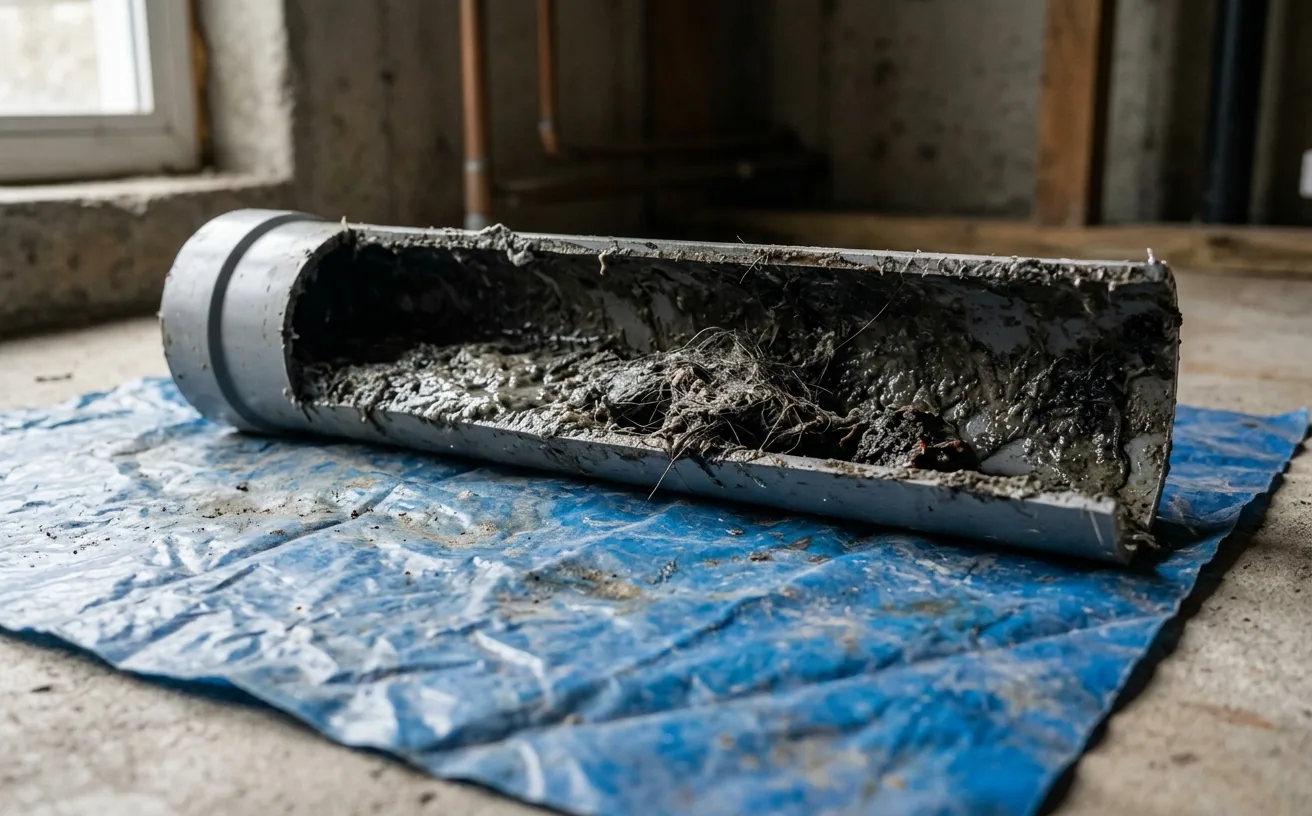
If the footage shows a line that is continuous but coated or root filled, the conversation is about cleaning methods on hydro Jetting in the Las Vegas Valley.

Finding a hidden water leak on the supply side needs different equipment entirely, which is covered on leak Detection in Las Vegas.

What the camera can show, and what it cannot

Being specific about the limits is what makes the findings trustworthy. A camera is an excellent eye and a poor engineer, so it answers some questions completely and others only partially.

Capabilities and limits of a push camera inspection
What is includedWhat that means
Pipe materialThe camera usually identifies clay, cast iron, plastic or Orangeburg on sight, which immediately narrows the likely failure mode.
Root intrusionRoots are visible at the point they enter, which shows both how much mass is inside and which joint gave way.
Cracks and offsetsFractures along the pipe and joints that have shifted out of line are visible, and both explain repeat blockages.
Standing water and sagsWater sitting in a low spot with no flow indicates a belly, which is a grade problem rather than a blockage.
Position and depthA transmitter in the head is tracked from the surface, so the defect can be marked on the ground with a depth reading.
Wall thickness, not shownA camera sees the inside surface only, so a pipe corroded thin from the outside can still look acceptable on screen.
Beyond a full line, not shownA line running full of water hides everything below the surface, so clearing is sometimes required before a useful inspection is possible.
What this work looks like

The parts and conditions behind sewer camera inspection

Sewer Camera Inspection in Las Vegas, Nevada
Illustrative image, not a photo of our work
What we commit to

What you get to keep

An inspection is an information product, so these commitments are about who owns the information.

  • The recording goes to youFootage from an inspection you paid for is provided to you and can be shown to any other contractor for a second opinion.
  • You watch it liveThe monitor is positioned so you can see the run as it happens rather than being told about it afterward.
  • Findings are described, not diagnosed awayWhat is on the screen is stated as what it is, including when the footage is inconclusive and a second access point is needed.
  • No repair pressure attachedAn inspection is a complete service on its own, and you are free to take the footage and hire anyone to do the work.
How it works

How an inspection runs from start to finish

It is a short visit with a clear deliverable, and you should leave holding the evidence.

  1. Say what decision you are making

    You explain whether this is for a purchase, a second opinion or a repeat backup. That shapes how far the camera needs to travel and what the report has to cover.

    On the phone
  2. Find and open the access point

    You point out any cleanout you know about, often near the house or in the side yard. The plumber uses that access rather than pulling a toilet where possible, which keeps the visit simple.

    First minutes on site
  3. Run the camera and watch together

    You stand where you can see the monitor while the reel is fed down the line. The plumber narrates what is passing, stops at anything notable and marks the footage distance.

    During the inspection
  4. Locate anything found

    You get the defect marked on the surface with a depth, using the transmitter in the camera head. That mark is what any future excavation quote will be built from.

    Immediately after the run
  5. Take the footage and the findings

    You receive the recording and a plain description of what was seen. Nobody should be asked to approve a repair based on a verbal summary of a video they never saw.

    Before the visit ends

The inspection price is set before the camera goes in. If the line has to be cleared before it can be filmed, that is a separate number you approve separately.

What it costs

What a sewer camera inspection costs here

An inspection is bounded work, which is why its published range is narrower than anything else on this site. The figures come from the cost guides named beside them, not from a rate card here.

Two different products get called the same thing. A camera run as part of diagnosing an active problem sits at the lower end. A standalone survey with a full written report and recorded footage runs higher.

How the estimate works

Pricing an inspection is simpler than pricing a repair, because the work is bounded. What varies is the access. An existing cleanout at grade is straightforward, while a line without one may require pulling a toilet or using a roof vent.

You are told the figure before anyone opens anything, and it is agreed before the camera reel is unpacked. If the line cannot be filmed until it is cleared, the work pauses so you can decide whether to continue.

Published market ranges for inspection and the work it typically informs
JobTypical Las Vegas rangeWhat moves the number
Sewer camera inspection$100 to $500That is the range when it is run as part of diagnosing a sewer problem. A standalone full survey runs higher.
Drain cleaning$147 to $352National average about $246. A main sewer line clog runs higher, about $100 to $800, and Las Vegas contractors commonly publish $250 to $500 for a main line.
Sewer line spot repair$600 to $1,050One broken or cracked section, dug and replaced.
Trenchless pipe lining, CIPP$90 to $250 per footAn option when the pipe has not collapsed. It costs more per foot and less in restoration, so the comparison is total, not per foot.

Every figure in this table is a published Las Vegas or national market range from the source named beside it. It is not a quote and it is not this company's price list. Your number comes from the on site estimate. Sources: <a href="https://www.homeadvisor.com/cost/plumbing/" rel="nofollow noopener" target="_blank">HomeAdvisor cost guides, 2026</a>.

What changes your number

  • Access is the main variable, and a property with no cleanout may need a fixture pulled before the camera can enter the line.
  • Length of the run affects time, since a long lateral to a street main takes longer to film and to review than a short one.
  • A line holding standing water may need clearing first, because a camera cannot see through a pipe that is running full.
  • A written report with recorded footage and still images for a real estate transaction costs more than a verbal diagnostic run.
  • Locating and marking the defect with a depth reading adds time on site and is what makes the findings usable for a repair quote.
Repair against replace

An inspection in the low hundreds either rules out a repair entirely or turns a several thousand dollar excavation into a targeted spot repair.

Service call and diagnostic fee

Where an inspection is bundled into diagnosing an active backup, the published market range is $100 to $500. The general trade service call fee runs about $75 to $150. The wider range published in that same guide is roughly $50 to $200.

Crediting an inspection fee toward a resulting repair varies across the trade, and nothing is claimed here without verification. What the inspection itself costs is settled when you call.

Ranges last reviewed September 2026.

What the job looks like

What inspections typically find in this valley

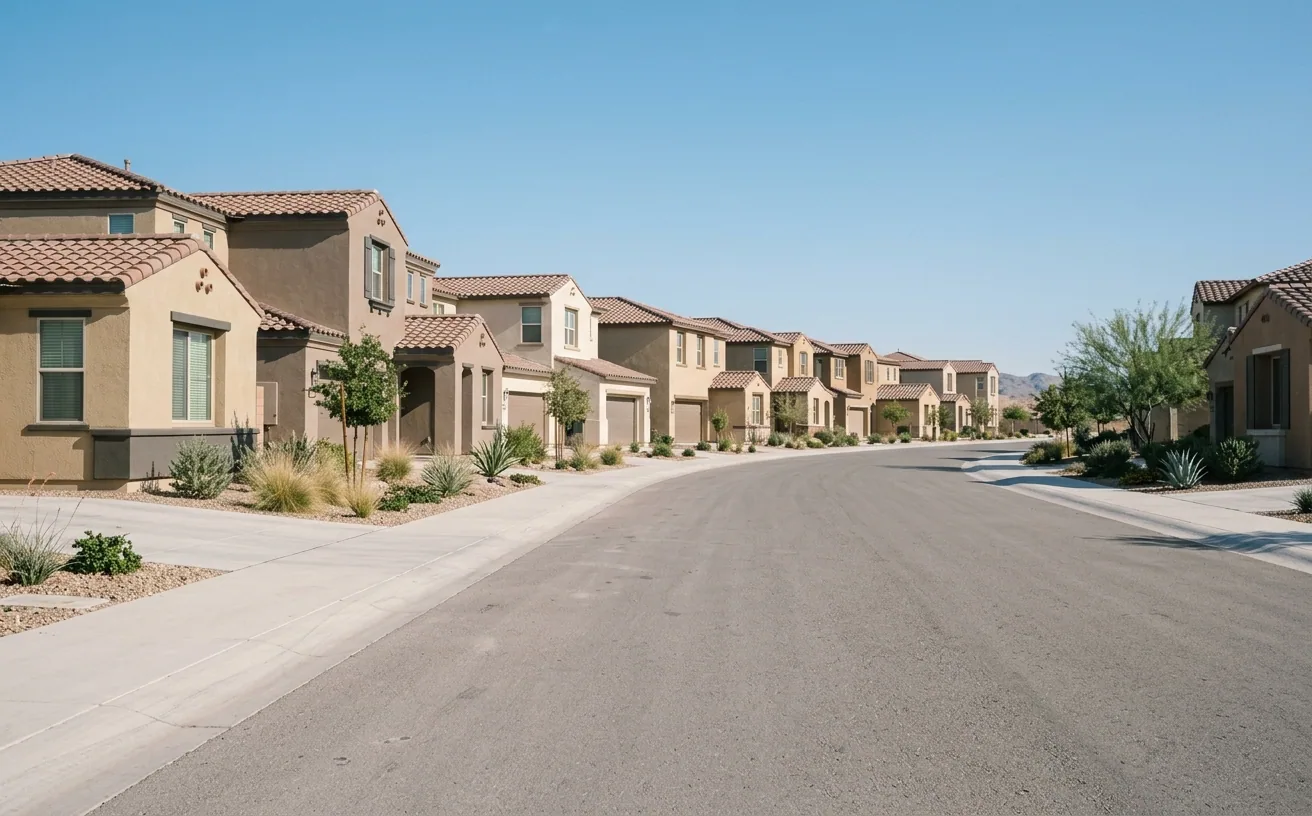
The median home inside the City of Las Vegas was built in 1995, so valley laterals split into two rough populations. Newer plastic lines fail for installation reasons, and older lines fail for material reasons.

Knowing which population a property belongs to before the camera goes in helps set expectations, and the footage then confirms or corrects that guess.

Newer tract homes, installation faults. Sewer Camera Inspection in Las Vegas
Illustrative image, not a photo of our work

Newer tract homes, installation faults

Plastic laterals in homes built since 2000 rarely corrode, but they do settle. A camera in these properties tends to find bellies where the trench was poorly compacted, joints slightly offset, or construction debris left in the line. The pipe material is fine and the grade is not.

Older properties, material failure. Sewer Camera Inspection in Las Vegas
Illustrative image, not a photo of our work

Older properties, material failure

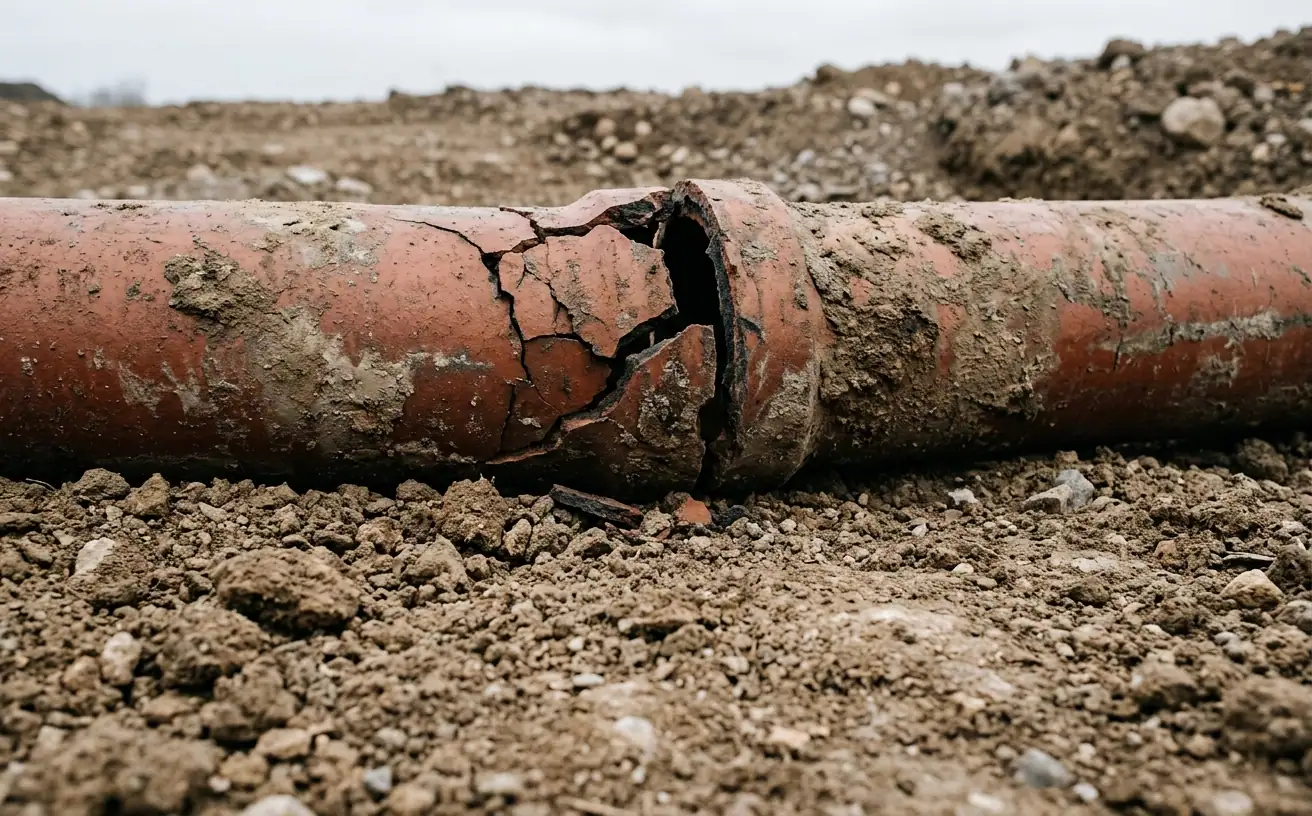
In homes from the 1970s and earlier the camera often meets clay, cast iron or Orangeburg. Clay cracks and shifts at its joints, cast iron scales heavily inside, and Orangeburg deforms as its pitch binder dries. Each has a recognizable signature on screen.

Photography note

The tract home and the cracked clay section above illustrate the two populations of lateral a camera meets in this valley. Neither is a frame from an inspection run for this site.

What people want to be sure about first

Is this just a way to sell me a bigger repair?

It can be, in the sense that an inspection with no footage handed over is an opinion dressed up as evidence. That is exactly why the recording should leave with you.

Footage you hold can be reviewed by anyone. If two contractors look at the same video and disagree, you learn something useful either way.

Can you inspect the line if there is no cleanout?

Usually, though it costs more and is more disruptive. The alternatives are pulling a toilet to enter through the flange, or going in through a roof vent where the layout allows.

If you are having other work done anyway, installing a proper cleanout is worth considering. It makes every future inspection and clearing faster and cheaper.

The seller says the sewer was inspected last year.

Ask for the footage and the date, not the conclusion. An inspection is only as good as the file behind it. A year is long enough for roots to return or for a belly to deepen.

If no recording exists, you have a claim rather than a record. On a property built before 1980, which describes roughly 16.7 percent of county housing, that distinction is worth the cost of your own run.

Will the camera tell you exactly how much a repair will cost?

It gives the two facts a quote is built from: where the defect is, and how deep the line runs at that point. Without those, any excavation price is guesswork.

What it does not decide is what sits on top of the line, whether caliche will slow the dig, or how much restoration you want. Those are settled on the surface after the footage.

Can a camera see a leak in the sewer line?

It can see the opening that a leak is coming from, such as a crack, a separated joint or a hole. It cannot see water escaping into soil from outside the pipe.

For clean water leaking from supply piping, a camera is the wrong instrument altogether. That work uses acoustic and pressure methods instead.
Where we do this work

Sewer Camera Inspection across Clark County

We cover sewer camera inspection in every part of the valley listed below. Each area page names the office that issues the plumbing permit there and who owns the sewer line at the curb, because both genuinely differ from one city to the next.

The fastest way in

Ask about sewer camera inspection

Say it is about this when you call and you skip the sorting.

Reach Clark County Plumber

Service area
Clark County, Nevada, including Las Vegas, Henderson, North Las Vegas, Summerlin, Paradise, Spring Valley, Enterprise and Boulder City

We are a service area business. We come to you, so there is no counter to visit and no street address on this page. The number above is the fastest way in.

What to have ready

About a minute of detail changes what we can tell you on the call.

  • The address and ZIP code, so we know which end of the valley you are on.
  • What the symptom is, in your own words. "Water under the sink" beats a diagnosis.
  • When it started, and anything already tried.
  • On a water heater: gas or electric, and roughly how old it is.
  • You get the diagnostic fee as a figure on the phone, before anyone is sent.
  • Scope and price are agreed together, before any work starts.
  • Water moving right now? Shut the main off first, then call and say so.

Questions about this service

How does a sewer camera inspection work?

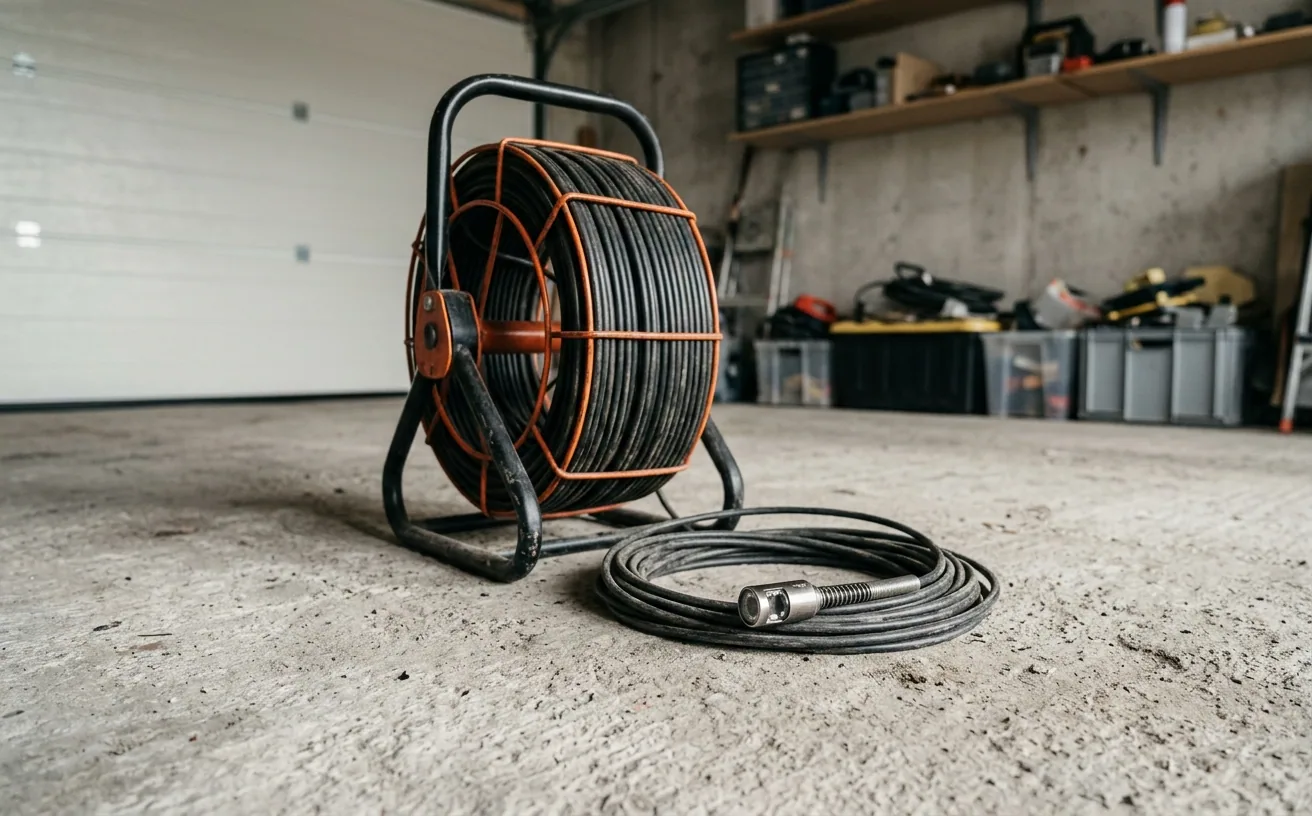
A waterproof camera head on a flexible push rod is fed into the drain line through a cleanout. The head carries its own light and sends live video to a monitor, while a counter tracks how many feet of rod have gone in. The operator watches, stops at anything notable and records the run.

Most heads are self leveling, so the picture stays the right way up as the camera rolls. A transmitter inside the head lets the position be traced from the surface with a separate locator.

Should I get a sewer inspection before buying a house in Las Vegas?

It is worth strong consideration on any older property, and the age band matters more than the neighborhood. A standard home inspection does not include the buried lateral. The most expensive plumbing component on the property is normally the one nobody looks at.

The median City of Las Vegas home was built in 1995, and about 16.7 percent of county homes predate 1980. On a house from that older group, the inspection cost is small against what a lateral replacement runs.

How long does a sewer camera inspection take?

Most residential inspections take thirty to sixty minutes on site, start to finish. Setting up, opening the cleanout and running the camera to the street main is the bulk of it. Locating a defect from the surface adds a little more time.

It takes longer when there is no cleanout, or when the line has to be cleared before filming. Several branches inside the house each needing their own run also add time.

What does a belly look like on camera footage?

It looks like the camera driving into standing water that does not drain away. The picture often goes dark or murky as the head submerges. Debris frequently sits in the low point, and the water level stays constant rather than falling after the fixtures stop running.

Distinguishing a belly from a blockage matters because they need different fixes. A blockage clears and the water leaves, while a belly stays wet no matter how well the line is cleaned.

Can a camera inspection tell what my pipe is made of?

Usually yes, by appearance. Clay has distinct bell joints roughly every few feet, and cast iron shows a rough scaled interior. Plastic looks smooth with glued or gasketed joints. Orangeburg tends to look deformed or oval where it has lost its shape.

Identifying the material is often the most valuable minute of the run. Orangeburg pipe, installed from the 1940s to the 1970s, effectively sets the repair plan on its own once it appears on screen.

Do I get a copy of the video?

You should, and you should ask before booking if it is not offered. The footage is the substance of what you paid for. Holding it lets you get a second opinion without paying for a second inspection. Ask for it when you book.

A useful record includes the video, the footage distances where defects appear, still images of each defect, and the surface location with a depth reading.

How much of my sewer line can the camera actually reach?

A push camera commonly reaches well past the property line to the city main. How far depends on the reel length, the pipe diameter and how many bends the line takes. Tight turns and offsets are the usual reason a run stops short.

If the camera stops early, that is itself a finding. A head that will not pass a particular point often means an offset joint, a collapsed section or a foreign object sitting in the line.

Talk to someone about sewer camera inspection

Describe what is happening and we will tell you what it usually takes to fix.