City of Las Vegas permitsWater at 16 grains per gallonMedian city home built 1995
Plumbing help for Las Vegas homes, from Huntridge to the northwest
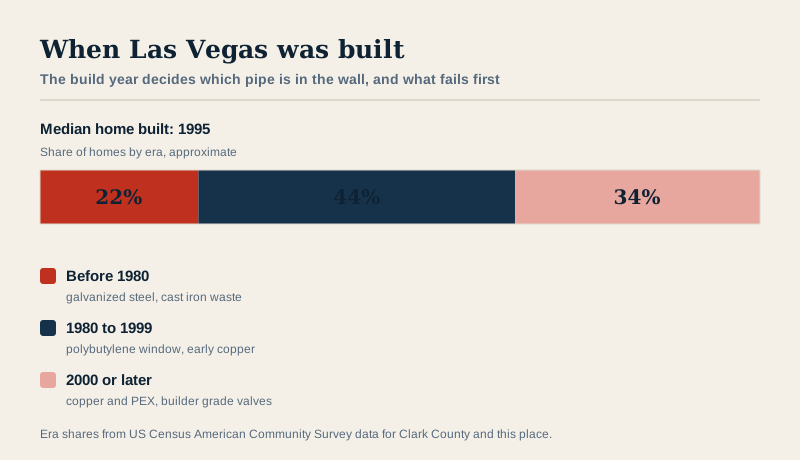
The median City of Las Vegas home was built in 1995, and about 22 percent of city housing predates 1980. The tap water reaches all of it at 16 grains per gallon.
City permits, not county permitsInside the city limits the plumbing permit comes from City of Las Vegas Building and Safety at 495 S. Main St.
Eighteen city ZIP codesThe City of Las Vegas covers eighteen ZIP codes, from the 89101 core out to 89166 on the far northwest edge.
The same hard water everywhereEvery city address gets the same 280 parts per million water, which is 16 grains per gallon on a softener dial.
No branch office in the cityNo street address, no opening hours and no directions appear on this page, because the work happens at your address rather than at a counter.
Plumbing in Las Vegas
Las Vegas city addresses run from pre 1980 stock to new build, so the plumbing problem depends on the block. Older core homes carry galvanized steel and cast iron. Mid 1980s and early 1990s tracts sit in the polybutylene window. Every address shares water published at 280 parts per million, which is 16 grains per gallon.
Who covers what in Las Vegas
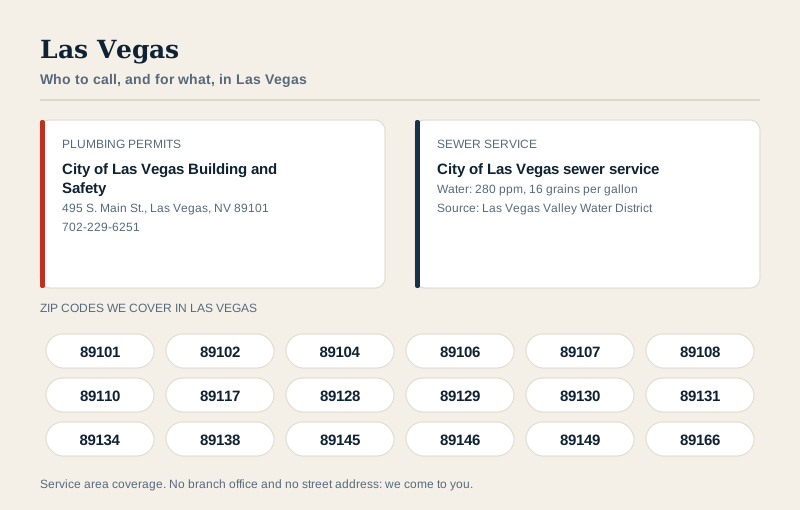
Plumbing permits for Las Vegas are issued by the City of Las Vegas Building and Safety, at 495 S. Main St., Las Vegas, NV 89101, reachable on 702-229-6251. Sewer service here runs through City of Las Vegas sewer service, and that matters because in the Clark County Water Reclamation District area the lateral from your house to the main in the street is the property owner's responsibility rather than the district's.
Who issues a plumbing permit in Las Vegas, and which ZIP codes we cover
Plumbing permits inside the city limits come from City of Las Vegas Building and Safety at 495 S. Main St. The counter number is 702-229-6251, and that department confirms which jobs need a permit before any work starts.
Work inside the city limits covers ZIP codes 89101, 89102, 89104, 89106, 89107 and 89108. It also reaches 89110, 89117, 89128, 89129, 89130, 89131, 89134, 89138, 89145, 89146, 89149 and 89166.
Downtown, the Arts District, Huntridge, the Scotch 80s, Rancho Charleston and Charleston Heights sit in the older core. The Lakes, Desert Shores, Queensridge, Twin Lakes and Summerlin North fill in the west and northwest side.
The arterials we work off in Las Vegas are Charleston Boulevard (SR 159), Sahara Avenue (SR 589), Rainbow Boulevard (SR 595), US-95 and I-15, which is how a job in this part of the valley gets reached.
Named communities and neighborhoods we cover inside Las Vegas include Downtown, The Arts District, Huntridge, Scotch 80s, Rancho Charleston, Charleston Heights, The Lakes, Desert Shores, Queensridge, Centennial Hills, Summerlin North and Twin Lakes. Each of those went up in a different decade, which is the single best predictor of what is about to fail in the wall.
Downtown
The Arts District
Huntridge
Scotch 80s
Rancho Charleston
Charleston Heights
The Lakes
Desert Shores
Queensridge
Centennial Hills
Summerlin North
Twin Lakes
We work Las Vegas as part of our Clark County coverage, dispatched to the address rather than from a counter. Start from every area we serve if this is not your city.
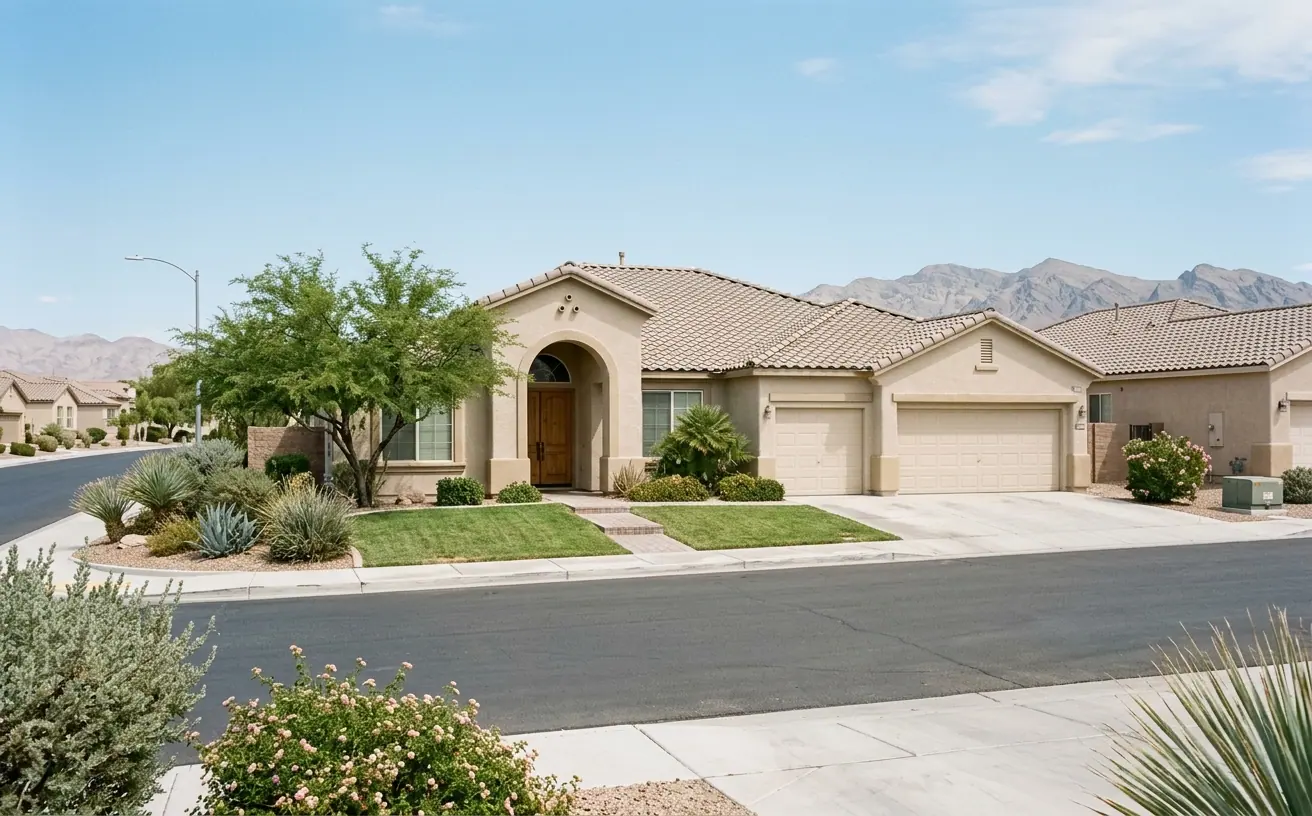
The City of Las Vegas is not one housing market. Huntridge, the Scotch 80s and Rancho Charleston sit in the pre 1980 core, which is about 22 percent of city housing. The far northwest edge of the city is new construction by comparison. The median city home dates to 1995, four years older than the county median of 1999.
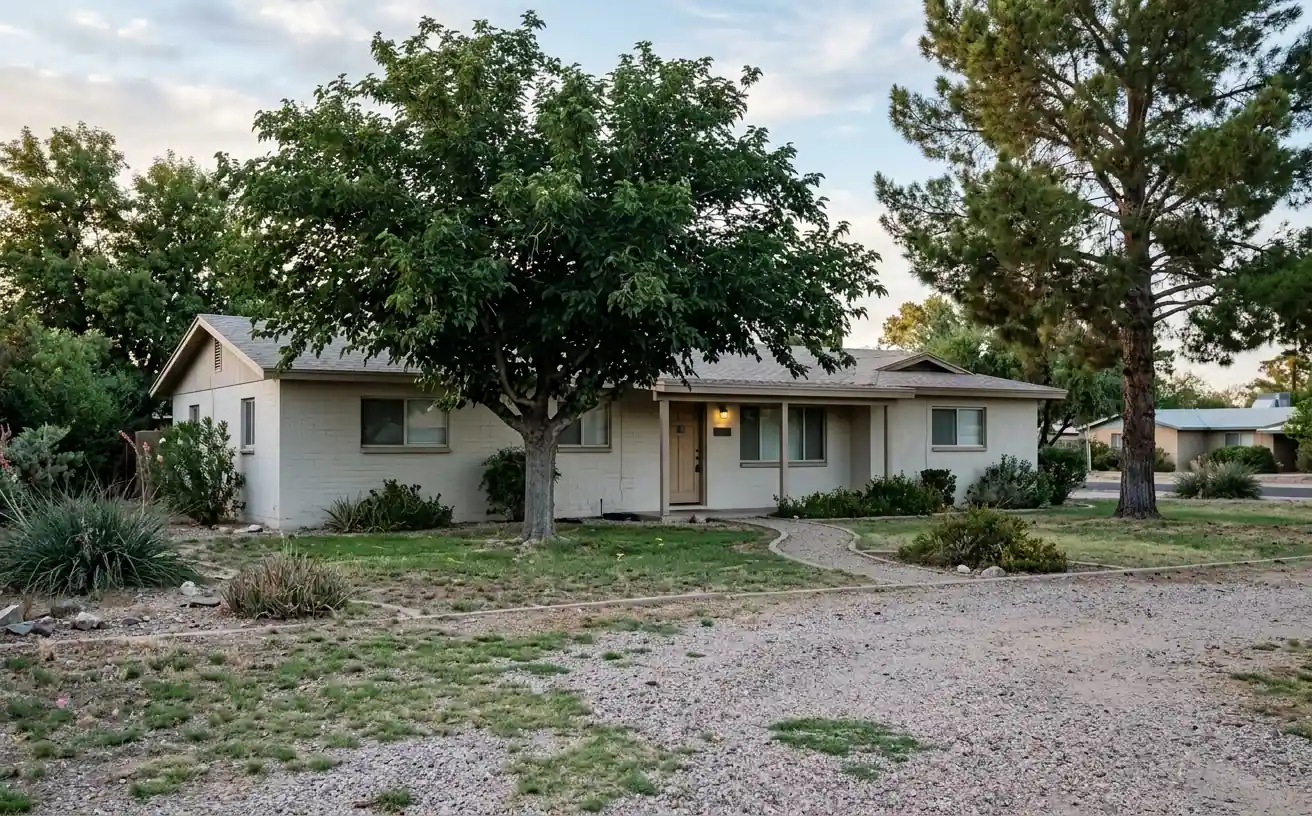
In the oldest city neighborhoods the supply pipe is often galvanized steel. That pipe has a useful life of roughly 20 to 30 years and corrodes from the inside out. Nothing shows on the surface until flow drops or a threaded joint starts to weep. Waste lines of the same age are usually cast iron, which InterNACHI lists at 50 to 60 years below ground.
The Lakes, Desert Shores, Queensridge and Twin Lakes fill in the west and northwest side of the city. Any house there built before mid 1995 sits inside the polybutylene window, because that pipe was made from 1978 to mid 1995. Polybutylene is usually gray and stamped PB2110. Chlorine in city water flakes it apart from the inside.
Sewer service inside the city limits is run by the City of Las Vegas rather than the Clark County Water Reclamation District. That changes which office you deal with when a main line backs up. About 90 percent of the valley supply comes from Lake Mead, with groundwater covering peak demand from April to October. Homes on the northwest side of the city can therefore be on a blend rather than straight lake water.
Put all of that together and city addresses need different work from one block to the next. A pre 1980 house may need a galvanized repipe while a post 2000 house needs a tankless flush. The one thing every address shares is the water chemistry. At 280 parts per million, scale keeps building in every heater, valve and aerator inside the city limits.
What goes wrong in city of Las Vegas houses
The symptom usually tells you the decade the house was built. Rust colored water and slow flow point at old steel. A wet floor that keeps returning after you mop points under the slab.
Write down when the problem started and what was running at the time. That one detail saves a lot of guessing later on.
Brown or rusty water from a tap that has been off all night
Water pressure that fell so slowly you only noticed this month
A damp patch on the floor that comes back after you dry it
The kitchen sink backing up while the washing machine drains
A toilet that rocks slightly and leaves water at its base
Hot water that runs out halfway through the second shower
White crust on the shower head and spotting on the glass
Is this you?
If you live inside the Las Vegas city limits and the problem is water, drain or gas, this is the right page. It covers houses of every age across all eighteen city ZIP codes.
If you rent, the landlord usually arranges plumbing work. Call them first so nobody pays twice for the same visit.
When this is the wrong page
This page is about work at city addresses. If your mail says Las Vegas but you live in Paradise, Spring Valley or Enterprise, your permits go to the county instead.
The work is the same trade everywhere, but the paperwork and the pipe change with the address. This table sets out what a city call normally includes.
Scope of residential plumbing work at a City of Las Vegas address
What is included
What that means
Diagnosis first
Someone looks at the actual pipe, fixture or meter before naming a repair, because guessing from a description costs you money.
Older pipe assessment
In pre 1960s homes the supply pipe is checked for galvanized steel, which corrodes from the inside and hides its condition.
Permit handling
Where the City of Las Vegas requires a permit, it is pulled at 495 S. Main St. and the inspection is scheduled.
City sewer coordination
Main line problems inside the city involve City of Las Vegas sewer service, not the county reclamation district.
Water treatment work
Softeners, filters and drinking water systems are fitted to valley water published at 16 grains per gallon.
Written price before work
The number is agreed with you on site before anything is cut, opened or removed.
What we see here
The conditions behind Las Vegas plumbing calls
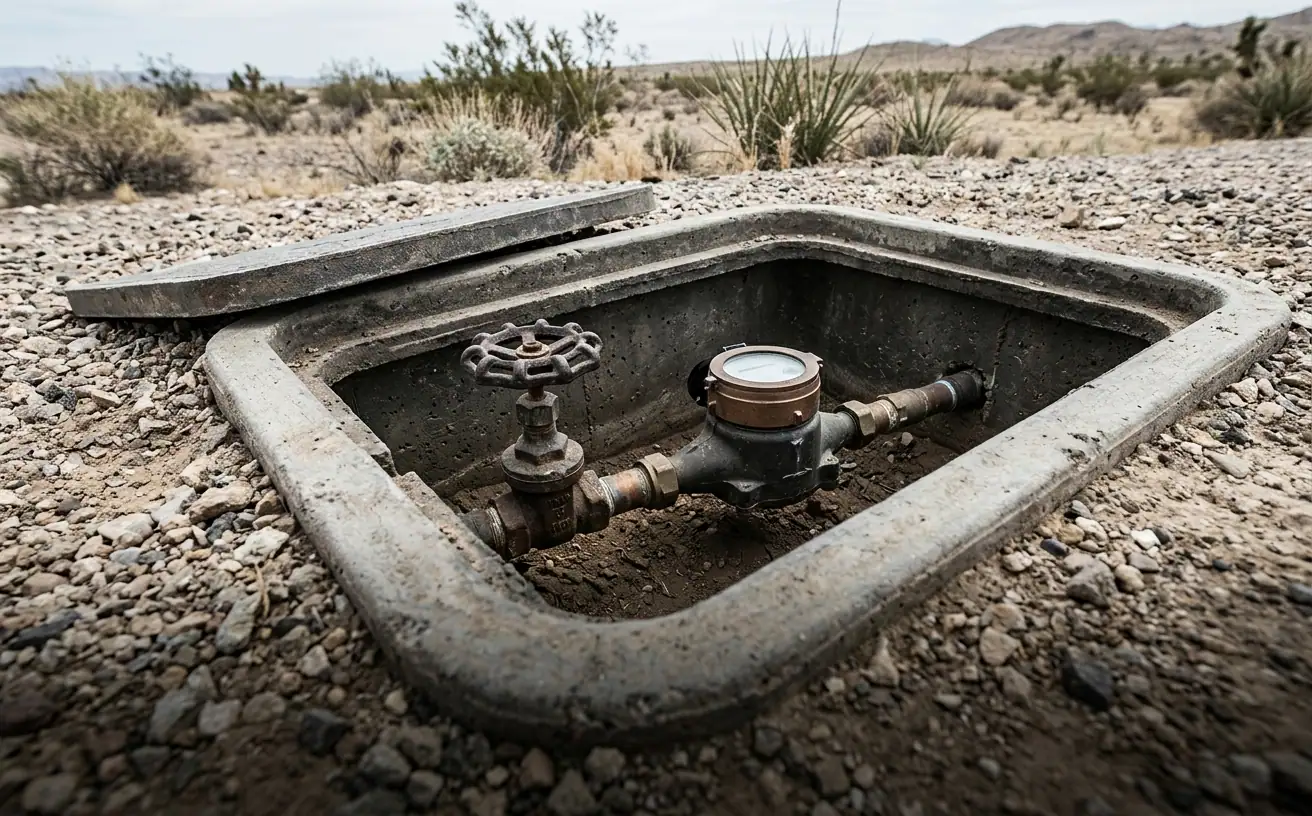
Illustrative image, not a photo of our workIllustrative image, not a photo of our workIllustrative image, not a photo of our work
How it works
How a Las Vegas call actually runs
Four stages, and the price is agreed in the third one before any work starts.
You describe it in your own words
You give the address first, because a Las Vegas mailing address does not always mean a City of Las Vegas address. Then you describe the symptom, when it started and whether the water is off.
On the phone
Someone looks at the real thing
You show where the trouble is and point out anything you already tried. The plumber tests, opens an access point if needed and names the cause.
At the visit
The price is set and agreed
You hear the repair options and pick one, or you decline. Nothing is cut or removed until you have said yes to a figure.
Before any work starts
Permit and inspection where required
You stay on the invoice as the property owner. A permit for a city address is filed at 495 S. Main St., and the inspection is booked with Building and Safety there.
After the repair is scoped
Nothing is final until you have seen the cause and said yes to a figure for fixing it.
What it costs
What Las Vegas plumbing work costs
Prices on this page cover everything from pre 1980 stock to new build, which is why the ranges are wide. Each one is a published market figure credited to its publisher, never a quote and never this company's price list.
A pre 1980 house on galvanized pipe and a post 2000 house on PEX are different jobs, even when the symptom sounds identical. The material behind the wall decides the labor.
How the estimate works
A plumber comes to the address, looks at the fixture, pipe or meter and works out the cause. Simple jobs are scoped in under an hour. Sewer and hidden leak work takes longer, because a camera or a listening device has to find the problem first.
You then get the options and a figure for each. You choose one or you choose none. The agreed price is fixed before any tool comes out, and any change has to be approved by you first.
Published Las Vegas and national market ranges for common city jobs
Job
Typical Las Vegas range
What moves the number
Service call or diagnostic fee
$75 to $150
The broader trade range runs about $50 to $200. Emergency and after hours dispatch is higher, commonly $150 to $350 or more.
Drain cleaning
$147 to $352
National average about $246. A main sewer line clog runs higher, about $100 to $800, and Las Vegas contractors commonly publish $250 to $500 for a main line.
Whole home repipe, PEX
$4,000 to $10,000
Las Vegas contractors commonly publish $4,500 to $8,000 for 1,500 to 2,000 square feet, rising with the size of the house.
Sewer line spot repair
$600 to $1,050
One broken or cracked section, dug and replaced.
Leak detection
$125 to $400
Repairing the pipe once it is found runs about $150 to $350 more. Las Vegas contractors commonly publish $200 to $600 for detection.
Tank water heater, installed
$882 to $1,826
National average about $1,347. A 50 gallon unit runs about $800 to $2,500 depending on venting and code upgrades.
Every figure in this table is a published Las Vegas or national market range from the source named beside it. It is not a quote and it is not this company's price list. Your number comes from the on site estimate. Sources: <a href="https://www.housecallpro.com/resources/marketing/how-to/how-to-price-plumbing-jobs/" rel="nofollow noopener" target="_blank">Housecall Pro 2026 Plumbing Price Guide</a>, <a href="https://www.homeadvisor.com/cost/plumbing/" rel="nofollow noopener" target="_blank">HomeAdvisor cost guides, 2026</a>, <a href="https://www.angi.com/articles/how-much-does-repiping-house-cost.htm" rel="nofollow noopener" target="_blank">Angi cost guides, 2026</a>.
What changes your number
House age moves the price most, because a galvanized system often has to be replaced rather than patched at every joint.
Access decides the labor hours, so pipe in an accessible attic costs far less to reach than pipe under a slab floor.
Whether a City of Las Vegas permit and inspection apply adds both a fee and a scheduled visit to the job.
Square footage and the number of bathrooms drive any repipe figure, since each fixture needs its own run and shutoff.
Published ranges price emergency and after hours work above a weekday appointment, commonly as a multiple rather than a flat fee.
Restoration after a repair, meaning drywall, tile and paint, is a separate cost from the plumbing itself.
Repair against replace
A single galvanized joint repair is cheap today, but three of them in one year usually costs more than starting the repipe conversation.
Service call and diagnostic fee
Published market ranges put a service or diagnostic fee at roughly $75 to $150. The broader trade range runs about $50 to $200, according to the Housecall Pro 2026 Plumbing Price Guide. That guide prices emergency and after hours work higher again.
This company's own fee, and whether it is credited toward the repair, is confirmed with you on the call before anyone is dispatched. We are not going to publish a policy here that has not been verified.
Two conditions matter most at older city addresses, and both sit on published life expectancy charts. Neither is visible from inside the house until the day it fails.
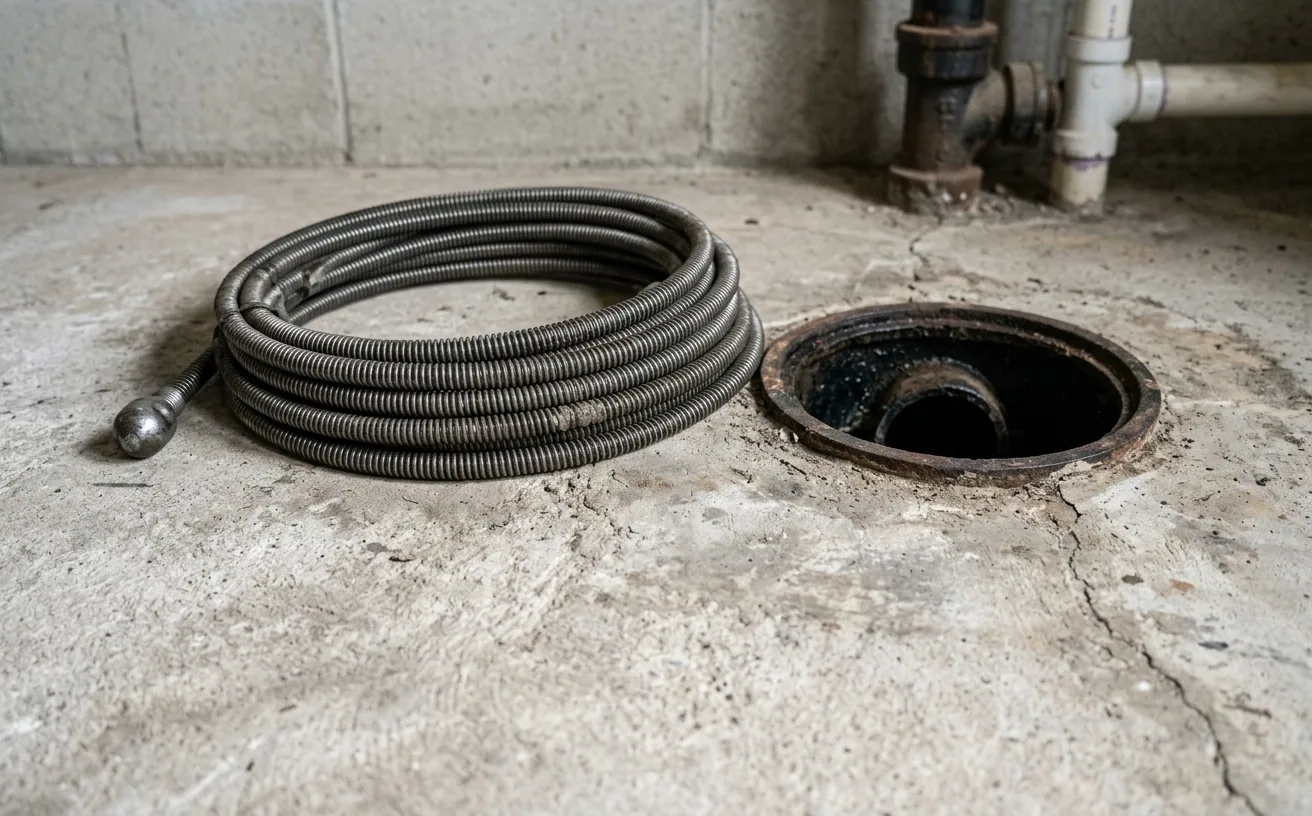
The illustrations below show the condition being described, so you know what a plumber is looking at when they cut a section out.
When Las Vegas was built, and what that means for the pipe in the wall
Galvanized steel closing up
Galvanized pipe rusts from the inside, so the opening narrows year after year while the outside still looks solid. Flow drops first at the fixture farthest from the meter. By the time water runs brown, the interior surface is already rough with scale and rust.
Illustrative image, not a photo of our work
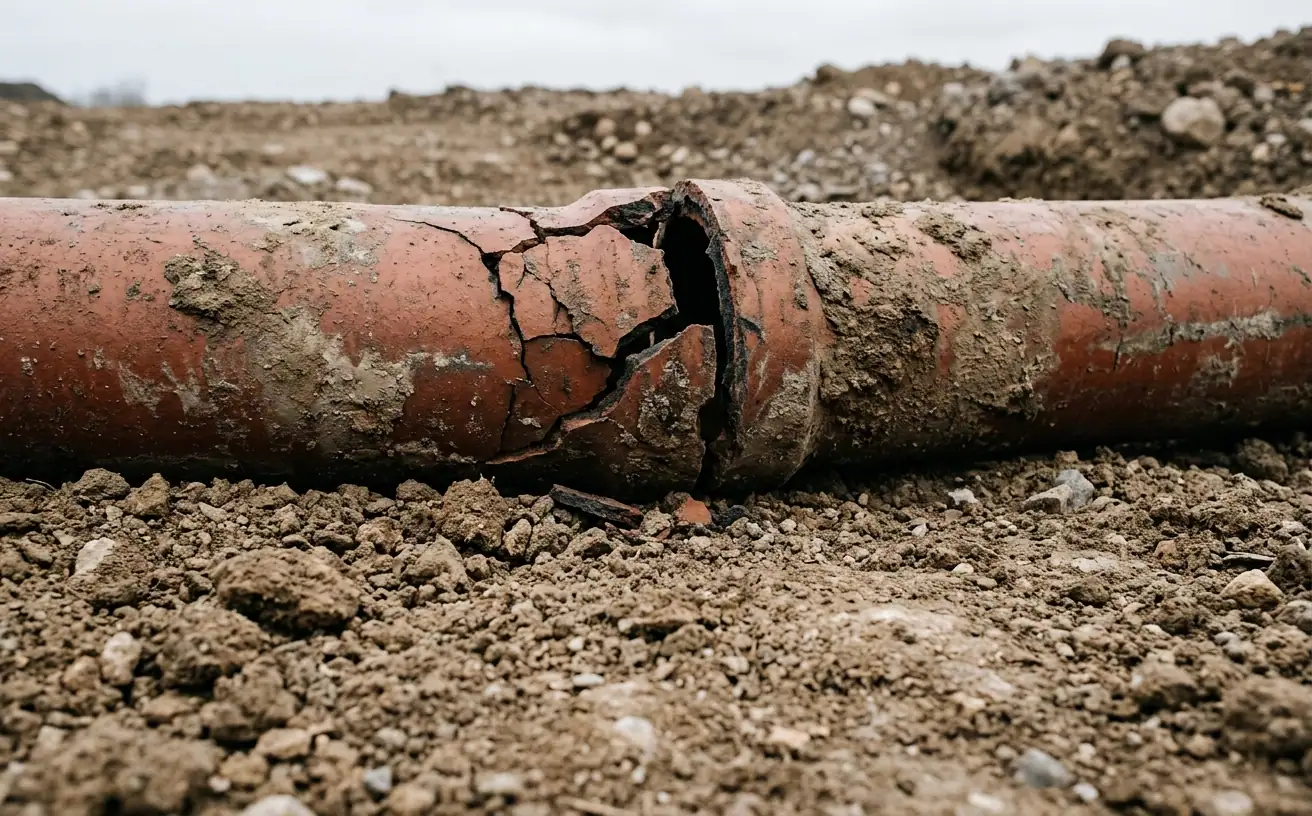
Old clay and cast iron sewer
Older city sewer laterals are jointed pipe, and every joint is a place a root can enter. Tree roots are reported to cause more than half of all sewer blockages. Once a crack opens, soil washes in and the line loses its fall.
Photography note
The pipe photographs on this page are illustrations of galvanized and clay pipe conditions, not photographs of work done at a Las Vegas address.
Every service below is available across Las Vegas. The water treatment pages matter more here than they would in a soft water city, because the valley runs at 16 grains per gallon on a positive saturation index.
Clark County, Nevada, including Las Vegas, Henderson, North Las Vegas, Summerlin, Paradise, Spring Valley, Enterprise and Boulder City
We are a service area business. We come to you, so there is no counter to visit and no street address on this page. The number above is the fastest way in.
What to have ready
About a minute of detail changes what we can tell you on the call.
The address and ZIP code, so we know which end of the valley you are on.
What the symptom is, in your own words. "Water under the sink" beats a diagnosis.
When it started, and anything already tried.
On a water heater: gas or electric, and roughly how old it is.
You get the diagnostic fee as a figure on the phone, before anyone is sent.
Scope and price are agreed together, before any work starts.
Water moving right now? Shut the main off first, then call and say so.
Questions from Las Vegas
Which office issues a plumbing permit for a Las Vegas city address?
City of Las Vegas Building and Safety issues plumbing permits inside the city limits, at 495 S. Main St., phone 702-229-6251. Unincorporated townships nearby go to Clark County instead, at 4701 West Russell Road. The two are separate departments with separate counters, fees and inspection schedules.
The city moved to the 2024 Uniform Plumbing Code for applications filed from January 5, 2026. Clark County applied the same code from January 11, 2026. Neither jurisdiction uses the plain code, because both enforce it alongside the Southern Nevada Amendments.
How hard is the water in Las Vegas?
The Las Vegas Valley Water District publishes hardness at 280 parts per million as calcium carbonate, which is 16 grains per gallon. The US Geological Survey calls anything above 180 milligrams per liter very hard. Las Vegas therefore runs at roughly 1.6 times that threshold.
The district FAQ page still shows an older figure of 291 parts per million, or 17 grains per gallon. Both numbers currently appear on official pages. Either way, the district tells customers to set a softener to 16 grains per gallon.
What pipe is in a house built in the 1950s in Las Vegas?
Most likely galvanized steel supply pipe, unless it has already been replaced. Galvanized was common in American homes from the 1920s through the 1950s, and copper had largely taken over new construction by the 1960s. Its useful life is about 20 to 30 years.
Waste piping from that era is usually cast iron, listed at 50 to 60 years below ground. A 1950s house with original supply and waste lines is past both figures, which is why flow and drainage complaints cluster in those neighborhoods.
Who is responsible for the sewer line at my city address?
Inside the City of Las Vegas, sewer service is the city's own rather than the Clark County Water Reclamation District's. In the district's service area the lateral from house to street main is the owner's responsibility to clean, repair and replace.
Either way, the line running through your yard is the part that roots and settlement reach first. A camera inspection is the normal way to see which section has failed before anything is dug up.
My water bill jumped but I cannot see a leak. What now?
Turn off every tap and appliance, then watch the flow indicator on your water meter. The Southern Nevada Water Authority says that if it keeps moving, the leak is most likely underground between the shutoff valve and the meter.
The average household wastes more than 9,300 gallons a year to leaks, according to EPA WaterSense. SNWA offers single family homeowners a voucher of up to $250 toward a leak diagnostic visit, one per property per calendar year.
Is polybutylene pipe a problem in Las Vegas neighborhoods?
It can be, in tracts built between 1978 and mid 1995. Polybutylene is usually gray and stamped PB2110. Disinfectants in city water react with the plastic and flake it apart from the inside, so fractures deepen until they reach the outer wall.
The class action over that pipe settled for $950 million in November 1995, and the claim window is long closed. Replacement today comes out of the owner's pocket, which is why a west side house is worth checking early.
How long should a water heater last on Las Vegas water?
Rheem puts a traditional tank heater at 8 to 12 years and a tankless unit at 15 to 20 or more. Hard water, heavy demand and skipped maintenance all shorten that. Las Vegas water is hard enough to matter at every address.
Battelle ran a 2009 study for the Water Quality Research Foundation. Gas storage heaters on hard water built 528 grams of scale a year, against 7 grams on softened water. None of the unsoftened units lasted to the end of that test.
Plumbing help in Las Vegas
Tell us what is happening and we will tell you what it usually takes to fix.