Plumbing and water treatment across Clark County. Call (725) 337-3692

Endless flow, within a gas and flow limitAnnual descaling, per manufacturer guidanceSized on fixtures, not square footage

Tankless water heaters in Las Vegas, sized, vented and descaled

A tankless unit heats water as it flows, so the limits are gas supply and flow rate rather than tank capacity. Rheem publishes 15 to 20 years or more of service life, and manufacturers tie that to an annual descale.

  • Maintenance interval quoted from the manufacturer
  • No dealer or factory relationship claimed
  • Sizing math written down for you
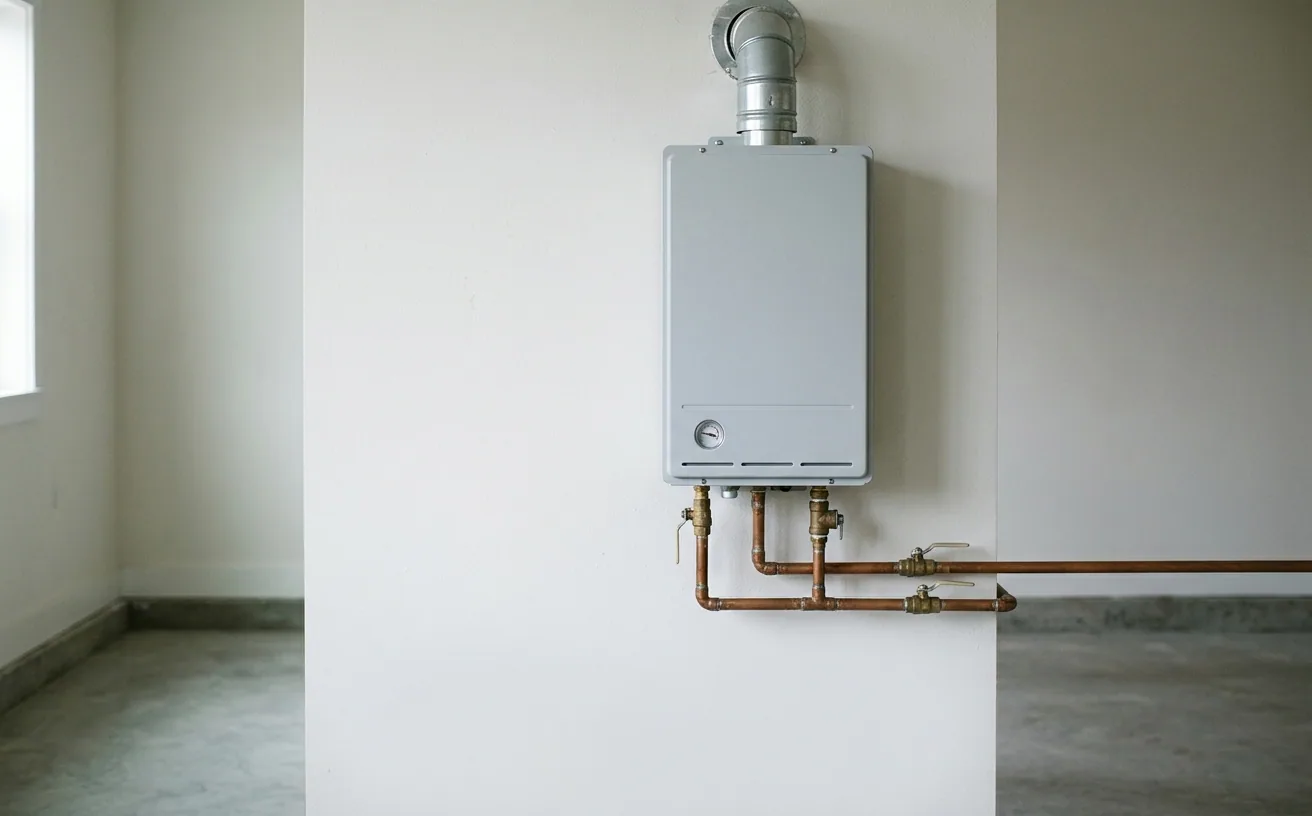
Tankless Water Heaters in Las Vegas, Nevada
Illustrative image, not a photo of our work
15-20 yrsPublished tankless service life
YearlyMinimum flush interval named by Rinnai
280 ppmPublished valley hardness as calcium carbonate
0.99 ppmFree chlorine residual in valley water

Figures above are published third party data, not company claims. Sources: Rheem, Rinnai, LVVWD.

  • The maintenance is named upfrontNavien says to descale at least once a year, and more often where the mineral content or the set temperature is higher.
  • Local water decides the intervalValley water carries a saturation index of plus 0.25, meaning it deposits mineral rather than dissolving it, which is what drives descaling frequency.
  • No brand relationship is claimedManufacturers are named here only to cite their published maintenance guidance, and no dealer, factory or partnership status is asserted.
  • Permit applies to this tooA water heater permit covers tankless installations, and Clark County issues that permit online with no plan review, one item per permit.
The short answer

A tankless water heater heats water on demand, so the ceiling is flow rate rather than tank size. In Las Vegas the deciding factor is scale. Rinnai calls for a flush at least yearly, and Navien for descaling at least annually where mineral content or set temperature runs higher.

This page covers tankless water heaters across the Las Vegas Valley. If you are not sure this is the right service, start from the full plumbing services list.

Why people call about a tankless unit

Calls about tankless heaters split into two groups. One group is shopping, usually because the tank has stopped keeping up or the garage space is wanted back.

The other group already owns one and has noticed it behaving differently than it did when it went in. Scale explains a large share of the second group.

  • Hot water runs out before the second shower is finished
  • The tank in the garage takes up space you want to use
  • The unit flashes an error code and shuts down partway through a shower
  • Hot water goes cold for a few seconds, then comes back again
  • The kitchen tap will not stay hot when it runs at a trickle
  • Flow at the hottest tap has dropped noticeably over the past year
  • Nobody has flushed the unit since the day it was installed
Is this you?

This page covers choosing, installing and maintaining a tankless unit in the Las Vegas Valley, including descaling an existing one. It applies to gas and electric models.

Tankless suits households that run hot water in bursts through the day. It pays back over time, so it favors people staying in the home.

When this is the wrong page

If your existing storage tank has quit and you want hot water back, start at water heater repair across Clark County. A tankless conversion is not a one visit decision.

If you have decided on another tank and want it sized, permitted and swapped, go to water Heater Installation in Las Vegas. If mineral is showing up on glass, fixtures and appliances throughout the house, the upstream fix is water softeners across Clark County.

What a tankless job involves

The heater is the easy part. Gas capacity, venting and service access are what decide whether a tankless install works well in a particular house.

The elements of a tankless installation or service visit
What is includedWhat that means
Gas supply reviewA tankless burner draws far more gas at once than a tank does. The existing line size and meter capacity get checked before anything is ordered.
VentingTankless units use their own sealed venting, so an old tank flue rarely carries over and a new route usually has to be planned.
Isolation valvesService valves on the hot and cold sides are what turn an annual descale into a short job rather than a partial teardown.
Descaling serviceA pump circulates descaling solution through the heat exchanger for a period to dissolve the mineral that hard water has left behind.
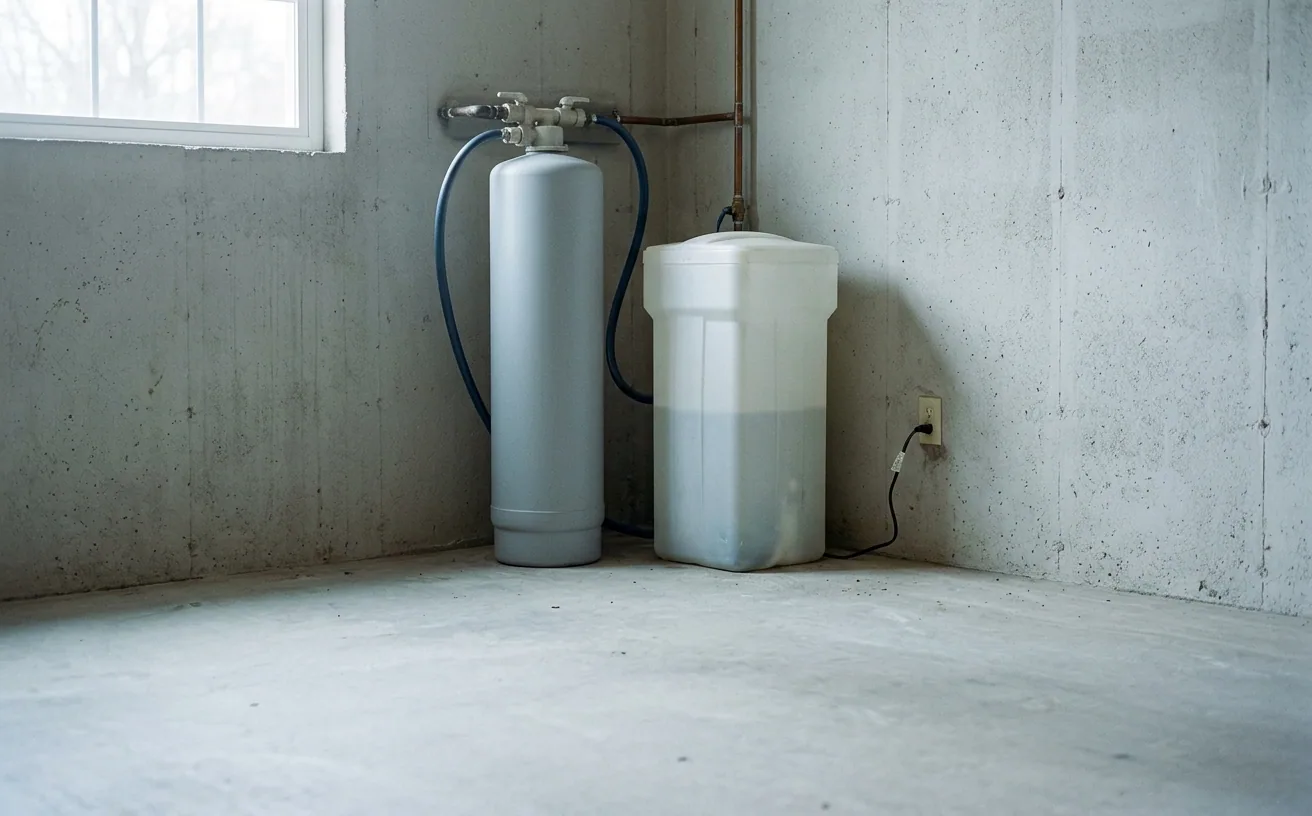
Water treatment pairingSoftening the water upstream is the one lever that slows scale formation, which is why the two jobs are often discussed together.
Error code diagnosisThe code on the display narrows the fault to ignition, flow, venting or the exchanger before any panel comes off.
Flow expectationsThe unit is matched to how many fixtures you expect to run at once. That number is stated plainly rather than sold as endless hot water.
What this work looks like

The parts and conditions behind tankless water heaters

Tankless Water Heaters in Las Vegas, Nevada
Illustrative image, not a photo of our work
What we commit to

What this page will and will not tell you

Four commitments about maintenance intervals and manufacturer claims.

  • Manufacturer intervals, quoted not inventedRinnai publishes at least an annual flush and Navien at least an annual descale. Those are the intervals named here, not a schedule of our own.
  • Maintenance is priced before you buyThe descale is discussed and priced during the buying conversation, so it is not a surprise two years into owning the unit.
  • No brand partnership claimedNo dealer status, factory certification or manufacturer relationship is claimed anywhere on this site, because none has been verified.
  • Sizing shown, not assertedThe fixture count and the temperature rise behind a recommended model are written down and handed to you to keep.
How it works

How a tankless project runs

Four stages, and the gas question gets answered before you commit to anything.

  1. Count the fixtures

    You describe the worst case morning in the house. A plumber turns that into a required flow rate and a temperature rise, which is what actually sizes the unit.

    On the phone
  2. Check the gas and the vent

    You show where the meter and the current unit sit. A plumber checks whether the gas line can feed the burner and whether a vent route exists that works.

    At the site visit, before you commit
  3. Permit and installation

    You clear access to the wall and the meter. A plumber pulls the water heater permit, mounts the unit, runs the vent, fits isolation valves and commissions it.

    Install day, after the permit
  4. Set the descale interval

    You get the manufacturer interval in writing and a date to work to. A plumber shows you where the service valves are and what a flush actually involves.

    At handover

The price is settled in writing once the gas and vent check is done. That check decides whether extra work is in scope.

What it costs

What tankless costs in this market

These are published cost guide ranges for the market with the source named on each line. They are not this company's prices, and a tankless quote depends heavily on conditions in your specific house.

Tankless is the service where the gap between a simple install and a difficult one is widest. Treat the published range as a starting point, not an expectation.

How the estimate works

The site visit is longer than for a tank swap, because gas line capacity and venting have to be assessed before a number means anything. Expect questions about the meter, the appliances and the wall you want the unit on.

You receive a written price covering the unit, mounting, gas and vent work, isolation valves and the permit fee. It is agreed before install day, and nothing gets ordered until you have said yes.

Published market ranges for tankless and the work around it
JobTypical Las Vegas rangeWhat moves the number
Tankless water heater, installed$1,406 to $3,902National average about $2,640. Gas line sizing and venting are the two things that move it most.
Tank water heater, installed$882 to $1,826National average about $1,347. A 50 gallon unit runs about $800 to $2,500 depending on venting and code upgrades.
Water softener, installed$200 to $6,000National average about $1,500. A whole home system sized for Las Vegas hardness sits in the middle of that range, not the bottom.
Gas line installation$272 to $936Average about $598, or $15 to $30 per linear foot for a new run.
Service call or diagnostic fee$75 to $150The broader trade range runs about $50 to $200. Emergency and after hours dispatch is higher, commonly $150 to $350 or more.

Every figure in this table is a published Las Vegas or national market range from the source named beside it. It is not a quote and it is not this company's price list. Your number comes from the on site estimate. Sources: <a href="https://www.homeadvisor.com/cost/plumbing/" rel="nofollow noopener" target="_blank">HomeAdvisor cost guides, 2026</a>, <a href="https://www.housecallpro.com/resources/marketing/how-to/how-to-price-plumbing-jobs/" rel="nofollow noopener" target="_blank">Housecall Pro 2026 Plumbing Price Guide</a>.

What changes your number

  • An undersized gas line is the biggest add on, because a new run is priced by the linear foot back to the meter.
  • Venting a condensing unit out through a side wall costs less than running a new vent up through a tiled roof.
  • Fitting isolation valves at installation is a small cost that makes every future descale faster and cheaper.
  • A second unit or a recirculation loop for a long run of pipe pushes the job well above the published range.
  • Electric tankless shifts the cost to the electrical panel, since the amperage draw often calls for new circuits or a service upgrade.
  • Adding a softener at the same time raises day one cost and slows the scale that shortens heat exchanger life.
Repair against replace

A tank at $882 to $1,826 installed beats tankless at $1,406 to $3,902 on day one. The case for tankless rests on longer published life and the space you get back.

Service call and diagnostic fee

For a service visit on an existing tankless unit, Housecall Pro publishes a trade service call of about $75 to $150. The wider trade range runs $50 to $200. A descale is normally priced as its own job rather than as a diagnostic.

Whether the call fee is credited toward the work is confirmed on the phone before a visit is scheduled. No crediting policy is stated on this site, since none has been verified for publication.

Ranges last reviewed September 2026.

What the job looks like

What scale does to a tankless heater

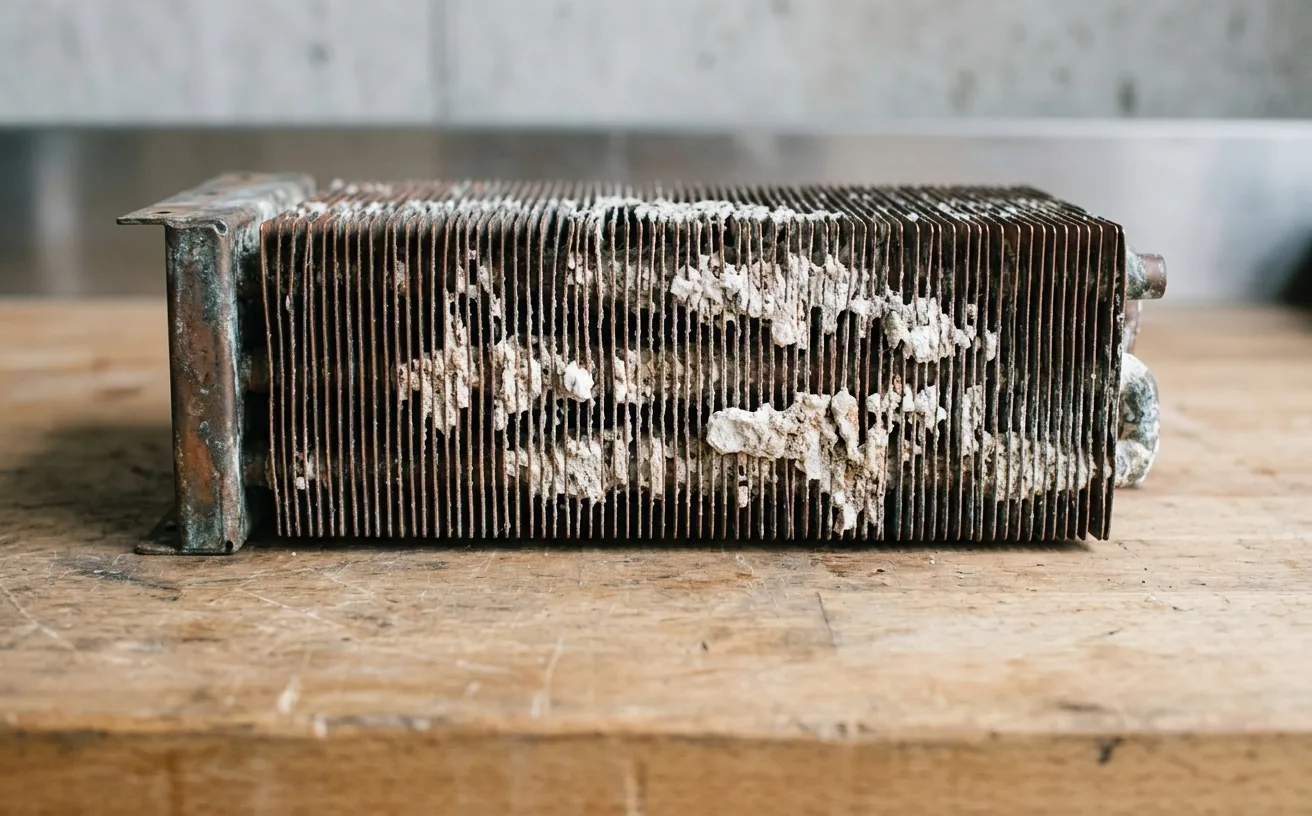
A tankless heat exchanger runs water through narrow passages against very hot metal. That is exactly the condition in which calcium and magnesium come out of solution and stay there.

Las Vegas water carries a saturation index of plus 0.25, which means it deposits mineral rather than dissolving it. That is the reason manufacturers here name an annual interval as a minimum rather than a suggestion.

Narrow passages, hot metal. Tankless Water Heaters in Las Vegas
Illustrative image, not a photo of our work

Narrow passages, hot metal

Mineral builds on the inside of a heat exchanger and slowly restricts the passage water flows through. The unit compensates by firing harder, then eventually throws an error and shuts down. Navien warns that this causes premature failure, which is why descaling is not optional here.

The same deposit you can already see. Tankless Water Heaters in Las Vegas
Illustrative image, not a photo of our work

The same deposit you can already see

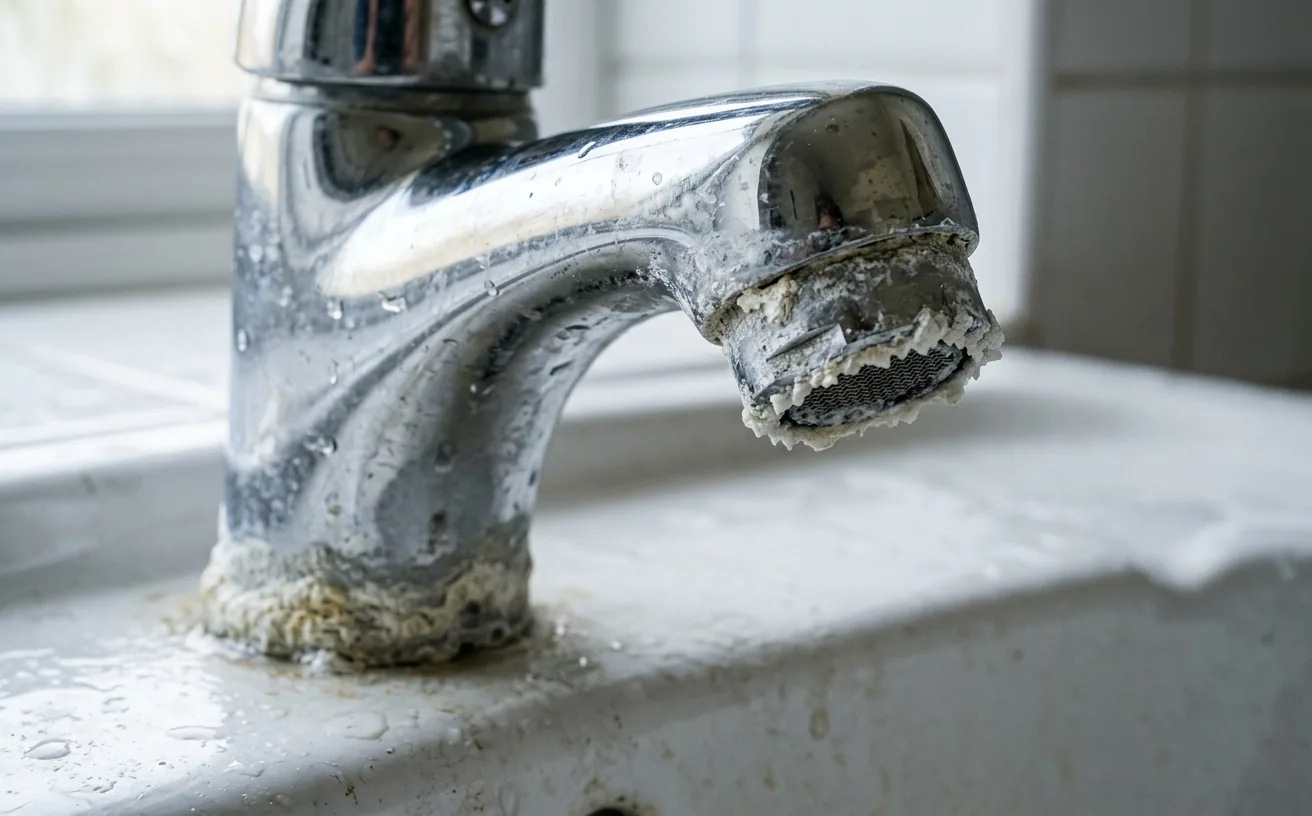
What crusts a faucet aerator is the same calcium carbonate that lines a heat exchanger. The aerator is simply the version you can unscrew and look at. If yours is white and crusted within a year, the heater is getting the same water.

Photography note

Every image on this page is a generated illustration of the condition under discussion, not a photograph of this company's work. Approved job photographs will be published here in their place.

What people push back on

I heard tankless units are not worth the money.

In some houses that is true. If the gas line needs replacing and the vent route is awkward, the extra cost can outrun the benefit.

The case is strongest where the household wants the space back and runs hot water in bursts. It also needs an owner staying long enough for a 15 to 20 year life to matter.

My neighbor's tankless never gets properly hot.

That is usually a sizing or a gas supply problem rather than a fault with the technology. An undersized unit cannot lift cold water to temperature at high flow.

The second common cause is scale narrowing the exchanger over years without a flush. Both are diagnosable, and both are avoidable at the point of sizing.

An annual flush sounds like a subscription I did not agree to.

It is a real cost and it belongs in the decision before you buy, not after. That is why it is named on this page rather than buried in a manual.

Rinnai says flush at least once a year and Navien says descale at least annually. Softening the water upstream reduces how hard that job has to work.

The unit I want is cheaper online. Can I just buy it?

Ask before booking, because policies on homeowner supplied equipment differ and it is a bad conversation to have on install day.

The thing to check first is whether the model you found actually suits your gas supply and vent route. A cheap unit that needs a new gas run is not cheap.

Salespeople push tankless because it costs more.

That is a reasonable suspicion, so here is the counterweight. A straight tank replacement is published at $882 to $1,826 installed, and it is often the right answer.

If your gas line is undersized and your household is two people, a tank is very likely the better buy, and that gets said plainly.

Does a tankless unit really give endless hot water?

It gives continuous hot water up to its flow rating, which is a different promise. Exceed the rating and the temperature falls off.

That is why sizing starts with how many fixtures run at once rather than with the size of the house. The number you are sized for gets stated openly.
Where we do this work

Tankless Water Heaters across Clark County

We cover tankless water heaters in every part of the valley listed below. Each area page names the office that issues the plumbing permit there and who owns the sewer line at the curb, because both genuinely differ from one city to the next.

The fastest way in

Ask about tankless water heaters

Say it is about this when you call and you skip the sorting.

Reach Clark County Plumber

Service area
Clark County, Nevada, including Las Vegas, Henderson, North Las Vegas, Summerlin, Paradise, Spring Valley, Enterprise and Boulder City

We are a service area business. We come to you, so there is no counter to visit and no street address on this page. The number above is the fastest way in.

What to have ready

About a minute of detail changes what we can tell you on the call.

  • The address and ZIP code, so we know which end of the valley you are on.
  • What the symptom is, in your own words. "Water under the sink" beats a diagnosis.
  • When it started, and anything already tried.
  • On a water heater: gas or electric, and roughly how old it is.
  • You get the diagnostic fee as a figure on the phone, before anyone is sent.
  • Scope and price are agreed together, before any work starts.
  • Water moving right now? Shut the main off first, then call and say so.

Questions about this service

Is a tankless water heater worth it in Las Vegas?

It can be, with one condition attached. Rheem publishes 15 to 20 years or more for tankless against 8 to 12 for a tank, but that longer life assumes maintenance. Valley water is published at 16 grains per gallon, so an annual descale is what protects the investment.

The other half of the math is installation. If the gas line and vent route are straightforward, the premium over a tank is modest. If both need work, the payback period stretches out considerably.

How often does a tankless water heater need flushing?

Rinnai says to flush mineral deposits out at least once a year. Navien says to descale at least annually, and more often where mineral content or set temperature is higher. Scale clogs the heat exchanger and causes premature failure. Las Vegas water sits in that higher mineral category.

Set temperature matters more than people expect. Running the unit hotter drives more mineral out of solution. A household at a high setting should plan on the shorter interval.

What is the cold water sandwich?

It is the slug of cool water that arrives shortly after you turn on a hot tap that was used a moment earlier. Hot water already in the pipe reaches you first, then the water that sat in the line, then the newly heated water behind it.

It is normal behavior rather than a fault, and it is more noticeable on short draws like rinsing dishes. A recirculation setup or a small buffer tank reduces it where it bothers people.

Do I need a water softener with a tankless heater?

It is not required, but it is the single most effective thing you can do for one here. Valley hardness is published at 16 grains per gallon, with a saturation index of plus 0.25. That means the water deposits mineral on hot surfaces inside the exchanger.

There is a permit angle too. Installing a water conditioning system in unincorporated Clark County needs a permit and an inspection, whether a homeowner does it or a company does.

Will one tankless unit run two showers at once?

That depends entirely on the model's flow rating and on how cold the incoming water is. Two showers together typically need a meaningful flow rate at a decent temperature rise, and a small unit will not deliver it. Sizing is done on fixtures running simultaneously.

Households with heavy overlapping demand sometimes install two units in series instead of one large one. That costs more upfront and gives redundancy if one unit needs service.

Do tankless water heaters need a permit in Clark County?

Yes. A water heater replacement needs a permit from the building department for your jurisdiction, and that covers tankless units as well as tanks. Clark County issues water heater permits start to finish online with no plan review, one item per permit, followed by an inspection.

Where a gas line is upsized or rerouted as part of the job, that work belongs in the permit conversation too.

How long do tankless water heaters last?

Rheem publishes 15 to 20 years or more for tankless, against 8 to 12 years for a traditional tank. Rheem also says hard water, heavy demand and skipped maintenance shorten both. Descaling on schedule keeps a unit in the upper part of that published range.

An untouched unit in this valley will not reach those numbers. Scale narrows the exchanger year after year until the burner cannot keep up and the unit starts reporting faults.

Can I put a tankless unit where my tank is now?

Often yes, and it frees the floor space the tank occupied. The constraints are the gas supply feeding that location and whether a sealed vent can run from that wall to the outside. Both get checked at the site visit before any commitment is made.

Garage walls are usually the easy case in valley homes. Interior closets are harder, because the vent route is longer and service access for the annual descale still has to work.

Talk to someone about tankless water heaters

Describe what is happening and we will tell you what it usually takes to fix.