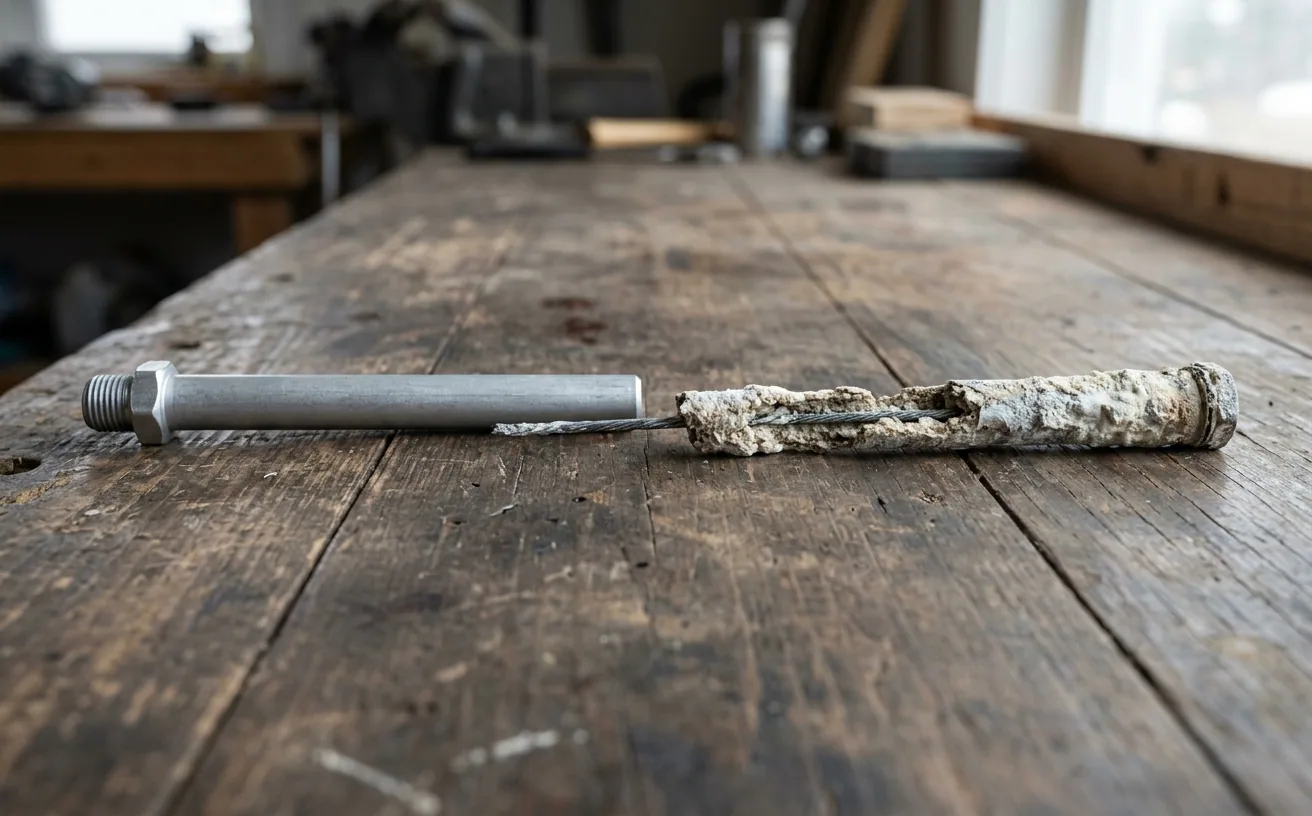
The anode rod gives itself up first
The anode rod is a length of magnesium or aluminum designed to corrode so the steel tank does not. When it is eaten away, the tank lining is next in line. Rusty water on the hot side only is the usual first sign.
Clark County and the Las Vegas ValleyWater published at 16 grains per gallonDiagnosis before parts
Hot water fails for a short list of reasons, and each one leaves its own evidence. Las Vegas water is published at 16 grains per gallon, so scale builds fast inside a tank.
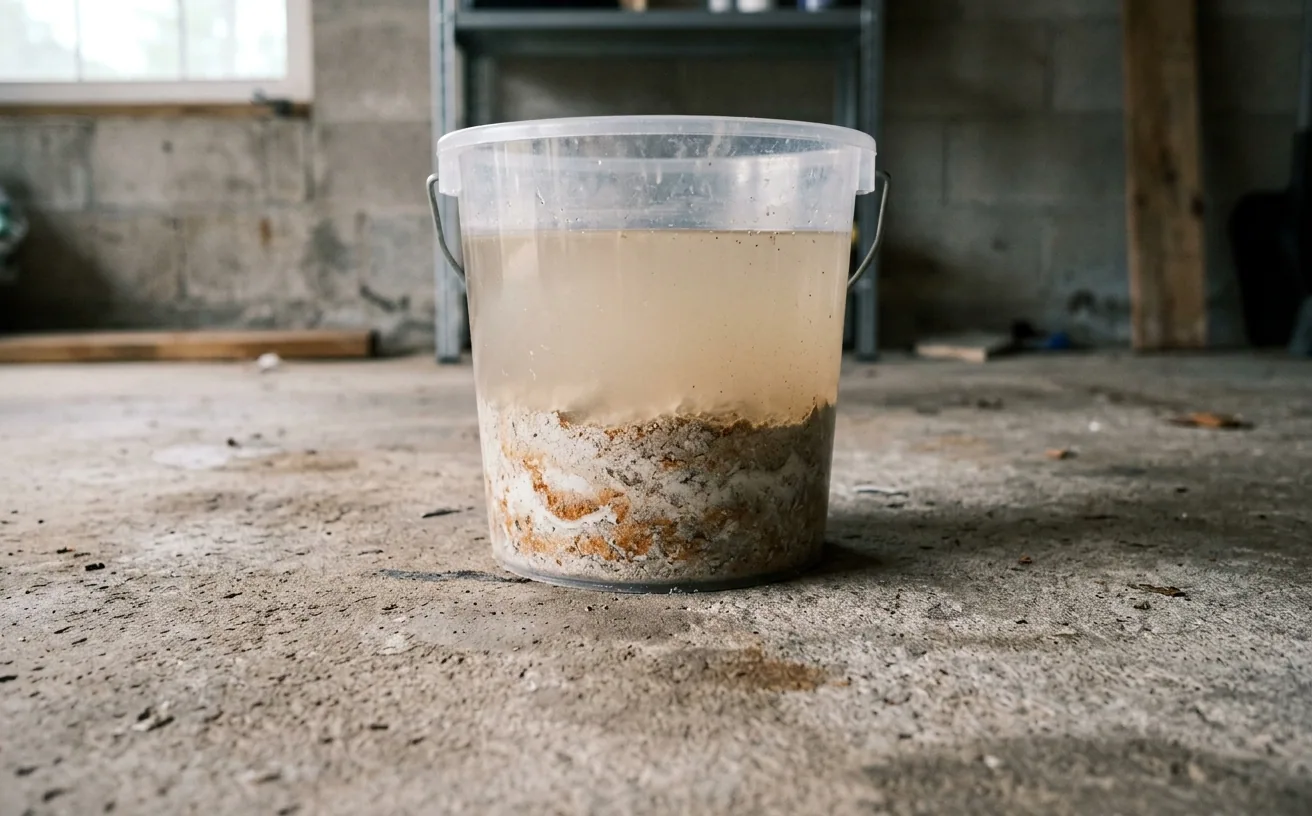
Figures above are published third party data, not company claims. Sources: LVVWD, Water Quality Research Foundation, Rheem.
Most Las Vegas water heater repairs come down to a thermostat, an element, a gas valve, a thermocouple or heavy sediment. Valley water is published at 16 grains per gallon, so scale arrives early here. A leak repair itself needs no permit under Clark County Code 22.02.195.
This page covers water heater repair across the Las Vegas Valley. If you are not sure this is the right service, start from plumbing services across Clark County.
A water heater rarely dies without warning. It changes how it sounds, how long the hot water lasts, or what color the water runs. Those changes usually start weeks before the cold shower.
The list below is written the way people describe it on the phone. If one of these sounds like your house, the fault is already narrowed down before anyone arrives.
This page is for a water heater that is still in place and has stopped doing its job properly. The unit can be gas or electric, in a garage, a closet or an exterior alcove.
If the tank is under twelve years old and the problem started suddenly, a repair is usually the first thing to price. Age and a wet floor are what change that answer.
If the tank itself is leaking from a seam rather than a fitting, no repair holds, and you want water heater installation instead. If you are weighing a wall mounted unit rather than another tank, read tankless water heaters.
Warm water spreading from under the concrete rather than from the heater is a different problem. That one is slab Leak Repair, Las Vegas NV, and it needs a different diagnosis.
A repair visit is a sequence of tests, not a parts swap. The point is to find which single component failed and to check whether the tank is worth putting a part into at all.
| What is included | What that means |
|---|---|
| Fault diagnosis | Power or gas supply, the thermostat, the control valve and the burner all get tested before any part is named. |
| Thermostat and element work | On an electric unit the upper and lower elements and both thermostats are tested for continuity and replaced individually. |
| Gas control and pilot faults | A pilot that drops out points at the thermocouple, the gas control valve or a burner that is starved of air. |
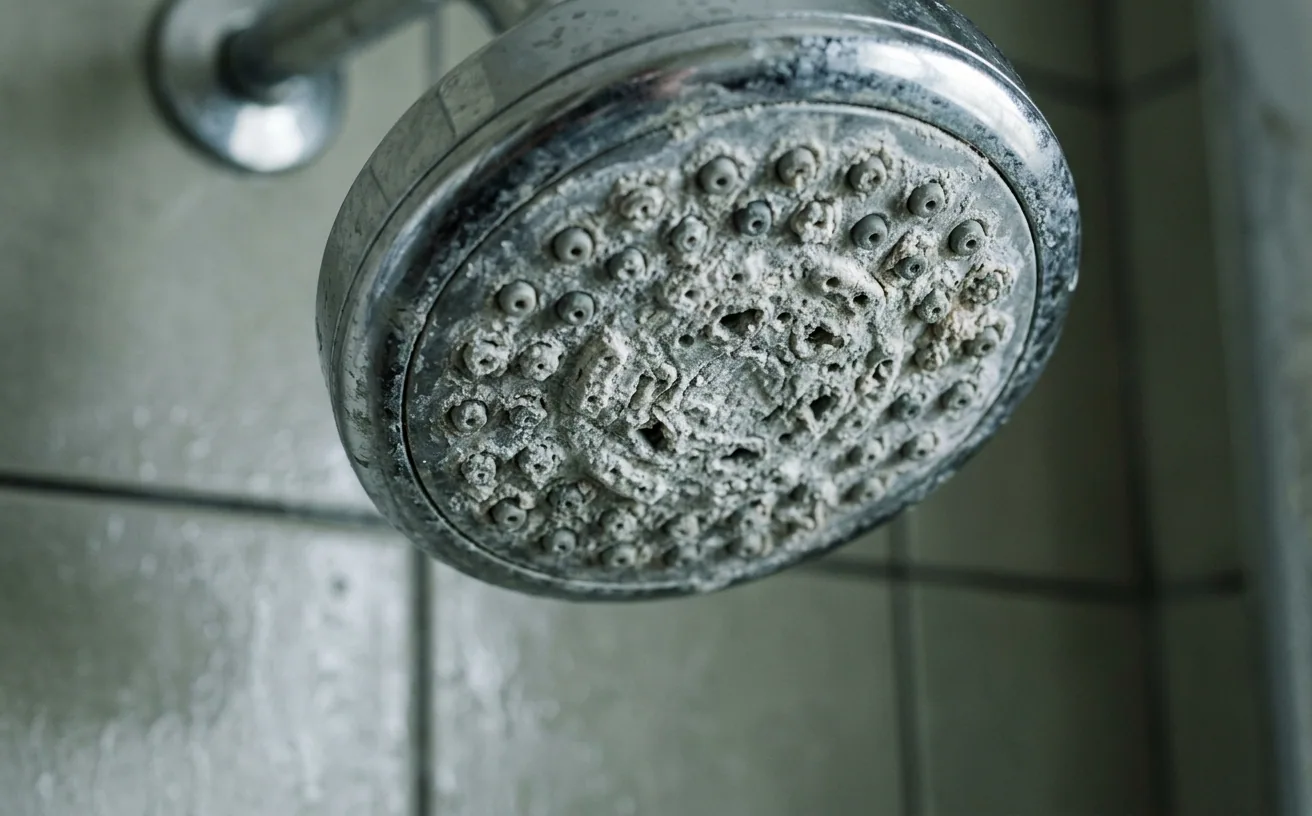
| Sediment flush | Draining the tank clears loose sediment, though hardened scale stuck to the bottom does not always come away. |
| Anode rod check | The anode rod is sacrificial metal that corrodes so the steel tank does not, and a spent rod explains rusty hot water. |
| Relief valve check | A temperature and pressure relief valve that weeps is either failing itself or reporting pressure from somewhere else. |
| Connections and shutoff | The flex connectors, the cold water shutoff and the drain valve get checked for corrosion, drips and seized handles. |
Four commitments about how a diagnosis is handled, none of them needing a credential.
Four stages, and the diagnosis is finished before a part is priced.
You say what the symptom is and when it started. The person on the phone asks for the address, whether the unit is gas or electric, and roughly how old it is.
On the phoneYou keep people and pets away from any standing water. A plumber shuts off the gas or the breaker and closes the cold supply before opening anything up.
First thing on siteYou get told what failed and why, in plain terms. A plumber runs the electrical or gas tests, checks the tank itself, and shows you what the test found.
During the diagnosisYou approve a written price before anything is replaced. A plumber fits the part, refills and purges the line, relights or re-energizes, and checks the recovery.
Before a wrench turnsYou sign off a written repair price on site, after the diagnosis and before the part goes in. Anything found later is raised with you rather than added quietly.
Repair pricing is mostly the cost of one part, which is why the published range below is so wide. The figures are market ranges from named cost guides, not this company's price list.
They are here so you can walk into the conversation knowing roughly what the market says. If a number you are given sits far outside these ranges, ask why, and expect a straight reason.
A plumber comes to the house, runs the diagnostic tests, and tells you which component failed. That takes the first part of the visit, and it happens before any price for the repair is given.
The repair price is written down and agreed with you before the work starts. If the diagnosis shows the tank itself is finished, you are told that instead, and the conversation turns to replacement.
| Job | Typical Las Vegas range | What moves the number |
|---|---|---|
| Water heater repair | $228 to $1,017 | National average about $616. Las Vegas contractors commonly publish $150 to $700. |
| Service call or diagnostic fee | $75 to $150 | The broader trade range runs about $50 to $200. Emergency and after hours dispatch is higher, commonly $150 to $350 or more. |
| Tank water heater, installed | $882 to $1,826 | National average about $1,347. A 50 gallon unit runs about $800 to $2,500 depending on venting and code upgrades. |
| Pressure regulator replacement | $200 to $700 | Average around $400. |
Every figure in this table is a published Las Vegas or national market range from the source named beside it. It is not a quote and it is not this company's price list. Your number comes from the on site estimate. Sources: <a href="https://www.homeadvisor.com/cost/plumbing/" rel="nofollow noopener" target="_blank">HomeAdvisor cost guides, 2026</a>, <a href="https://www.housecallpro.com/resources/marketing/how-to/how-to-price-plumbing-jobs/" rel="nofollow noopener" target="_blank">Housecall Pro 2026 Plumbing Price Guide</a>.
A mid range repair from the published $228 to $1,017 band can be sound money in a nine year old tank. The same spend on a thirteen year old tank that already weeps is usually spent twice.
Housecall Pro puts a plumbing service call or diagnostic fee at roughly $75 to $150, with the wider trade range running about $50 to $200. Emergency and after hours dispatch runs higher across the market.
Whether that fee is credited toward the repair is confirmed on the call before anyone is dispatched. This site does not publish a policy it has not verified. You get the number and the answer from the person who books the visit.
Ranges last reviewed September 2026.
Two things explain most of what goes wrong with tanks in this valley, and both of them happen where you cannot see them.
The Battelle study for the Water Quality Research Foundation measured it. Gas storage heaters on hard water built 528 grams of scale a year, against 7 grams on softened water.
The anode rod is a length of magnesium or aluminum designed to corrode so the steel tank does not. When it is eaten away, the tank lining is next in line. Rusty water on the hot side only is the usual first sign.
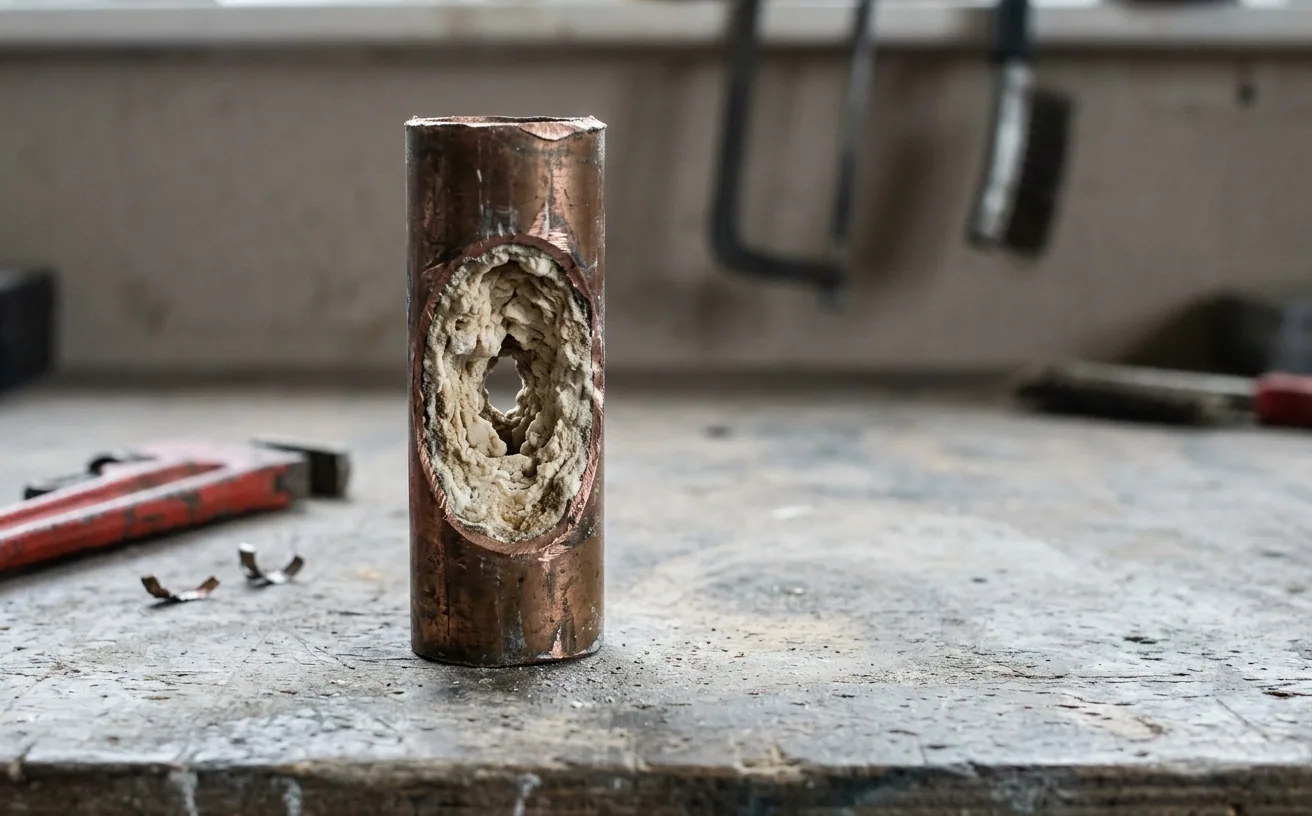
Calcium and magnesium leave the water where it is hottest and stick to the surface they were heated on. A cut section of pipe shows the same buildup that coats the bottom of a tank. It insulates the steel from the water, which is why a scaled tank pops.
The photographs on this page are generated illustrations of the conditions described here, not pictures of this company's work. Real job photographs will be added as they are approved for publication.
Sometimes that is the honest answer, and sometimes it is not. A thermocouple on a seven year old tank is a repair, full stop.
What decides it is the age of the tank and whether the shell itself is sound. Both of those are checked and shown to you, not asserted.
A flush moves loose sediment. It does not remove the hard layer that has baked onto the bottom of the tank over years of heating.
That is why a flush helps a two year old tank and does very little for a ten year old one. If the popping survived a flush, the diagnosis moves on to the tank itself.
The diagnostic time is what tells you whether you are buying a small part or a whole new heater. Guessing costs more than testing.
Housecall Pro puts that fee at about $75 to $150 across the trade. Ask on the phone whether it is credited toward the repair, and get the answer before you book.
You often can, and for some faults that is a reasonable path. An element on an electric unit is a common homeowner repair.
Gas control valves and relief valves are different. A wrong part or a poor seal on a gas appliance carries consequences a faucet washer never will.
That is a fair question, and the honest answer is that no review count has been verified for this site, so none is published.
What this page does instead is name its sources and publish market ranges you can check. Judge the call itself, and check any contractor free on the Nevada State Contractors Board license search.
We cover water heater repair in every part of the valley listed below. Each area page names the office that issues the plumbing permit there and who owns the sewer line at the curb, because both genuinely differ from one city to the next.
Say it is about this when you call and you skip the sorting.
We are a service area business. We come to you, so there is no counter to visit and no street address on this page. The number above is the fastest way in.
About a minute of detail changes what we can tell you on the call.
It depends on which part failed and what the tank itself looks like. Rheem publishes a typical tank life of 8 to 12 years, so a 10 year old unit is near the end. A cheap element or thermocouple is usually worth fixing. A leaking tank is not.
The test is whether the repair buys years or weeks. A control part on a sound shell buys years. A weeping seam means the steel has already failed, and no part sold fixes that.
A single part repair is usually one visit of work, since the common failures are a thermostat, element, thermocouple or gas valve. Diagnosis comes first and takes the early part of the visit. Parts availability is the usual reason a repair runs into a second trip.
Older or less common units are where that changes. If a control valve has to be ordered for a discontinued model, you are told at the diagnosis, not after the plumber has gone.
That sound is water boiling underneath a layer of sediment on the floor of the tank. Las Vegas water is published at 16 grains per gallon, so that layer builds quickly here. The popping means the burner is heating scale instead of water.
It is not dangerous on its own, but it is a bill. The burner runs longer for the same hot water, and the overheated steel underneath the scale is where tanks eventually fail.
Clark County Code 22.02.195 lists work that needs no permit, including repairing leaks in pipes, valves and fixtures and clearing stoppages. Whether a given part replacement falls inside that list is worth confirming with the building department for your address. Replacing the whole heater is a different matter and does need a permit.
The rule that matters is whether concealed piping is being replaced or rearranged. Once it is, the exemption stops applying, and the jurisdiction your address sits in issues the permit.
Rust on the hot side alone points inside the water heater rather than at the city main. The anode rod is sacrificial metal that corrodes so the steel tank does not. Once the rod is used up, the tank lining starts to go, and the water shows it.
If both hot and cold run rusty, the problem is upstream of the heater, usually in galvanized supply pipe that corrodes from the inside out. That is a pipe conversation, not a heater one.
You can, and the drain valve exists for that purpose. Shut off the gas or the breaker first, close the cold supply, and run a hose to a safe drain point. Loose sediment comes out. Hardened scale baked onto the bottom of the tank often does not.
Two cautions. Old drain valves can seize or fail to reseat. A tank that has never been flushed can also clog its own valve with the sediment you are removing.
HomeAdvisor publishes a national water heater repair range of $228 to $1,017, with an average near $616. Las Vegas contractors commonly publish $150 to $700. Those are market figures rather than a quote for your unit. Your number follows the diagnosis.
The spread is mostly parts. An element sits at the bottom of that range and a gas control valve near the top. That is why testing happens before pricing.
A pilot that will not stay lit usually points at the thermocouple, the gas control valve or a burner starved of air. The thermocouple is the cheapest of the three and the most common culprit. A plumber tests the flame and the millivolt output before naming a part.
Do not keep relighting it repeatedly and walking away. A unit that drops its pilot again and again is telling you something has failed, and the message does not improve with repetition.
Describe what is happening and we will tell you what it usually takes to fix.