The things people hesitate over
I have heard reverse osmosis wastes a lot of water.
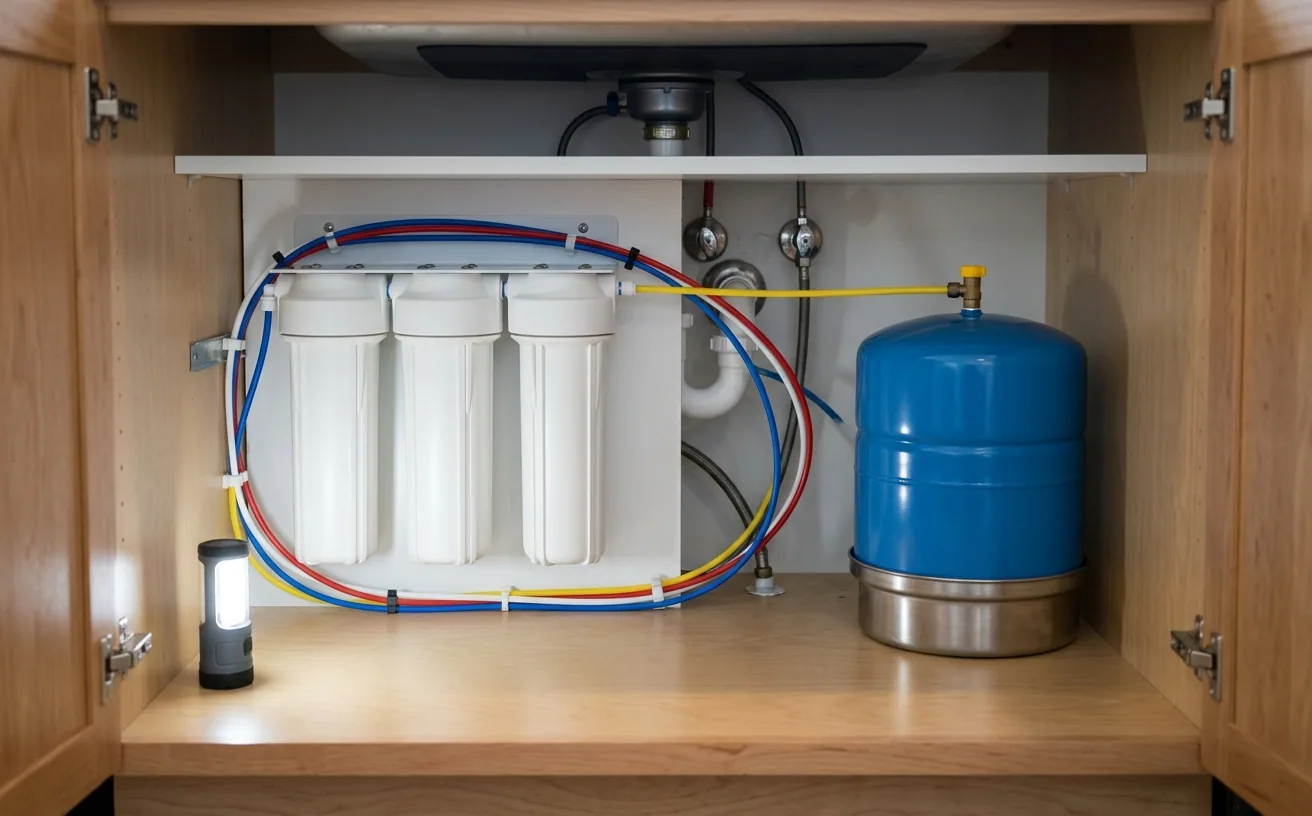
It does send some water to the drain, and that is how the membrane keeps itself clean. The ratio depends on the unit, incoming pressure and how hard the feed water is.
Worth putting next to a different number: the average household already loses more than 9,300 gallons a year to leaks, according to EPA WaterSense. Fixing a running toilet usually saves more than an RO unit sends down the drain.
Do I lose the minerals my body needs?
The membrane does strip most dissolved minerals, which is exactly what it is built to do. Calcium here averages 75 ppm and magnesium 24 ppm.
If that bothers you, a remineralization stage puts a measured amount back and also rounds out the flat taste some people notice. It adds a cartridge to the yearly service list.
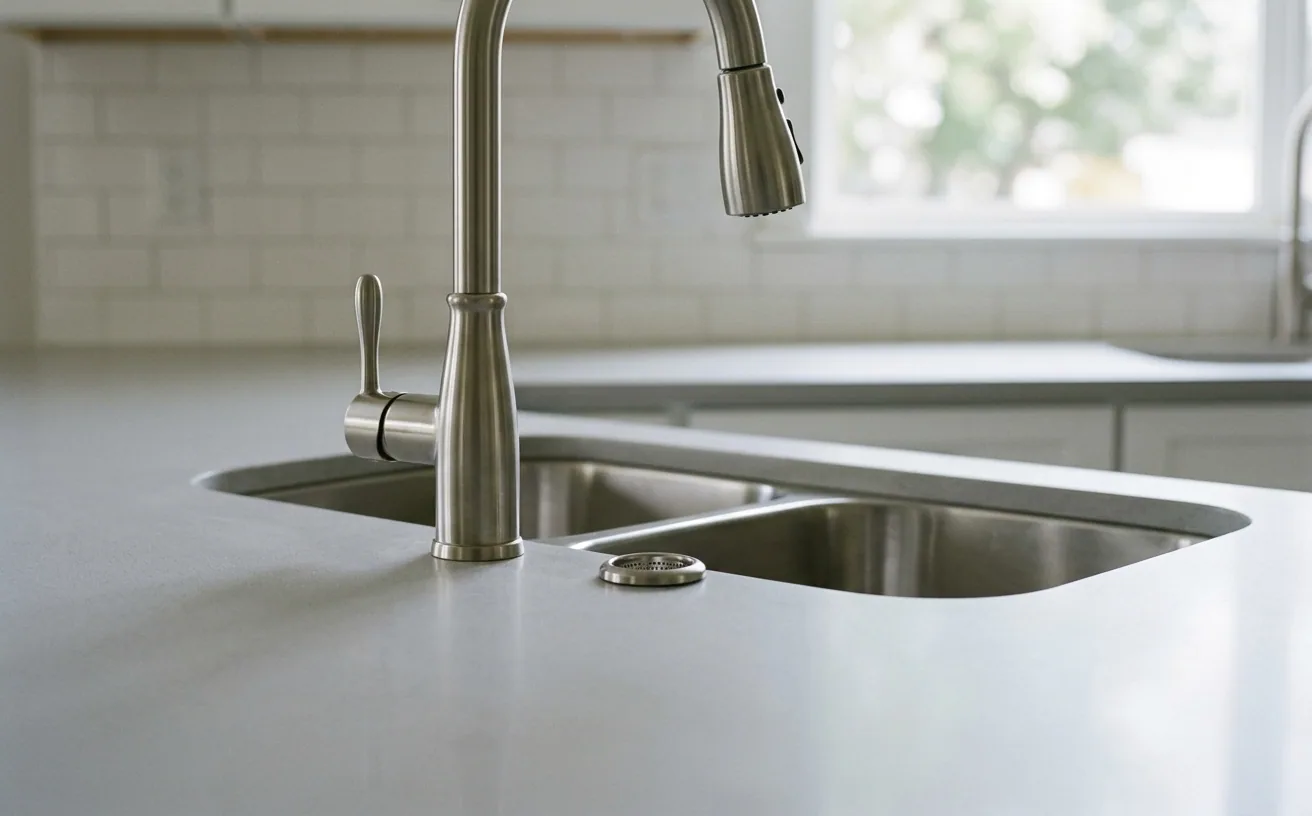
My counter is quartz and I do not want it drilled.
Then say so at the first visit, before anything is ordered. Many sinks have a capped spare hole from a sprayer or a soap dispenser that the RO faucet can take over.
If there is no spare hole and you will not allow drilling, that is a real constraint. Better to know it before a system is sitting in your hallway.
Is this actually cheaper than just buying bottled water?
Do the arithmetic with your own numbers rather than ours. Count the cases you buy in a month, multiply by twelve, and compare that against the install plus the yearly cartridge cost.
For a two person household the math is often marginal. For a family that drinks a case a week, it usually stops being a close call.
Can a handyman do this for less?
Sometimes, and the plumbing itself is not difficult. The two things that go wrong are the drain connection and the permit.
Nevada's small job exemption under $1,000 does not apply when a permit is required, and Clark County does require one here. You can check any contractor's C-1 license on the Nevada State Contractors Board public search.
We might sell the house in a couple of years.
An under sink unit is a modest, self contained addition, and the permit record is the part a future buyer actually benefits from.
Unpermitted work is what creates problems at sale time. A permitted install with an inspection behind it is one less thing to explain to a buyer's inspector.