Plumbing and water treatment across Clark County. Call (725) 337-3692

Clark County and the Las Vegas ValleyFree chlorine, not chloramineTreated at the main line

Whole house water filtration for Las Vegas homes on 591 ppm water

Las Vegas tap water leaves the plant with an average free chlorine residual of 0.99 parts per million. Whole house filtration treats that at the main line, before the water reaches any fixture.

  • Filtration costs shown as sourced market ranges
  • Permit question answered before work starts
  • We say plainly what is not yet confirmed
Whole House Water Filtration in Las Vegas, Nevada
Illustrative image, not a photo of our work
0.99 ppmAverage free chlorine residual in Las Vegas water
90%Share of valley water drawn from Lake Mead
+0.25Saturation index, meaning the water deposits scale
280 ppmHardness a filter does not remove

Figures above are published third party data, not company claims. Sources: LVVWD Water Quality Summary, LVVWD Water Quality Report.

  • Chlorine, not chloramineThe published average free chlorine residual here is 0.99 ppm, and that is the number a carbon stage gets sized against.
  • The permit question gets settled firstClark County lists water softener and reverse osmosis among the plumbing permits it issues online. The building department gets asked before any pipe is cut.
  • Your source water changes by seasonAbout 90 percent of valley water comes from Lake Mead and about 10 percent from a deep aquifer used mainly April to October.
  • A filter is not a softenerFiltration does not lower the published 280 ppm hardness, so scale control stays a separate decision with its own equipment.
The short answer

Whole house water filtration treats every tap at the point where the main line enters the house. In Las Vegas that usually means carbon for the 0.99 ppm free chlorine residual and a sediment stage. It does not remove hardness. Las Vegas water is 280 ppm, so scale control still needs a softener.

This page covers whole house water filtration across the Las Vegas Valley. If you are not sure this is the right service, start from the full list of what we do.

What makes people call about whole house filtration

Most calls about filtration start with taste or smell, not with a leak. Someone fills a glass in the kitchen and it smells like a swimming pool, so they start buying bottled water and never stop.

The second common trigger is that the complaint follows the water everywhere. It is not just the kitchen faucet, it is the shower, the laundry sink and the ice maker too. That pattern points at the main line rather than at any one fixture.

  • Every tap in the house smells like a swimming pool
  • The shower steam smells like bleach and my skin feels tight afterward
  • Coffee and tea taste flat no matter which pot I use
  • Tiny white flecks and grit keep clogging the faucet screens
  • The water looks cloudy in a glass until it sits for a minute
  • The taste changes in the summer and goes back to normal in winter
  • The ice maker water tastes like the garden hose
Is this you?

If the complaint shows up at more than one fixture, a point of entry filter is the right conversation. If it shows up at exactly one faucet, the problem is usually that fixture, its supply line or its aerator.

A seasonal change in taste is also a strong signal. Groundwater from the deep aquifer runs mainly April to October, so northwest valley homes can be on a blend part of the year.

When this is the wrong page

This page is not about scale. Spotted glass, crusted showerheads, stiff laundry and soap that will not lather are all scale complaints. Those point to a water softeners across Clark County, because filtration leaves calcium and magnesium in the water.

If you only want better drinking and cooking water at one sink, a point of use unit is cheaper. Start at reverse Osmosis Drinking Water in Clark County, NV instead. If the real problem is weak flow rather than taste, read water Pressure Regulator Replacement in Las Vegas first.

What a whole house filtration job covers

A point of entry filter is a housing, a bypass and a set of cartridges plumbed into the main cold line. The work is short compared with a repipe. The decisions in front of it matter more, because a filter sized for the wrong flow rate chokes the house.

Scope of a point of entry filtration install in a Clark County home
What is includedWhat that means
Water test at your tapA plumber runs a hardness and chlorine check at a hose bib, so the stages get chosen from numbers measured at your address.
Point of entry locationThe housing goes on the main cold line after the meter and main shutoff, ahead of the split that feeds the rest of the house.
Stage selectionSediment, carbon and any specialty stage get picked against what the test shows and what the district publishes for your zone.
Bypass and isolation valvesA bypass loop lets someone service or change cartridges without shutting water off to the entire house.
Drain provision where neededBackwashing units need a drain connection sized and placed to code, and that requirement often decides where the unit can sit.
Permit confirmationSomeone calls the building department that covers your address and tells you what it requires before the job is scheduled.
Pressure reading before and afterStatic pressure gets read at a hose bib before and after the install, so any drop caused by the new housing is on the record.
What this work looks like

The parts and conditions behind whole house water filtration

Whole House Water Filtration in Las Vegas, Nevada
Illustrative image, not a photo of our work
Whole House Water Filtration in Las Vegas, Nevada
Illustrative image, not a photo of our work
What we commit to

How this page is put together

Four commitments that hold without any credential you would have to take on faith.

  • Every price is a published range with a sourceNo figure on this page is our price. Each one is a published market range with its source named in the table.
  • The permit question is asked, not skippedWhoever pulls a permit is the responsible party for the installation, so the building department gets called before the work, not after it.
  • Numbers before product namesThe stages get chosen from a hardness and chlorine reading taken at your own tap, and you get told what those readings were.
  • We name what we have not confirmedAnything about this business that is not verified stays off this site. That is why you will not find a rating, a review count or a year founded.
How it works

How a filtration job actually runs

Five stages, and the first three happen before anyone touches a pipe.

  1. Describe the water, not a product

    You describe what you taste, smell or see, and which rooms it shows up in. The person taking the call asks for the address, the age of the house and when someone can be home.

    On the phone
  2. Test the water and walk the main line

    You point out the main shutoff, the water heater and the laundry area. The plumber tests hardness and chlorine, reads static pressure and measures the space at the point of entry.

    First visit, before any parts are chosen
  3. Size the housing and pick the stages

    You say how many people live in the house and which complaint bothers you most. The plumber sizes the housing to the fixture count and flow rate, then names the stages that match the test result.

    After the test, before the price is set
  4. Confirm what the building department requires

    You decide whether you want that call made before scheduling or on the day. The plumber contacts the department that covers your address and reports back what it wants for this specific install.

    Before any pipe is cut
  5. Install, flush and hand over the schedule

    You clear the area around the main line and keep pets out of the work zone. The plumber cuts in the housing and bypass, flushes the new media and writes down the cartridge change interval.

    On install day

The price becomes final the moment you approve the stage list and housing size in writing, which happens before any pipe is cut.

What it costs

What whole house filtration costs in Las Vegas

Filtration pricing tracks the size of the housing and the number of stages, not the brand on the label. The table holds published market data with every source named, and it is not a quote for your house.

Use them the way you would use a used car guide. They tell you whether a quoted number sits inside the normal band or well outside it. That is what most homeowners want to know before they say yes.

How the estimate works

An estimate for filtration starts with a test, not a catalog. A plumber runs a hardness and chlorine check at an outside hose bib. The same visit covers static pressure and the space where the main line enters. How long that takes depends on how easy the main line and the hose bib are to reach.

From those readings comes a stage list, a housing size and a written price. You see that price before any work starts, and nothing gets cut, soldered or drilled until you approve it. If the numbers change once a wall or a cabinet is opened, the work stops and you are asked again.

Published market ranges for filtration and related water treatment work
JobTypical Las Vegas rangeWhat moves the number
Whole house filtration$1,129 to $3,541Average about $2,275. A carbon filter runs $800 to $1,500, a UV unit $500 to $1,500.
Water softener, installed$200 to $6,000National average about $1,500. A whole home system sized for Las Vegas hardness sits in the middle of that range, not the bottom.
Reverse osmosis, installed$1,000 to $4,800Average around $2,200 for a full system. An under sink point of use unit runs $200 to $800 installed.
Service call or diagnostic fee$75 to $150The broader trade range runs about $50 to $200. Emergency and after hours dispatch is higher, commonly $150 to $350 or more.

Every figure in this table is a published Las Vegas or national market range from the source named beside it. It is not a quote and it is not this company's price list. Your number comes from the on site estimate. Sources: <a href="https://www.homeadvisor.com/cost/plumbing/" rel="nofollow noopener" target="_blank">HomeAdvisor cost guides, 2026</a>, <a href="https://www.housecallpro.com/resources/marketing/how-to/how-to-price-plumbing-jobs/" rel="nofollow noopener" target="_blank">Housecall Pro 2026 Plumbing Price Guide</a>.

What changes your number

  • Flow rate drives the size, so a four bathroom home needs a larger housing than a two bathroom home and larger housings cost more.
  • A carbon only filter sits toward the lower end of the published range, roughly $800 to $1,500. Multi stage systems land well above that.
  • Adding a backwashing stage means adding a drain connection. Routing that drain across a finished garage is what turns a short job into a long one.
  • An ultraviolet stage adds roughly $500 to $1,500 and needs a working power outlet within reach of the housing.
  • A copper main line needs a soldered tie in, which takes longer on the clock than tying into PEX or CPVC.
  • Installing a filter and a softener on one visit shares the shutoffs and the tie in work. That usually costs less than booking two separate jobs.
Repair against replace

Swapping a clogged cartridge is a small recurring cost. Replacing the whole housing only makes sense when the unit is undersized, cracked or starving the house of flow.

Service call and diagnostic fee

A filtration visit starts with a test rather than a repair. The fee in the table above is the published market figure for that kind of diagnostic call, roughly $75 to $150. The wider trade range runs about $50 to $200.

What this company charges for that visit is not published here, because the number has not been confirmed for this site. Ask for it on the phone, along with whether it comes off the price of the work.

Ranges last reviewed September 2026.

What the job looks like

What the conditions behind this page look like

Filtration is one of the few plumbing jobs where the evidence is mostly invisible. You cannot see chlorine and you cannot see dissolved solids, so the pictures below show the two places the decision actually gets made.

The first is the point of entry, where the housing has to fit and the shutoff has to be reachable. The second is what a filter deliberately leaves alone.

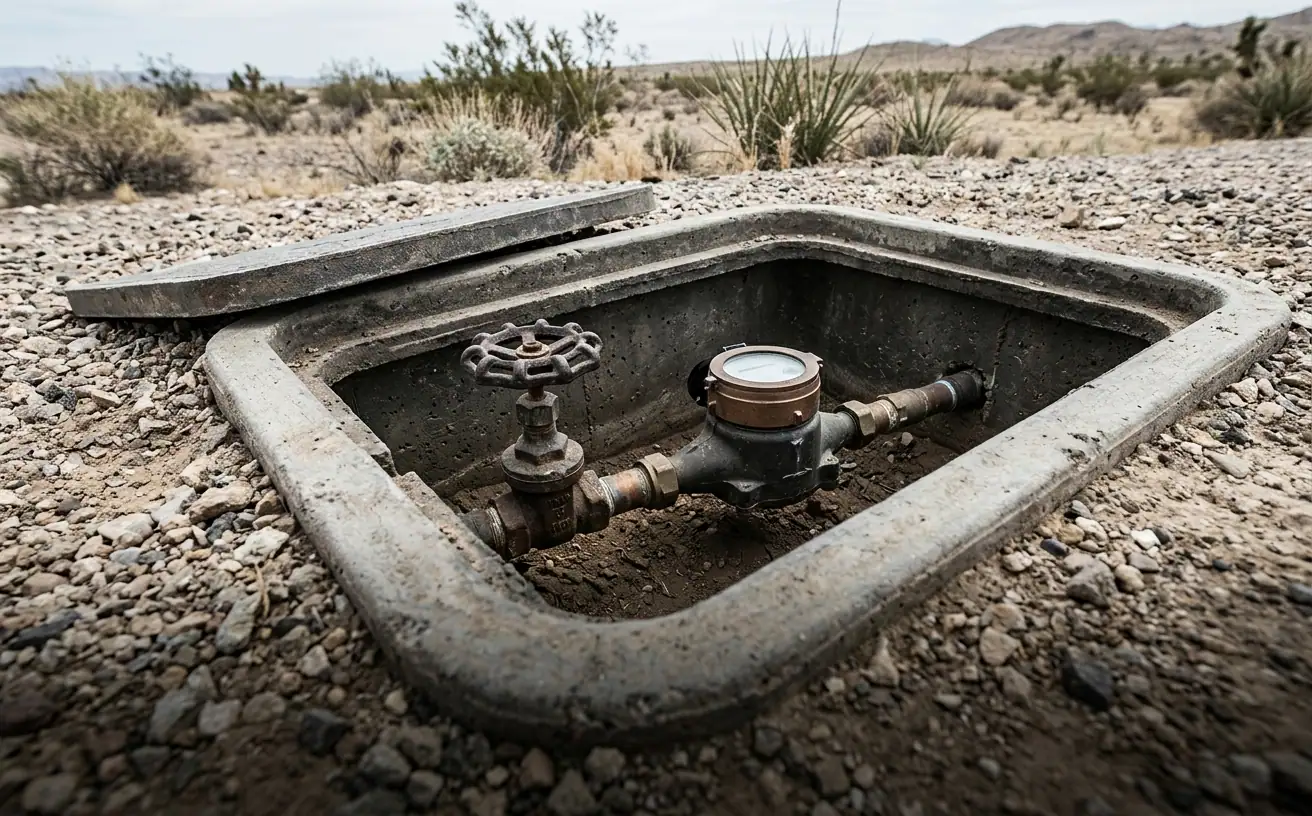
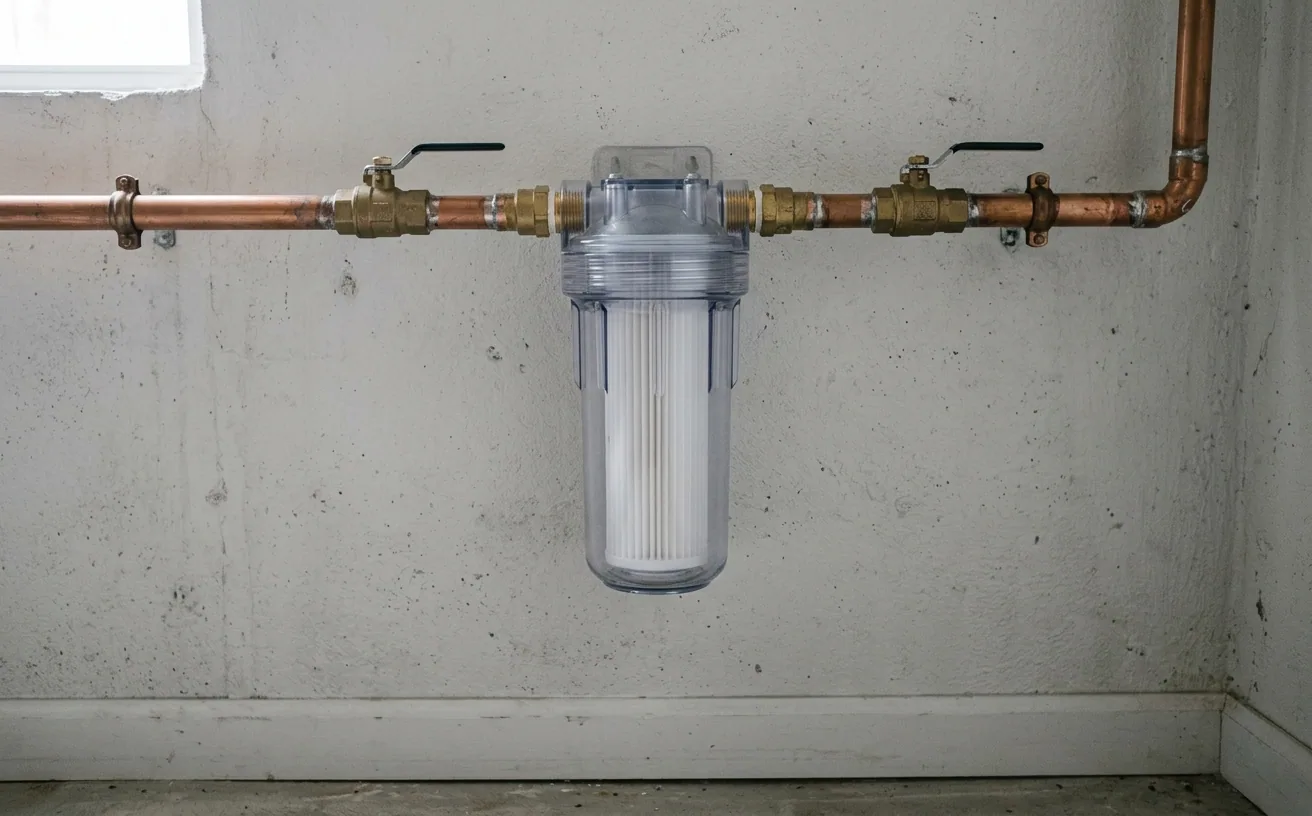
Where the point of entry sits. Whole House Water Filtration in Las Vegas
Illustrative image, not a photo of our work

Where the point of entry sits

A whole house filter goes downstream of the meter and the main shutoff, on the cold line before it branches. In Clark County that is normally a garage or exterior wall, because homes here sit on slabs over caliche and have no basement. The location has to leave working room to change cartridges without draining the house.

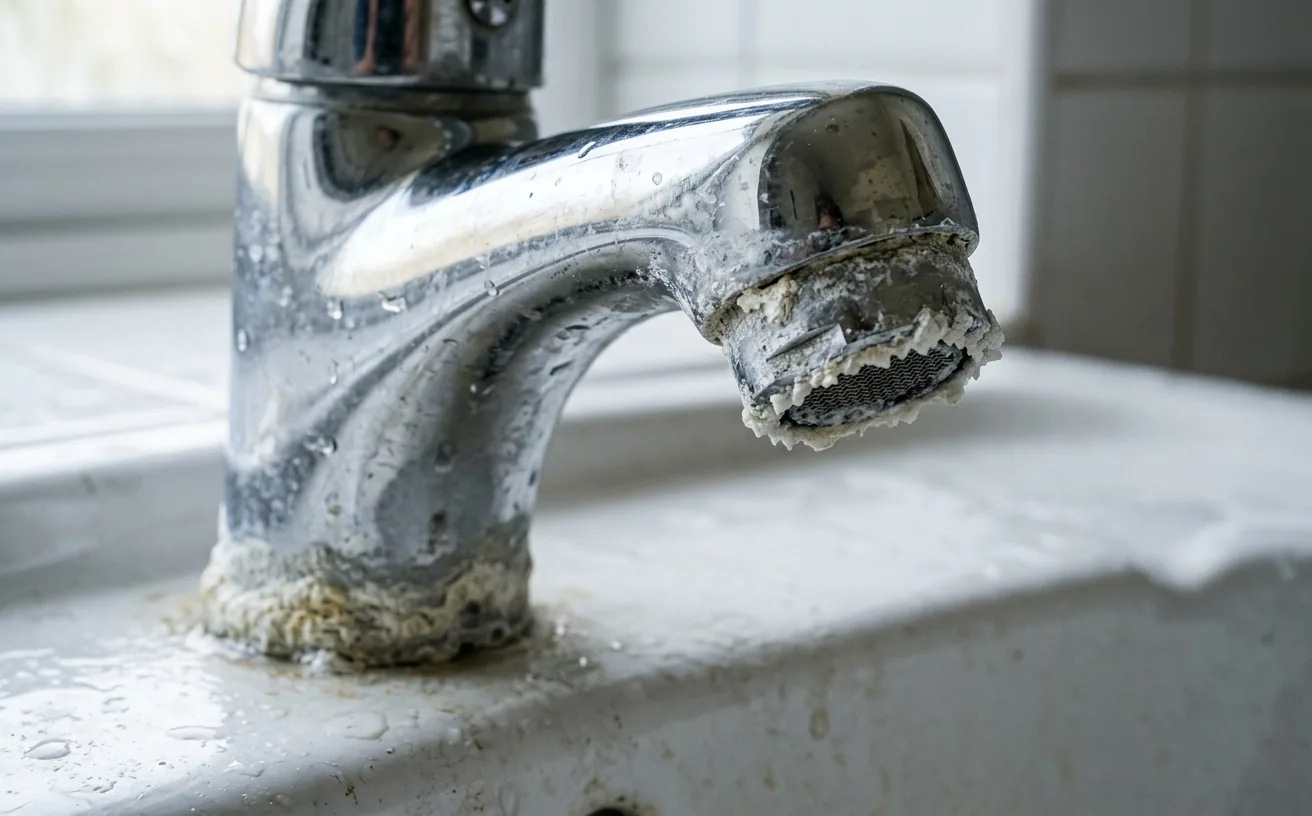
What a filter deliberately leaves behind. Whole House Water Filtration in Las Vegas
Illustrative image, not a photo of our work

What a filter deliberately leaves behind

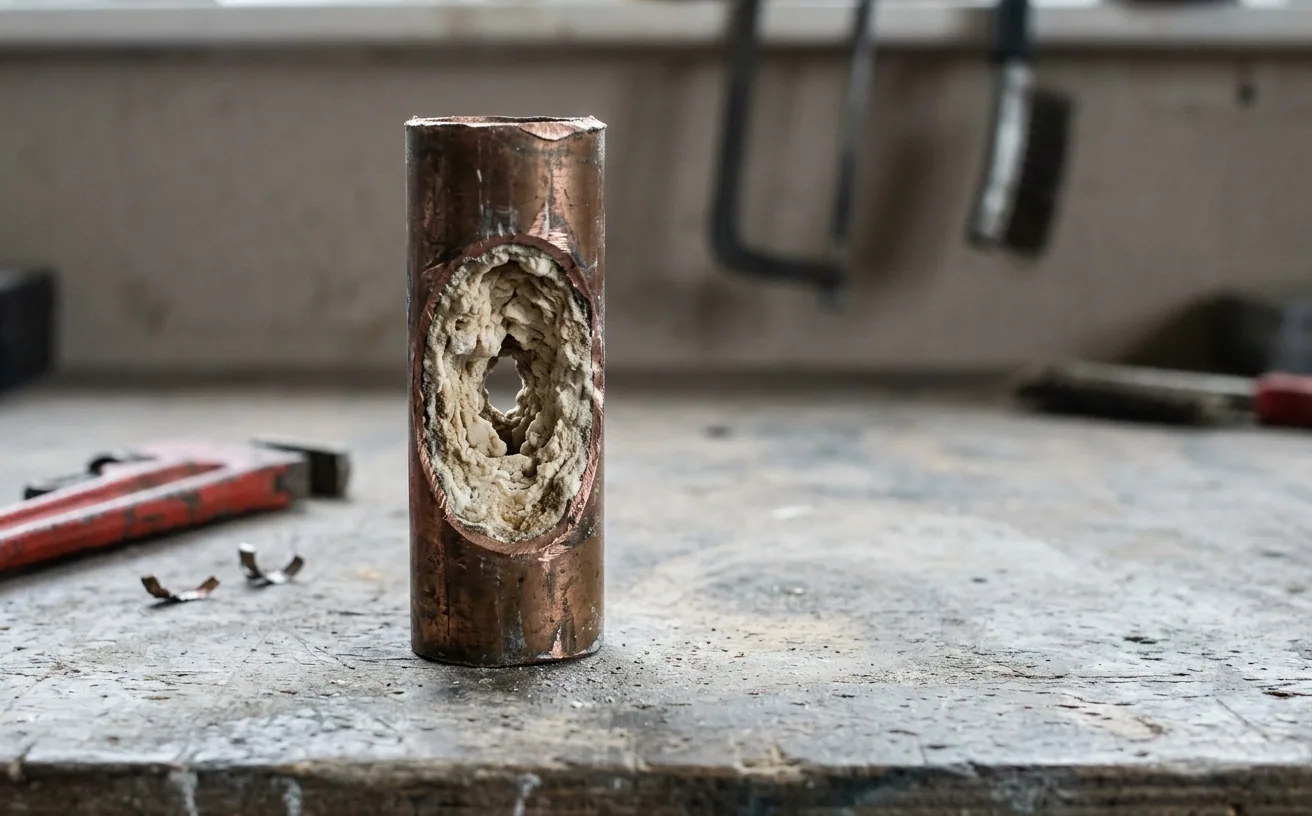
Carbon and sediment stages take out chlorine, taste, odor and grit, and they leave calcium and magnesium in the water. That is why an aerator on filtered water still crusts over on a 280 ppm supply. Solving the white crust is a softener job, not a filtration job.

Photography note

These photographs are generated illustrations, not jobs this company did, and real job photographs go up as they are approved.

Fair questions before you spend anything

I already have a filter on the fridge, is that not enough?

It depends what is bothering you. A refrigerator filter handles the drinking and ice water at one appliance, and it does nothing for the shower, the laundry or the bathroom taps.

If the chlorine smell in the shower is the actual complaint, a fridge filter will never fix it because the water never passes through it.

This feels like the start of an upsell into a softener.

The honest answer is that these are two different machines solving two different problems, and plenty of homes need only one of them.

If your complaint is taste and smell, a filter is the answer and a softener is not. If it is scale, the reverse is true. The test at your tap tells you which conversation you are in.

I rent, so can I even do this?

A point of entry filter is plumbed into the main line, which makes it a change to the property rather than to your belongings. That is a landlord decision, not a tenant one.

If you want something you can take with you when the lease ends, a unit at one sink is the practical option in a rental.

I do not want my shower pressure to drop.

Every filter housing costs some pressure, and a neglected cartridge costs a great deal more. That is the real risk, not the filter itself.

This is why static pressure gets measured before the housing is chosen. A house already running low pressure needs a larger housing or a different approach entirely.

How do I know the numbers on this page are real?

Every water quality figure here comes from the Las Vegas Valley Water District publications linked beside the number, and you can open them yourself.

You will notice the district publishes two hardness figures at once. The summary says 280 ppm and its FAQ page still shows an older 291 ppm. We would rather show you that than pretend the data is tidier than it is.

Can I just buy one at a big box store and put it in myself?

Plenty of people do, and the hardware is not the hard part. Sizing it to your flow rate and getting the bypass right is where self installs go wrong.

The permit question matters more than the parts. Nevada's small job exemption under $1,000 does not apply when a permit is required.
Where we do this work

Whole House Water Filtration across Clark County

We cover whole house water filtration in every part of the valley listed below. Each area page names the office that issues the plumbing permit there and who owns the sewer line at the curb, because both genuinely differ from one city to the next.

The fastest way in

Ask about whole house water filtration

Say it is about this when you call and you skip the sorting.

Reach Clark County Plumber

Service area
Clark County, Nevada, including Las Vegas, Henderson, North Las Vegas, Summerlin, Paradise, Spring Valley, Enterprise and Boulder City

We are a service area business. We come to you, so there is no counter to visit and no street address on this page. The number above is the fastest way in.

What to have ready

About a minute of detail changes what we can tell you on the call.

  • The address and ZIP code, so we know which end of the valley you are on.
  • What the symptom is, in your own words. "Water under the sink" beats a diagnosis.
  • When it started, and anything already tried.
  • On a water heater: gas or electric, and roughly how old it is.
  • You get the diagnostic fee as a figure on the phone, before anyone is sent.
  • Scope and price are agreed together, before any work starts.
  • Water moving right now? Shut the main off first, then call and say so.

Questions about this service

Does a whole house filter get rid of hard water in Las Vegas?

No. A whole house filter removes chlorine, taste, odor and sediment, but it does not remove calcium and magnesium. Las Vegas water is published at 280 parts per million hardness, which is 16 grains per gallon. Lowering that takes a softener, which is a separate unit with its own permit.

The two are commonly installed together at the same point on the main line, sharing the shutoffs and the tie in. If crusted fixtures and spotted glass are your main complaint, read the softener pages before you price a filter.

Is Las Vegas tap water safe to drink?

The water district publishes its results against state and federal limits. Total dissolved solids average 591 parts per million, against a Nevada secondary standard of 1,000. Secondary standards cover taste, odor and appearance rather than health. Filtration here is usually a taste and chlorine decision, not a safety limit.

The hardness that most people complain about is a mineral content question, not a contamination question. Calcium averages 75 ppm and magnesium 24 ppm, and both arrive with Rocky Mountain snowmelt down the Colorado River.

Where does a whole house filter get installed?

It goes on the main cold line after the meter and shutoff, before the water splits to the rest of the house. In Clark County homes that is usually the garage wall or an exterior wall, because houses here sit on slabs and have no basement. The spot has to leave room to change cartridges.

Irrigation and hose bibs are often deliberately left upstream of the filter. There is no reason to spend cartridge life on landscape watering. Leaving them ahead of the housing also keeps flow demand on the filter lower.

How often do the filter cartridges need changing?

Cartridge life depends on the stage and on how much water the house uses. You replace sediment and carbon cartridges on the schedule the manufacturer sets, and the housing label gives the interval. Chlorine loads the carbon steadily, and Las Vegas runs a published average residual of 0.99 ppm.

A house of five people goes through cartridges faster than a house of two, because the interval is really about volume rather than calendar time. Write the install date on the housing with a marker and the guesswork disappears.

Do I need a permit for a whole house filter in Clark County?

Ask the building department before the work starts. Clark County issues several plumbing permits fully online with no plan review, including water softener and reverse osmosis, one item per permit. A water conditioning system needs both a permit and an inspection, whether a homeowner or a company installs it.

For unincorporated areas like Spring Valley, Enterprise, Paradise and Sunrise Manor, the counter is at 4701 West Russell Road, (702) 455-3000. Inside the City of Las Vegas it is Building and Safety at 495 S. Main St., (702) 229-6251.

Will a filter change my water pressure?

Every filter housing adds some pressure drop, and a clogged cartridge adds much more. That matters in a house that already runs low pressure or has an aging pressure regulator. A plumber checks static pressure at a hose bib before choosing a housing size and cartridge rating.

If the reading is already low before anything is installed, the regulator is the first thing to look at. Adding a filter to a house with a failing regulator makes a pressure complaint worse and hides the real cause.

Does filtering the water protect my water heater?

Not by itself. Scale, not chlorine, is what shortens a water heater in this valley. A 2009 Battelle study for the Water Quality Research Foundation measured scale in storage water heaters. Gas units on hard water built 528 grams a year, against 7 grams on softened water.

Carbon filtration does help a softener that sits behind it, because free chlorine shortens resin life and this valley runs free chlorine rather than chloramine. A resin bed typically lasts 10-15 years, and both chlorine and high hardness push it toward the short end.

Can I install a whole house filter myself?

A homeowner can do plenty of plumbing work, but Nevada's small job exemption under $1,000 does not apply when a permit is required. It also does not apply to work of a type a plumbing contractor performs. Anyone can check a contractor's C-1 license on the Nevada State Contractors Board public search.
The mechanical risk is the tie in on the main line, not the housing. A joint that weeps behind drywall or inside a garage wall costs far more to fix than the filter ever cost to buy.

Talk to someone about whole house water filtration

Describe what is happening and we will tell you what it usually takes to fix.