280 ppm, 16 grains per gallonFigures published by LVVWD
Is Las Vegas water hard? What 280 ppm actually means
The water district publishes a hardness figure for the valley, and it is high by any national measure. This guide explains the number, where it comes from and what it does inside a house.
- LVVWD published data
- USGS hardness threshold
- Battelle scale study
Yes. The Las Vegas Valley Water District publishes valley tap water at 280 parts per million as calcium carbonate, which is 16 grains per gallon. The US Geological Survey calls anything above 180 milligrams per liter very hard, so the valley runs about 1.6 times that line. Softening is the common way to take it out.
Last updated 2026-09-17. Written for homeowners in Las Vegas and Clark County, Nevada.
How hard is Las Vegas tap water?
The Las Vegas Valley Water District publishes valley tap water at 280 parts per million measured as calcium carbonate. That converts to 16 grains per gallon, which is the unit softeners are programmed in. The district tells customers to set a softener to 16 grains per gallon.
Against the national scale that is a high reading. The US Geological Survey puts the very hard band at anything over 180 milligrams per liter. The valley clears that mark by a wide margin. None of this is unusual for water off the Colorado River, but it is high compared with most of the country.
One wrinkle is worth knowing before you program anything. A second hardness figure, 291 parts per million or 17 grains, still appears on the district's own water quality FAQ page. The number the district tells customers to dial into a softener is 16.
What is actually in the water?
Hardness is one line on a longer water quality summary. Calcium averages 75 parts per million and magnesium averages 24 parts per million, and those two minerals together are what a hardness number counts.
Total dissolved solids average 591 parts per million, against a Nevada secondary standard of 1,000. The pH runs about 7.8, which is mildly alkaline. The valley is disinfected with free chlorine rather than chloramine, at an average residual of 0.99 parts per million.
That chlorine figure matters more than most homeowners expect. Free chlorine is what carbon filters are aimed at, and it also wears the resin beads inside a water softener over the years.
| Measure | Published figure |
|---|---|
| Hardness | 280 ppm as calcium carbonate |
| Hardness in softener units | 16 grains per gallon |
| Calcium | 75 ppm |
| Magnesium | 24 ppm |
| Total dissolved solids | 591 ppm, against a Nevada secondary standard of 1,000 |
| pH | 7.8 |
| Saturation index | Plus 0.25 |
| Disinfectant residual | 0.99 ppm free chlorine |
Why is the water hard in the first place?
About 90 percent of valley drinking water comes out of Lake Mead, and about 10 percent comes from a deep aquifer under the valley. Lake Mead water begins as Rocky Mountain snowmelt.
On its way down the Colorado River, that snowmelt picks up calcium and magnesium. By the time it reaches a tap in Summerlin or Henderson, it carries the mineral load the district reports every year.
Groundwater is pumped mainly from April to October to cover peak summer demand. Homes in the northwest valley can therefore be on a blend of both sources for part of the year rather than lake water alone.
What does 280 ppm do inside a house?
The district also publishes a saturation index of plus 0.25 for valley water. A positive index means the water tends to deposit mineral rather than dissolve it, so scale forms on surfaces the water touches.
A 2009 Water Quality Research Foundation study run by Battelle measured that effect. Gas storage water heaters on hard water built 528 grams of scale a year, against 7 grams on softened water. Electric units built 907 grams against 14 grams.
None of the heaters running unsoftened water finished that test, because scale blocked the outlet piping. Rheem puts a tank heater at 8 to 12 years and a tankless unit at 15 to 20 or more. Hard water shortens both, the manufacturer says.
Manufacturers plan around it. Rinnai says to flush the mineral out of a tankless unit at least once a year. Navien says to descale at least annually, and more often where mineral content or the set temperature is higher.
How can you see the hardness for yourself?
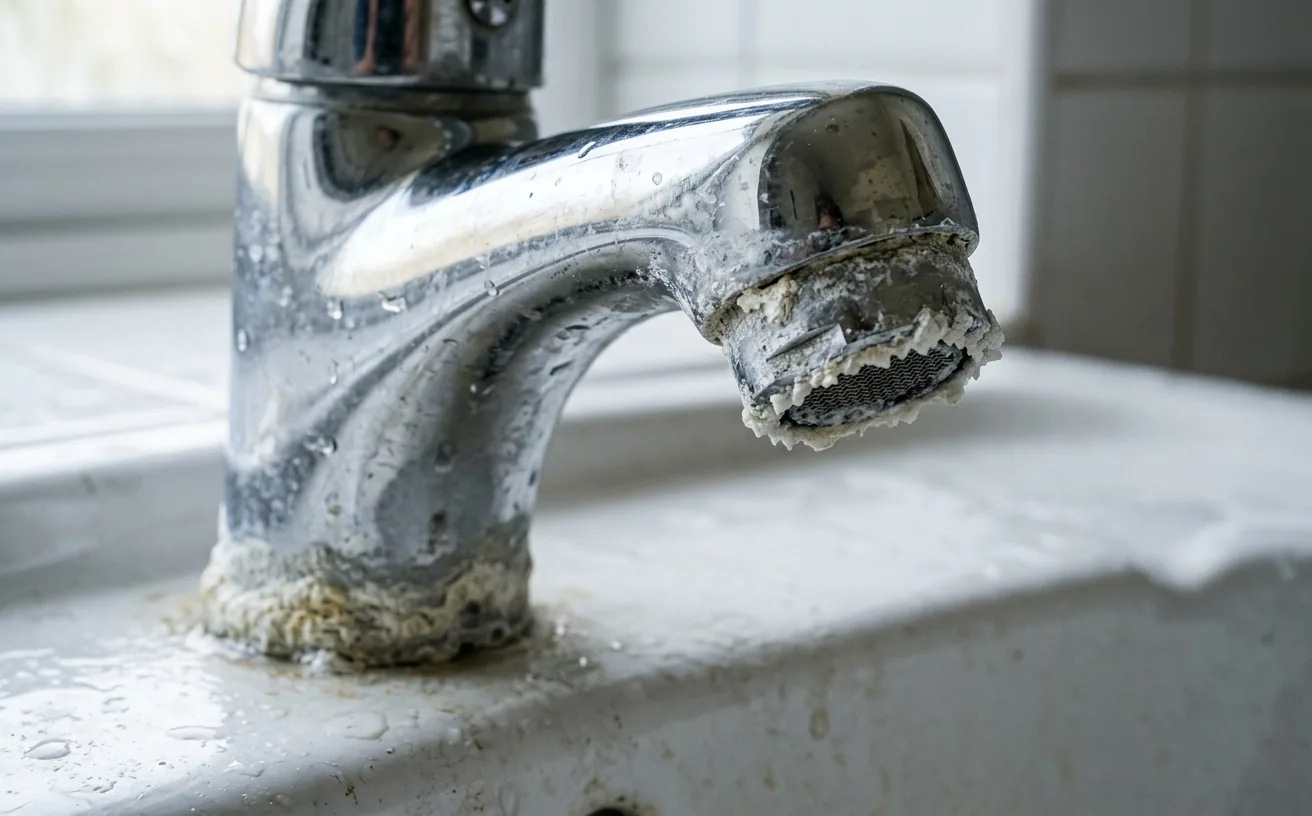
You do not need a test kit to watch 16 grains per gallon at work. Unscrew the aerator from the end of a kitchen faucet and look at the screen. White or gray crust on the mesh is mineral left behind as water evaporated.
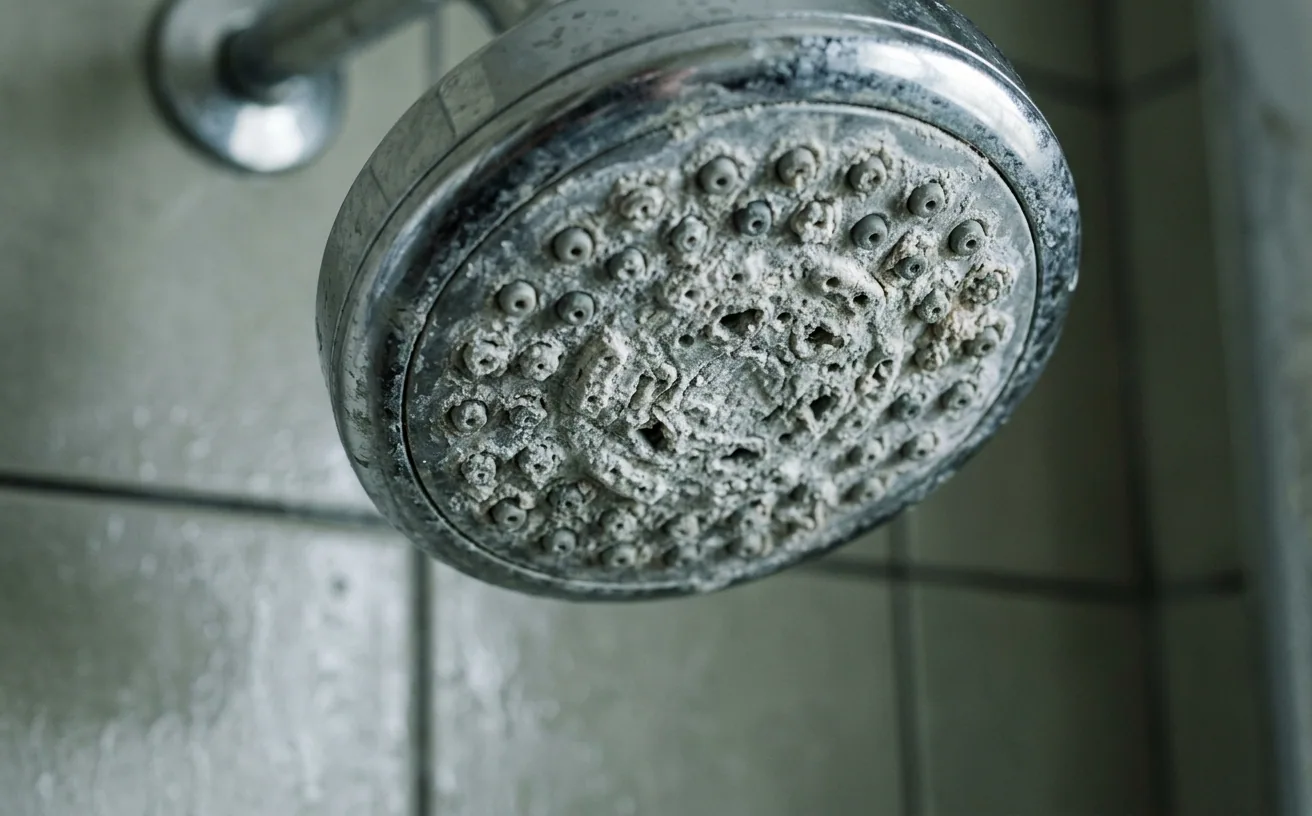
Shower glass tells the same story. Spots that return within a day of cleaning are dissolved mineral, not dirt. Chrome showerheads collect the same crust around the spray holes, which slowly wrecks the spray pattern.
Kettles, coffee makers and humidifiers pick up a chalky film for the same reason. None of that is dangerous on its own, and all of it is the visible version of what happens inside pipes and heaters.
If you are weighing up what to do about it, the water softeners service in Southern Nevada covers treatment options. The guide on whether you need a water softener walks through the decision itself. A reading at your own tap is the only way to confirm the published figure matches your address. That request goes to (725) 337-3692.
Sources
- Hardness of 280 ppm as calcium carbonate, calcium, magnesium, total dissolved solids, pH, saturation index and chlorine residual LVVWD Water Quality Summary
- The instruction to set a softener to 16 grains per gallon, and the split between Lake Mead and groundwater LVVWD Water Quality Report
- The older 291 ppm, 17 grains per gallon figure still shown on the district FAQ LVVWD Water Quality FAQs
- Water above 180 milligrams per liter is classed as very hard USGS, Hardness of Water
- Scale accumulation of 528 and 907 grams a year on unsoftened gas and electric water heaters Water Quality Research Foundation, Battelle study
- Tank water heaters at 8 to 12 years, tankless at 15 to 20 or more, shortened by hard water Rheem
- Guidance to flush a tankless water heater at least once a year Rinnai
- Guidance to descale at least annually, more often with higher mineral content or set temperature Navien
Where to go from here
The service this covers
Related guides
Want someone to look at yours?
Reading about it only gets you so far. One call gets you an answer about your house.
Reach Clark County Plumber
- Phone
- (725) 337-3692
- Service area
- Clark County, Nevada, including Las Vegas, Henderson, North Las Vegas, Summerlin, Paradise, Spring Valley, Enterprise and Boulder City
We are a service area business. We come to you, so there is no counter to visit and no street address on this page. The number above is the fastest way in.
What to have ready
About a minute of detail changes what we can tell you on the call.
- The address and ZIP code, so we know which end of the valley you are on.
- What the symptom is, in your own words. "Water under the sink" beats a diagnosis.
- When it started, and anything already tried.
- On a water heater: gas or electric, and roughly how old it is.
- You get the diagnostic fee as a figure on the phone, before anyone is sent.
- Scope and price are agreed together, before any work starts.
- Water moving right now? Shut the main off first, then call and say so.
Related questions
Is hard water in Las Vegas bad for you?
Hardness is regulated as a secondary standard, which covers taste, appearance and nuisance effects rather than health. Nothing the district reports for the valley crosses a health limit. The practical problem with 280 parts per million is scale on plumbing and fixtures.
If taste is the complaint, chlorine is the usual cause rather than calcium. Carbon filtration is the fix for that, and it is a separate piece of equipment from a softener.
Why does the water district show two different hardness numbers?
Because one of the two pages has not been refreshed. The current water quality summary carries 280 parts per million, while the FAQ page still reports an older sample at 291. In softener units that is 16 grains against 17.
The gap is small enough that it changes nothing about how a system is sized or programmed. Use 16 unless a plumber measures your own tap and finds something different.
Does the hardness change during the year?
It can shift a little, and the reason is which source is carrying the load that month. The valley leans on Lake Mead most of the year and pulls harder on its deep aquifer through the summer. A northwest valley home can be drinking a mix of the two for part of the year.
A softener programmed to the published 16 grains per gallon absorbs that seasonal variation without any adjustment from you.
Does hard water damage pipes as well as water heaters?
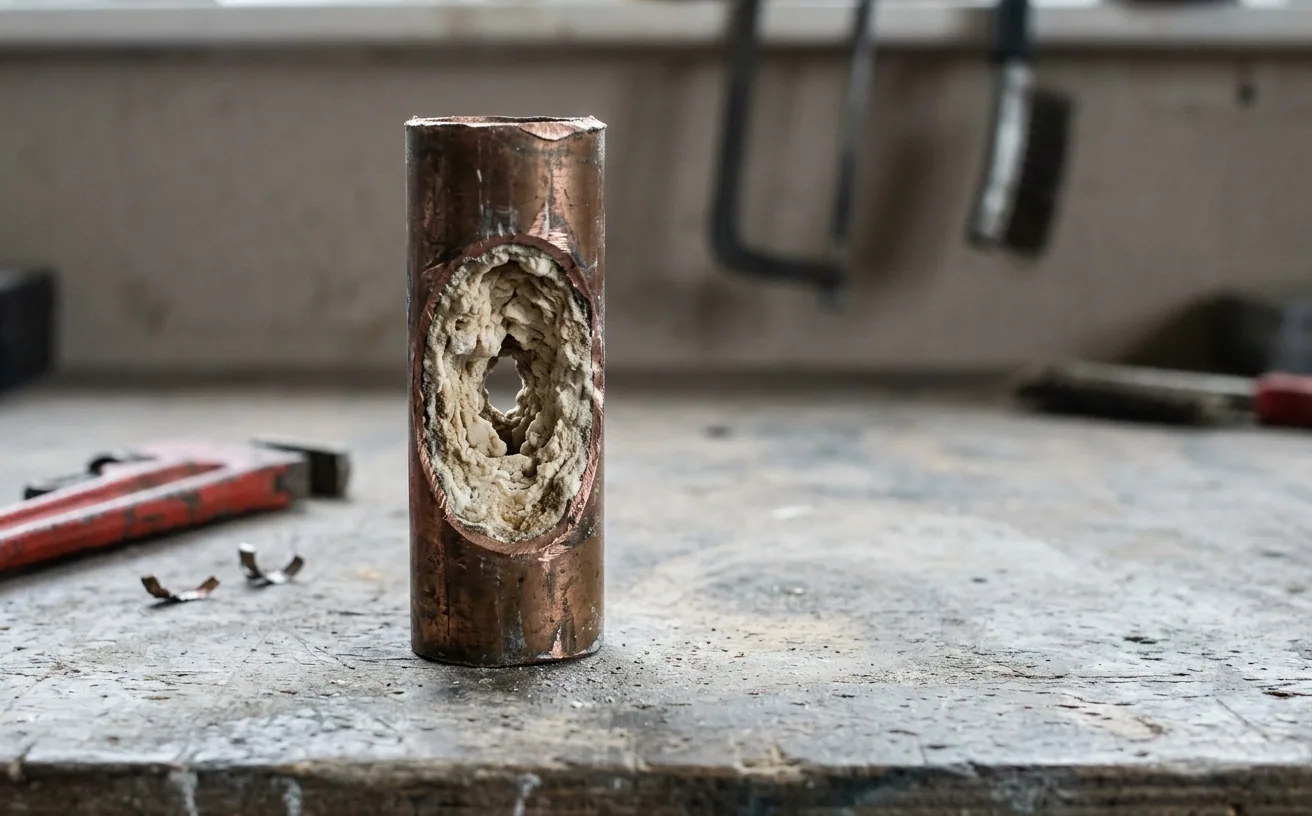
Scale narrows the inside of supply lines and collects on any heated surface, which is why heaters show it first. In the Battelle study, scale blocked the outlet piping on every unsoftened heater tested. Small shutoff valves are another common casualty in this valley.
InterNACHI puts angle stops, the shutoff valves under sinks and toilets, at 8 to 20 years. Hard water pushes them toward the early end of that range.
Will a pitcher filter fix hard water?
No. A pitcher or refrigerator filter targets taste, odor and chlorine, and it treats only the water poured through it. Hardness is a whole house problem, because scale forms in the heater, the shower valve and every fixture. Removing 16 grains per gallon takes a system plumbed into the main line.
That is the difference between point of use filtration and whole home treatment, and the two solve different complaints.
Talk it through with someone
Describe what you are seeing and we will tell you what it usually turns out to be.