Plumbing and water treatment across Clark County. Call (725) 337-3692

A method, chosen after the cameraGrease, scale and root cuttingNot for collapsed or fragile pipe

Hydro jetting in Las Vegas, and when it is the wrong tool

Hydro jetting is a method, not a service to buy by default. It cleans the full pipe diameter with high pressure water, and it can damage pipe that has already weakened.

  • Camera evidence before a jetter goes in
  • Published market ranges named with their source
  • We will say no when the pipe cannot take it
Hydro Jetting in Las Vegas, Nevada
Illustrative image, not a photo of our work
$350 to $600Published market range for hydro jetting
1940s to 1970sYears Orangeburg sewer pipe was installed
More than 50%Share of sewer blockages reported to involve tree roots
16.7%Clark County homes built before 1980, roughly 163,000

Figures above are published third party data, not company claims. Sources: HomeAdvisor cost guides, InterNACHI, US EPA, US Census ACS via Census Reporter.

  • Pipe condition decides, not the saleWhere the pipe is too fragile to take the pressure, the honest answer is that jetting is not the right method.
  • Look first, then choose the toolA camera run tells you what is in the line and what the line is made of before any nozzle goes down it.
  • Ranges, not invented pricesThe jetting figures here come from published cost guides that are named and linked beside the table.
  • Method is explained before it is usedYou are told why a jetter is being proposed over a cable, in terms of what is actually in your line.
The short answer

Hydro jetting pushes water through a nozzle at high pressure to scour the inside wall of a drain or sewer line. It removes grease, scale and roots that a cable only punches through. Published market ranges run $350 to $600 for typical residential work. Call (725) 337-3692 to talk it through.

This page covers hydro jetting across the Las Vegas Valley. If you are not sure this is the right service, start from the full list of what we do.

Conditions that point toward jetting rather than cabling

A cable cuts a channel through an obstruction. Water starts moving again, which feels like success, but the layer coating the pipe wall is still there. That is why some lines block again a few months later on the same schedule.

Jetting is the answer to a specific complaint: the line keeps closing, or it is coated rather than plugged. These are the patterns that usually lead there.

  • This same drain has been snaked three times in two years
  • The kitchen line at my restaurant slows down every few weeks
  • It drains fine for a month after every visit and then goes bad again
  • The plumber said there were roots but he only cut a hole through them
  • The camera showed the pipe coated all the way around, not just blocked
  • Two floor drains at my shop back up whenever we run the wash sink hard
  • The line smells even when it is draining, like something is stuck to the walls
Is this you?

If your line has been cleared more than once and keeps returning to the same behavior, jetting is worth discussing. Repeat failures usually mean coating, not a single obstruction.

It is also worth discussing when the line carries grease by design, which covers most commercial kitchens and many older residential kitchen branches.

It is not the right answer for a one time clog caused by an object. It is also not a maintenance ritual to buy on a calendar without evidence.

When this is the wrong page

A first time blockage in one fixture does not need a jetter. Start at clogged Drain Repair in Las Vegas, because a cable usually solves it for less money.

If the camera shows a pipe that has collapsed, separated at a joint or gone soft, jetting cannot help and could open it further. That is sewer Line Repair and Replacement or trenchless sewer repair territory.

Restaurant interceptor pumping and the records that go with it are a separate commercial service, handled on grease traps across Clark County.

What hydro jetting does inside the pipe

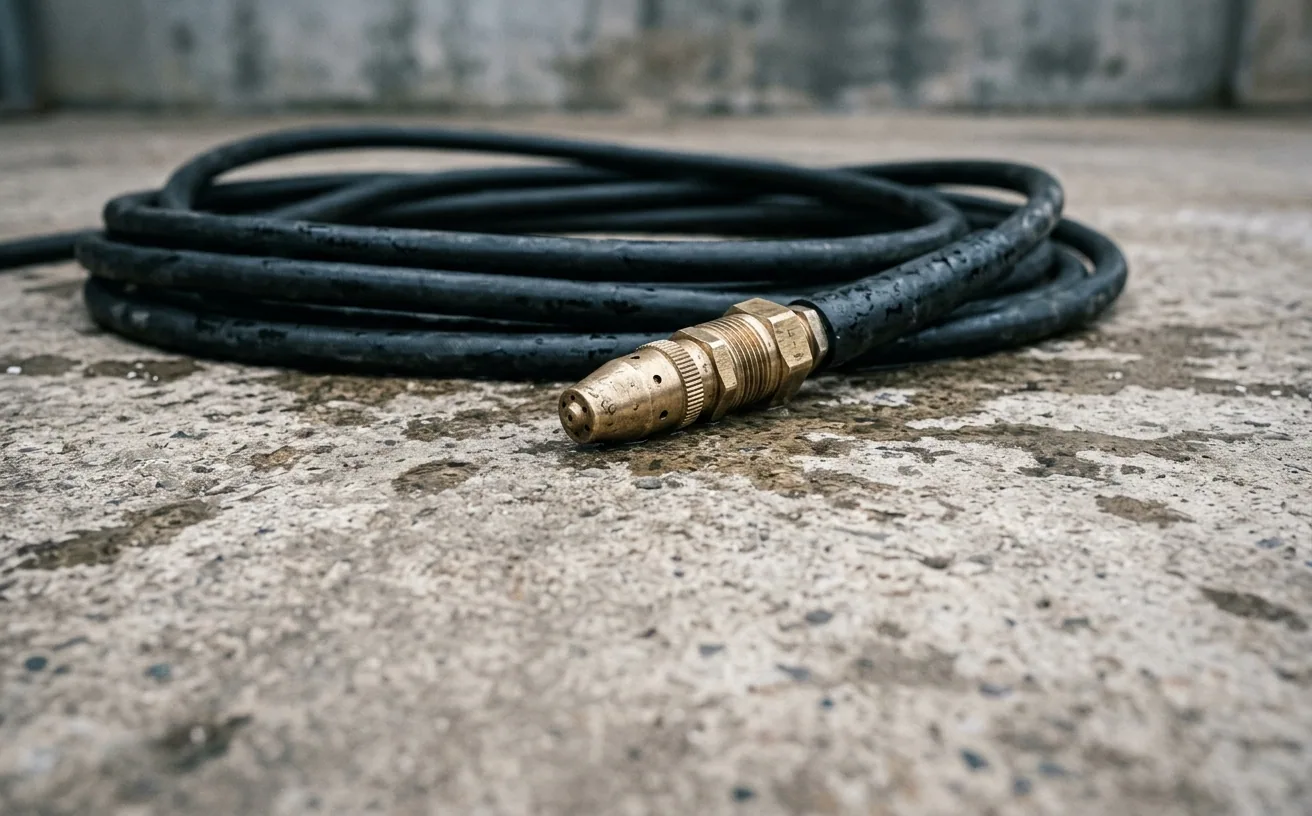
A jetter is a pump, a hose reel and a nozzle. The pump is rated by pressure in pounds per square inch and by flow in gallons per minute. The nozzle turns that into rearward jets, which both propel the hose and scour the wall.

How a jetting visit is built, from the machine to the proof
What is includedWhat that means
Machine sizingA sink branch and a four inch main need different pumps, because flow moves debris out while pressure does the cutting.
Nozzle selectionDifferent heads exist for grease, for scale and for roots, and the wrong head on the right machine still gives a poor result.
Hose advanceRear facing jets pull the hose up the line, and the operator advances and retreats in passes rather than driving straight to the end.
Debris evacuationFlow carries loosened material back down toward the cleanout, so the waste leaves the system instead of settling further along.
Wall scouringThe jets strike the pipe wall at an angle to lift coating away, which is what returns the line to something close to full diameter.
Post work cameraA second camera pass shows what the wall looks like after the water, which is the only honest proof the method worked.
What this work looks like

The parts and conditions behind hydro jetting

Hydro Jetting in Las Vegas, Nevada
Illustrative image, not a photo of our work
What we commit to

How we intend to use this method

Jetting is easy to oversell, so these commitments are about restraint.

  • No jetter without a cameraWe will not put high pressure water into a line nobody has looked at, because pipe condition is the whole question.
  • A recommendation against, when that is the answerIf the line shows collapse, separation or a soft wall, we will tell you jetting is off the table rather than quoting it anyway.
  • Before and after, on screenYou see the same stretch of pipe before the water and after it, so the result is something you judged yourself.
  • Prices stay sourcedThe jetting ranges published here carry the name of the cost guide they came from, every time they appear.
How it works

How a jetting job is decided and carried out

The decision to jet is made from evidence, and the evidence comes first.

  1. Describe the history, not just today

    You explain how many times this line has been cleared and how long it lasted each time. That history is the strongest clue about whether the line is coated or simply obstructed.

    On the phone
  2. See inside before choosing

    You watch the camera screen with the plumber. The purpose is to identify pipe material, wall condition and whether any joints have separated, because those facts decide whether a jetter is safe here.

    Before any method is chosen
  3. Approve the method and the number

    You get told what was seen and what it means, with a price for jetting that line. If the pipe cannot take the pressure, you should hear that instead of a quote.

    Before any work starts
  4. Jet in passes and evacuate

    You keep the area clear while the hose is worked in passes up and back down the line. The operator manages flow so material leaves through the cleanout.

    During the work
  5. Prove it with a second camera pass

    You see the same line again on screen after the work. A before and after comparison is the difference between a cleaned pipe and a hopeful invoice.

    Before the visit ends

The price is final once the camera has shown the line and you have accepted the method. If the camera reveals a broken pipe, jetting comes off the table and the repair is quoted as its own job.

What it costs

What hydro jetting costs in the Las Vegas market

Jetting is the one method on this site that should never be priced before the camera runs, so treat the figures below as market context. They are published guide ranges, not our prices.

Jetting is normally priced above cabling because of the equipment, the water handling and the time in passes. The published average sits around $475, with minor jobs from about $100 and severe blockages running up to $2,000.

How the estimate works

A jetting estimate depends on a camera run, so the visit almost always starts there. A plumber inspects the line, identifies the material and the condition, and prices the jetting from what is actually on the screen.

You hear both numbers, the inspection and the jetting, and you agree to the work before it begins. If the inspection rules jetting out, you still own the information about your pipe and can use it with anyone.

Published market ranges for jetting and the work usually booked alongside it
JobTypical Las Vegas rangeWhat moves the number
Hydro jetting$350 to $600Average about $475. Minor jobs run from $100 and severe blockages to $2,000. Las Vegas contractors commonly publish $300 to $800.
Sewer camera inspection$100 to $500That is the range when it is run as part of diagnosing a sewer problem. A standalone full survey runs higher.
Drain cleaning$147 to $352National average about $246. A main sewer line clog runs higher, about $100 to $800, and Las Vegas contractors commonly publish $250 to $500 for a main line.
Sewer line spot repair$600 to $1,050One broken or cracked section, dug and replaced.

Every figure in this table is a published Las Vegas or national market range from the source named beside it. It is not a quote and it is not this company's price list. Your number comes from the on site estimate. Sources: <a href="https://www.homeadvisor.com/cost/plumbing/" rel="nofollow noopener" target="_blank">HomeAdvisor cost guides, 2026</a>.

What changes your number

  • Line diameter changes the machine, and a four inch main takes a higher flow pump than a two inch kitchen branch does.
  • Length of the run matters, since jetting is done in passes and a long lateral means more passes to cover the same wall area.
  • Heavy grease takes longer to lift than soft organic sludge, which is why commercial kitchen lines sit at the upper end of the range.
  • Root cutting adds time and a different nozzle, and roots reportedly cause more than half of all sewer blockages.
  • Access shapes the day, because a jetter needs a cleanout of the right size and a water supply within reach of the rig.
  • A camera pass before and after adds cost, and skipping it is how jetting gets used on pipe that should never have seen it.
Repair against replace

Jetting a coated line costs several hundred dollars, while replacing that same line after it fails runs into the thousands.

Service call and diagnostic fee

The service call or diagnostic fee across the trade runs about $75 to $150. A broader range of roughly $50 to $200 appears in the Housecall Pro 2026 Plumbing Price Guide. A camera inspection to support a jetting decision is published at $100 to $500.

A credit policy for jetting work is not something this page will state without verification. You hear the inspection fee, and whether it counts toward the jetting, when you call.

Ranges last reviewed September 2026.

What the job looks like

Why the camera comes before the pressure

Roughly 16.7 percent of Clark County homes were built before 1980, which is about 163,000 properties. In that age band the sewer lateral can be clay, cast iron or Orangeburg, and each reacts differently to high pressure water.

Orangeburg, made of wood fiber soaked in coal tar pitch, went into service lines from the 1940s to the 1970s. It fails as the pitch dries out. It is the clearest example of pipe that should never meet a jetter.

The camera decides the method. Hydro Jetting in Las Vegas
Illustrative image, not a photo of our work

The camera decides the method

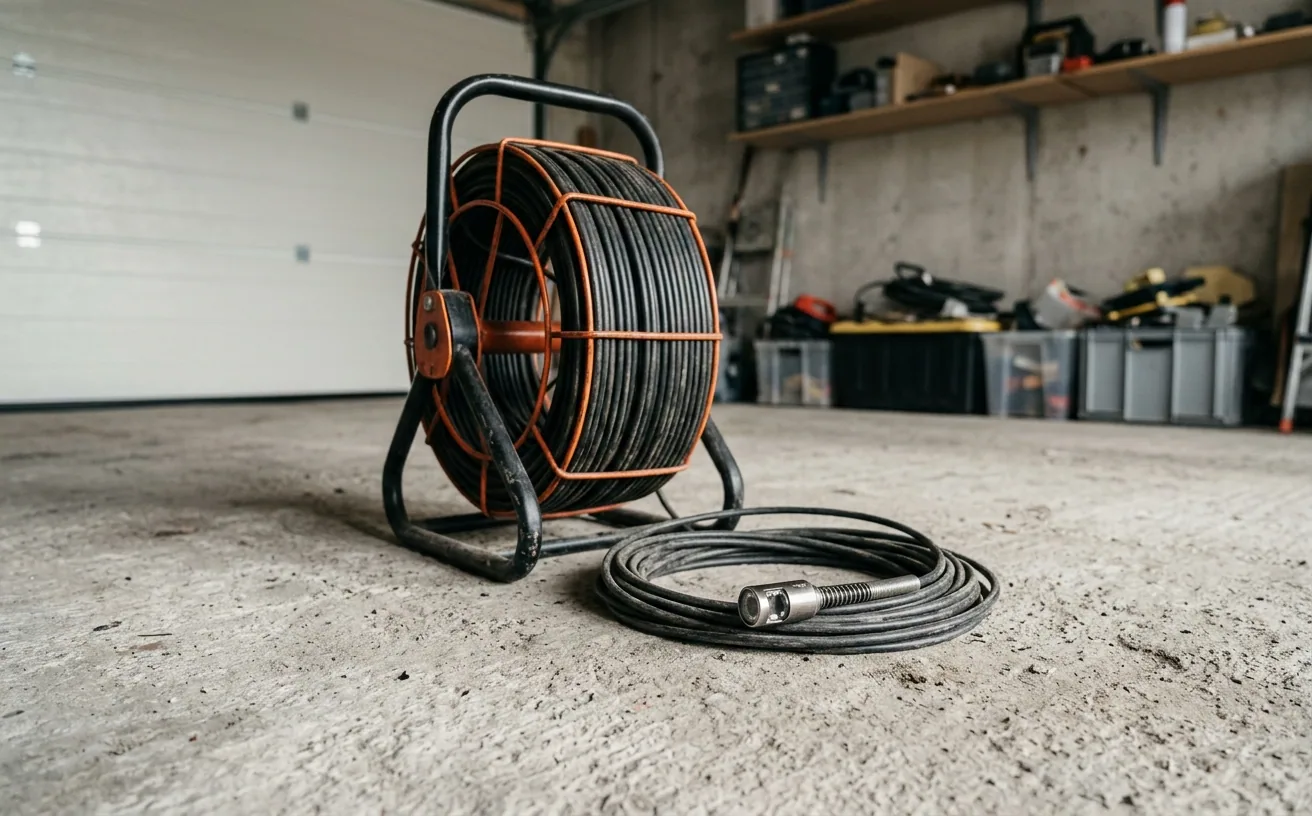
A self leveling camera head on a push reel shows pipe material, wall condition and separated joints. Those three facts are what tell an operator whether the line can take the pressure. Without them the choice of tool is a guess with a hose attached.

Pipe that cannot take the water. Hydro Jetting in Las Vegas
Illustrative image, not a photo of our work

Pipe that cannot take the water

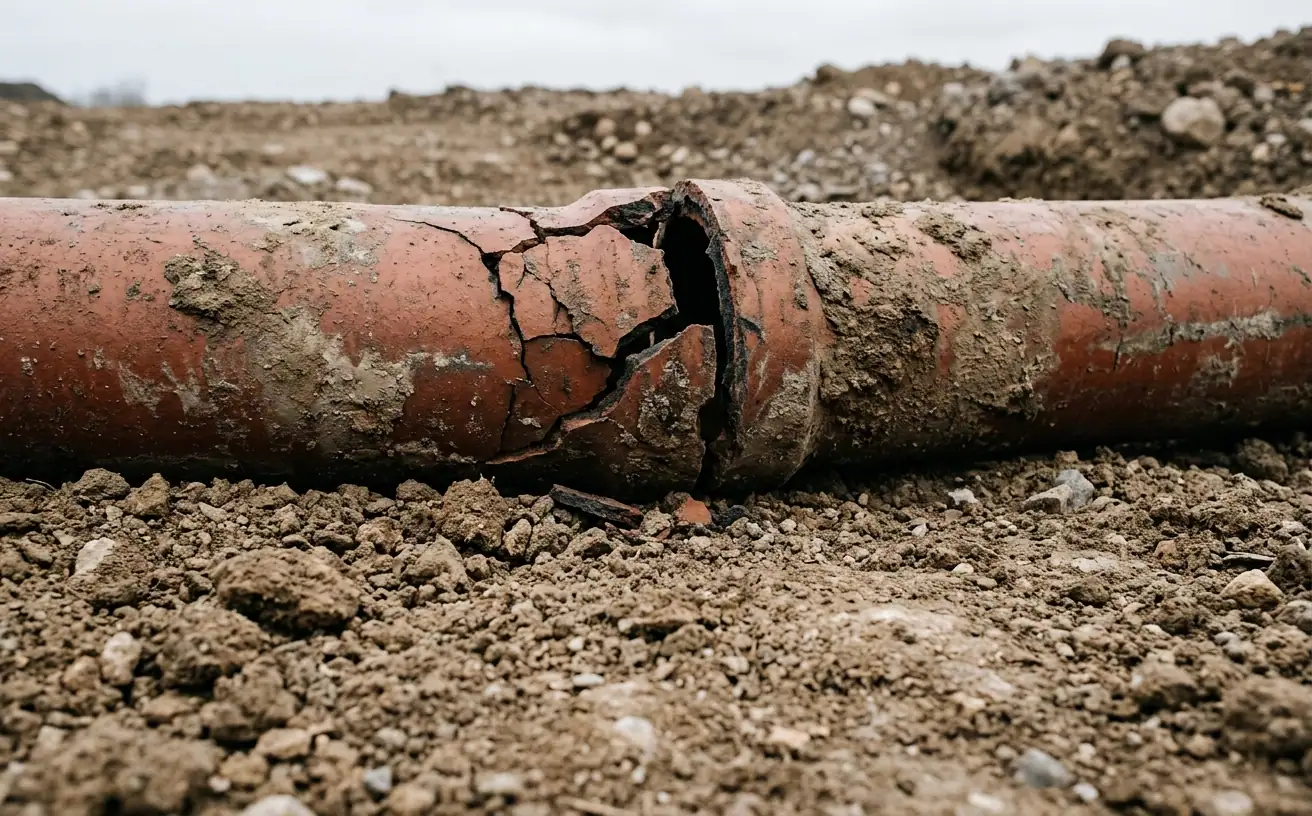
Old clay sections crack along their length and can shift at the joints as soil moves. Pressure entering a crack works against the pipe rather than the blockage. On a line in this condition the correct answer is repair, not cleaning.

Photography note

The camera reel and the cracked clay section above illustrate the pipe conditions that decide whether a jetter is safe to use. They are not stills from a jetting job on this site.

Fair questions about high pressure water

Will jetting break my pipes?

In sound pipe, no. The jets are aimed at the wall to lift coating away, and pipe in good condition handles that without trouble.

In pipe that has already failed, high pressure water can find the weakness and make it worse. That is precisely why the camera pass is not optional and why some lines get a recommendation against jetting.

Is jetting just an expensive version of snaking?

They do different things. A cable cuts a path through an obstruction, and a jetter cleans the whole circumference of the pipe wall.

For a single clog, cabling is usually the better value. For a line that keeps coating and closing, cabling buys a season while jetting addresses the layer causing it.

My plumber wants to jet every year as maintenance.

On a commercial kitchen line with heavy grease, scheduled jetting can be reasonable and is often tied to how fast the line loads up. On a normal house line it usually is not.

Ask what evidence supports the schedule. If nobody can show you camera footage of the line coating up again, an annual jetting is a subscription rather than a repair.

Can jetting really cut tree roots?

Root cutting nozzles do remove root mass from inside the pipe, and roots reportedly cause more than half of all sewer blockages. Cleaning them out restores flow.

It does not close the opening the roots came through. Unless the joint or crack is repaired or lined, the roots return. Root removal is usually paired with a plan for the defect.

Do you need to dig up my yard to jet the line?

No. Jetting is done through an existing cleanout or another access point, and the hose travels inside the pipe.

Digging only becomes part of the conversation if there is no usable access, or if the camera finds damage that has to be repaired. Those are separate decisions with separate prices.

How much water does this use, and does that matter in the desert?

A jetter uses a meaningful amount of water during a job, supplied from a tank or a hose bib. It is a working cost rather than a trivial one in this valley.

The counterweight is that a line failing repeatedly wastes far more, through backups, repeat visits and eventually excavation. The Southern Nevada Water Authority takes valley water losses seriously enough to fund leak diagnostics with a voucher of up to $250.
Where we do this work

Hydro Jetting across Clark County

We cover hydro jetting in every part of the valley listed below. Each area page names the office that issues the plumbing permit there and who owns the sewer line at the curb, because both genuinely differ from one city to the next.

The fastest way in

Ask about hydro jetting

Say it is about this when you call and you skip the sorting.

Reach Clark County Plumber

Service area
Clark County, Nevada, including Las Vegas, Henderson, North Las Vegas, Summerlin, Paradise, Spring Valley, Enterprise and Boulder City

We are a service area business. We come to you, so there is no counter to visit and no street address on this page. The number above is the fastest way in.

What to have ready

About a minute of detail changes what we can tell you on the call.

  • The address and ZIP code, so we know which end of the valley you are on.
  • What the symptom is, in your own words. "Water under the sink" beats a diagnosis.
  • When it started, and anything already tried.
  • On a water heater: gas or electric, and roughly how old it is.
  • You get the diagnostic fee as a figure on the phone, before anyone is sent.
  • Scope and price are agreed together, before any work starts.
  • Water moving right now? Shut the main off first, then call and say so.

Questions about this service

What is hydro jetting and how does it work?

Hydro jetting sends water through a hose to a nozzle inside a drain or sewer line. The nozzle fires most of that water backward, which pulls the hose forward and scours the pipe wall as it travels. The result is a pipe cleaned around its full circumference rather than punched through.

The machine is rated by pressure and by flow. Pressure does the cutting and flow carries the loosened debris back out. An operator matches both to the line diameter and to what is coating it.

When should hydro jetting not be used?

Jetting should be avoided where the pipe has lost structural integrity. That includes collapsed sections, separated joints and badly corroded cast iron. It also includes Orangeburg pipe, installed from the 1940s to the 1970s, which fails as its pitch binder dries out.

It is also the wrong tool for a simple one time clog caused by an object. In that case retrieval with a cable is cheaper and less disruptive than washing the line.

How long does hydro jetting take?

A residential line usually takes one to three hours including setup, passes and testing. The camera work before and after adds time on top of that, and it is time worth spending. Commercial kitchen lines run longer because of the amount of grease involved.

Access has more effect on duration than pipe length does. A job with a proper cleanout at grade moves quickly. One that needs roof access or a pulled fixture loses an hour before the pump starts.

How often do restaurant drain lines need jetting?

There is no single interval, because it depends on the menu, the volume and how well the kitchen keeps fats out of the sink. High volume fryer kitchens load a line far faster than a coffee shop does. The interval that works is the one set by observation rather than habit.

A practical approach is to jet once, then watch how the line behaves and use a camera check to set the schedule. Grease interceptor pumping is a separate obligation, covered on grease Trap Services in the Las Vegas Valley.

Does hydro jetting remove mineral scale from Las Vegas pipes?

It removes a good deal of soft and moderately hard buildup, and specialized nozzles exist for harder deposits. Valley water is published at 280 parts per million of hardness with a positive saturation index. Deposition is a constant here rather than an occasional problem.

What jetting cannot do is restore a pipe that has thinned or pitted underneath the deposit. On old metal lines, removing heavy scale sometimes reveals damage the scale was masking.

Is hydro jetting safe for older Las Vegas homes?

It can be, and the age of the house is less important than the condition of the specific pipe. About 16.7 percent of Clark County homes were built before 1980, and plenty of those laterals are in sound shape today.

The only way to know is to look. A camera pass identifies the material and the wall condition, and that is the evidence any jetting decision on an older home should rest on.

What is the difference between hydro jetting and a sewer line replacement?

Jetting is cleaning and replacement is construction. Jetting removes what is inside the pipe and leaves the pipe where it is. Replacement takes out a failed pipe and installs new pipe, usually by excavation or by a trenchless method. They answer different problems entirely.

Cleaning cannot fix a structural problem, and replacing a line that was only dirty is money wasted. The camera is what separates the two cases, which is why it comes first.

Talk to someone about hydro jetting

Describe what is happening and we will tell you what it usually takes to fix.