Median county home built 1999Polybutylene made 1978 to mid 1995
What pipe is in your Las Vegas home, by the year it was built
Plumbing materials changed on a schedule, so the year on the deed narrows the answer before anyone opens a wall. Confirming it takes a flashlight and a look at the pipe under a bathroom vanity.
- Era by era material map
- How to find a PB2110 stamp
- Published service life figures
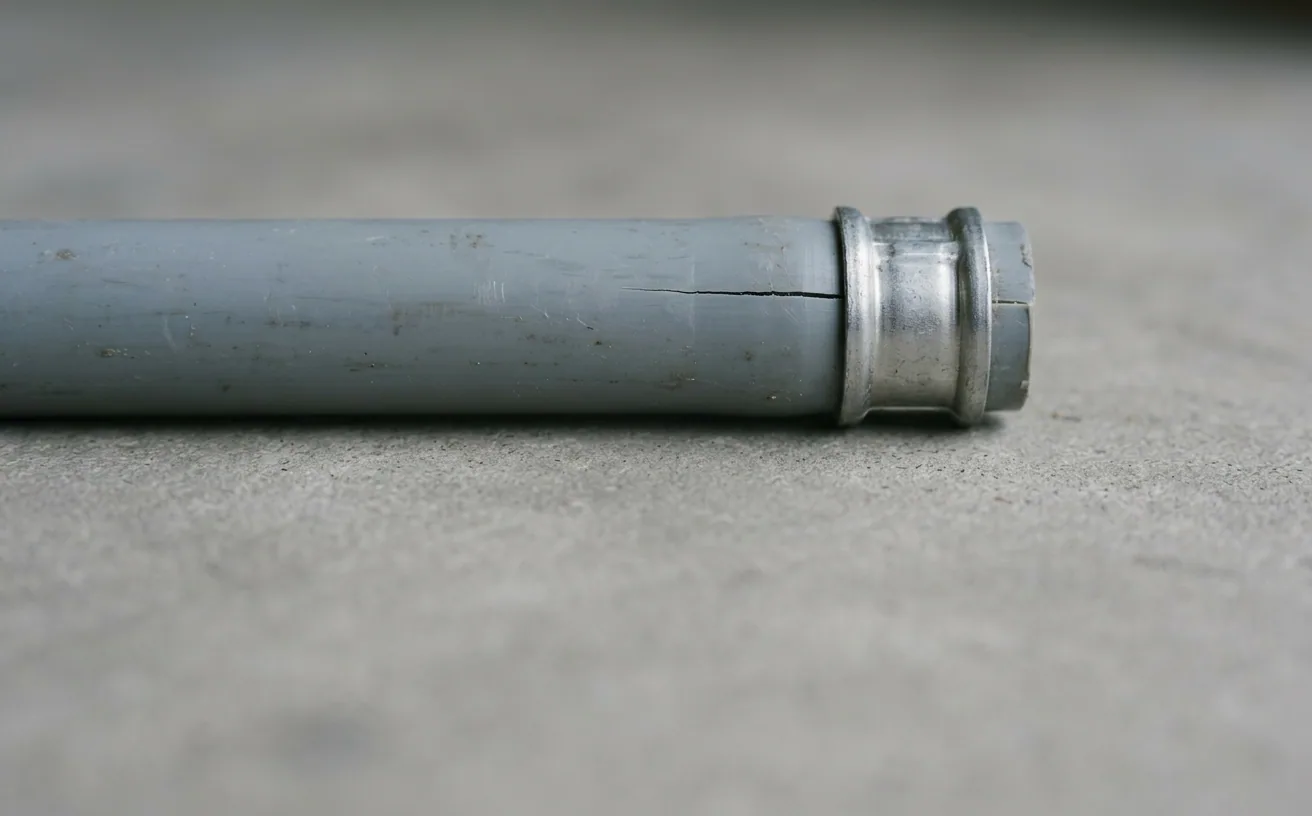
Clark County's median home was finished in 1999, and about 16.7 percent of houses predate 1980. Galvanized steel ran from the 1920s into the 1950s, and copper took over by the 1960s. Polybutylene was made from 1978 to mid 1995. PEX and copper fill newer construction.
Last updated 2026-09-08. Written for homeowners in Las Vegas and Clark County, Nevada.
When was your house built, and why does that decide the pipe?
Clark County holds roughly 975,834 housing units, and the median one was finished in 1999. Inside the City of Las Vegas the median is 1995. That is young housing stock by national standards, and it shapes what is behind the drywall.
The Census American Community Survey splits the county three ways. About 16.7 percent of homes went up before 1980, which is roughly 163,000 houses. Another 36.0 percent date from 1980 to 1999, and 47.3 percent were built in 2000 or later.
Those brackets matter because supply pipe was not a matter of taste. Builders used whatever the era's standard material was, valley wide, so a build year narrows the answer before anyone opens a wall.
Neighborhood age is the quickest shortcut of all. The older street grids near downtown, Huntridge and the Scotch 80s among them, sit in the pre 1980 bracket. Green Valley and Summerlin belong to the middle bracket instead.
Newer communities land firmly in the last bracket. Aliante, Mountain's Edge and Skye Canyon are all 2000s master plans, which puts them in PEX and copper territory rather than polybutylene.
Which material went in during which era?
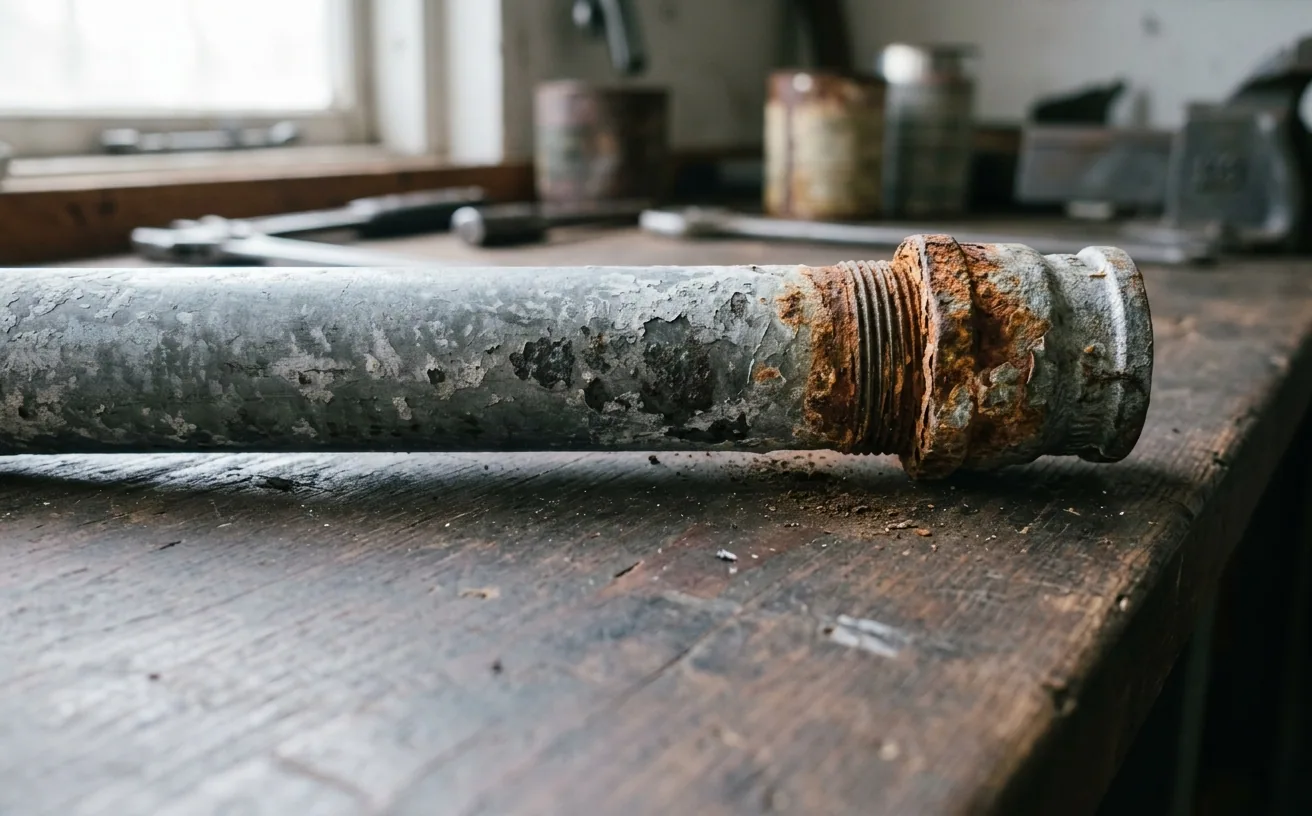
Galvanized steel was the standard supply pipe from the 1920s into the 1950s, and copper had replaced it in new construction by the 1960s. Galvanized corrodes from the inside out, so the damage stays hidden until flow drops off or the pipe finally weeps.
Polybutylene is the material that defines the middle bracket in this valley. It was manufactured from 1978 until the middle of 1995, went into as many as 10 million American homes, and is most often gray. Disinfectants in the water react with the plastic and flake it apart from within.
A $950 million class action settlement over polybutylene was approved in November 1995. The claim window closed long ago, so there is no money left to file for. Finding the pipe today is purely a maintenance question rather than a legal one.
InterNACHI publishes the life expectancy chart most of these numbers come from. It puts PEX at 40 to 50 years and a copper water line at about 50. Angle stops, the small shutoff valves under sinks and toilets, get 8 to 20 years, and valley hardness pushes them toward the short end.
| Era installed | Material and published service life |
|---|---|
| 1920s to 1950s | Galvanized steel supply pipe, 20 to 30 year useful life |
| 1940s to 1970s | Orangeburg sewer pipe, wood fiber bound in coal tar pitch |
| Through the 1970s | Cast iron waste pipe, 50 to 60 years below ground |
| 1960s onward | Copper supply pipe, about 50 years for a water line |
| 1978 to mid 1995 | Polybutylene, usually gray, usually stamped PB2110 |
| 1990s onward | PEX supply pipe, 40 to 50 years |
| Any era | Angle stop shutoff valves, 8 to 20 years on hard water |
How do you find polybutylene in a Las Vegas house?
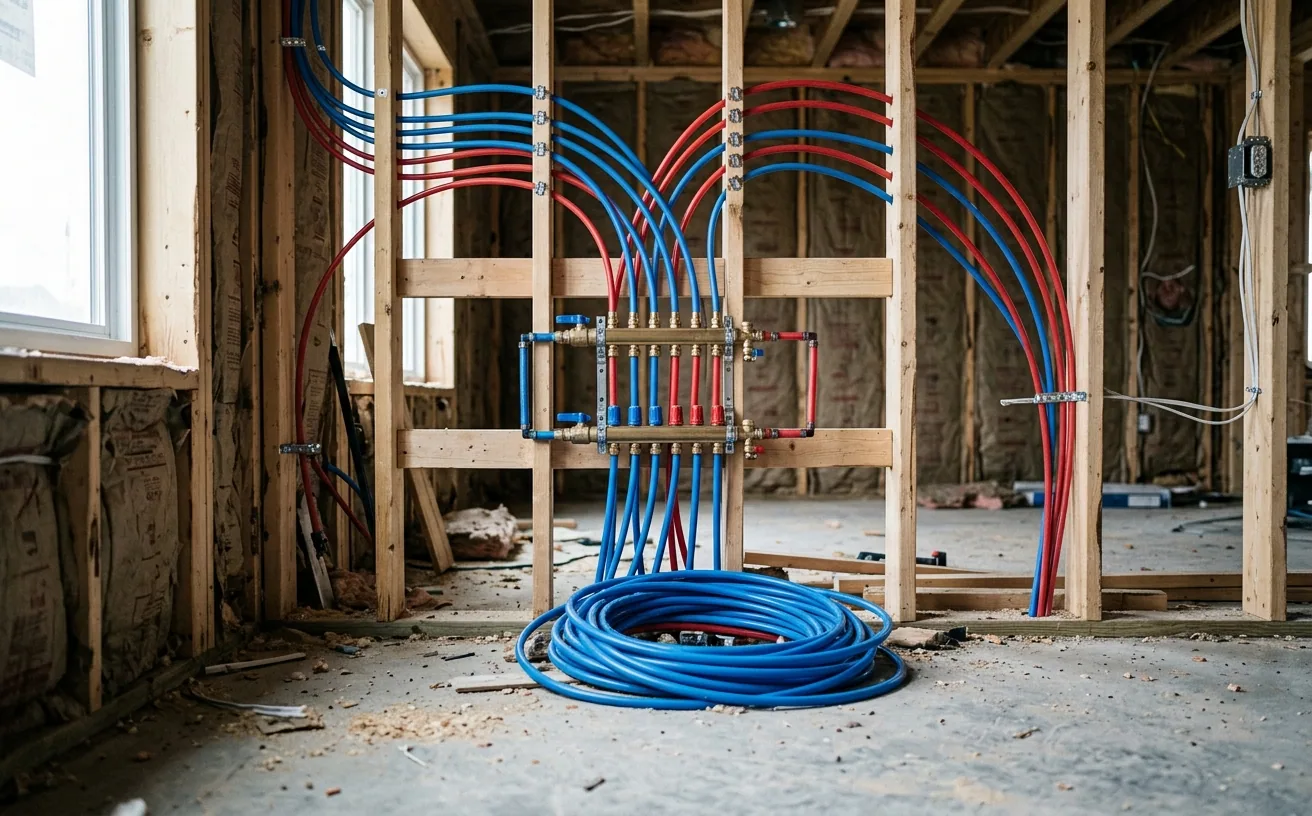
You can check this one yourself without tools and without touching anything under pressure. Polybutylene is usually gray, though it was also made in blue and black. It feels softer than copper and it carries no threads.
Look where pipe is already exposed. The usual spots are the connections at the water heater and the risers under a bathroom vanity. Check the washing machine valves too, and the point where the main line enters the garage.
Wipe the pipe clean and read along its length. The stamp you want is PB2110, printed into the pipe wall alongside other markings. If you find it in one place, the same material almost certainly runs through the rest of the house.
Fittings matter as much as the tube. Polybutylene was installed with gray plastic fittings and metal crimp rings, and those fittings fail at least as often as the pipe does. Look, photograph, and leave everything alone, because the line is pressurized and the plastic is brittle.
What about the drain and sewer side?
Supply pipe gets all the attention, but waste lines age on their own clock. Cast iron waste pipe is rated at 50 to 60 years below ground. That puts the county's pre 1980 homes squarely inside the window right now.
Orangeburg is the one that surprises people. It is wood fiber bound in coal tar pitch, and it went into the ground from the 1940s through the 1970s. It fails as the pitch dries out. The pipe deforms into an oval and then collapses.
Roots finish the job. Tree roots are reported to cause more than half of all sewer blockages. Mature landscaping in older valley neighborhoods sits directly over the lateral.
Ownership catches homeowners off guard here. In the Clark County Water Reclamation District area, the lateral running from the house to the main is the property owner's responsibility. The district operates more than 2,200 miles of pipeline for more than 240,000 accounts, and your lateral is not among them.
When does a repipe make more sense than another repair?
One leak is a repair. A pattern is a material problem, and telling the two apart is most of the decision.
A pinhole in a single copper elbow is a fitting that gave out. A second and a third pinhole along the same run means the run itself is finished. Patching it again just picks the next failure point for you.
Age against published service life is the other half of the answer. Galvanized past 30 years and polybutylene of any age are both living on borrowed time, no matter how presentable they look from the outside.
Permitting is not the obstacle people expect. A residential re-pipe is one of the items Clark County issues fully online, with no plan review and one item per permit. Applications go to the Department of Building and Fire Prevention at 4701 West Russell Road.
The repiping page covers scope, sequence and what happens to the drywall along the way. To have your own material identified, call (725) 337-3692 and start with the year the house was built.
Sources
- Housing unit count, median year built and the share of homes by era US Census ACS via Census Reporter
- Service life figures for PEX, copper water lines, cast iron waste pipe and angle stops InterNACHI life expectancy chart
- Residential re-pipe issued online with no plan review, one item per permit Clark County Building and Fire Prevention
- The sewer lateral from the house to the main is the property owner's responsibility Clark County Water Reclamation District
- Hardness of 280 parts per million, 16 grains per gallon, and a positive saturation index LVVWD Water Quality Summary
- C-1 plumbing license class and the free public license search Nevada State Contractors Board
Where to go from here
The service this covers
Related guides
Want someone to look at yours?
Reading about it only gets you so far. One call gets you an answer about your house.
Reach Clark County Plumber
- Phone
- (725) 337-3692
- Service area
- Clark County, Nevada, including Las Vegas, Henderson, North Las Vegas, Summerlin, Paradise, Spring Valley, Enterprise and Boulder City
We are a service area business. We come to you, so there is no counter to visit and no street address on this page. The number above is the fastest way in.
What to have ready
About a minute of detail changes what we can tell you on the call.
- The address and ZIP code, so we know which end of the valley you are on.
- What the symptom is, in your own words. "Water under the sink" beats a diagnosis.
- When it started, and anything already tried.
- On a water heater: gas or electric, and roughly how old it is.
- You get the diagnostic fee as a figure on the phone, before anyone is sent.
- Scope and price are agreed together, before any work starts.
- Water moving right now? Shut the main off first, then call and say so.
Related questions
How can I tell galvanized pipe from copper at a glance?
Copper is reddish brown when clean and turns green or dark brown as it ages, and its joints are smooth soldered sweat fittings. Galvanized steel is dull silver gray, noticeably heavier, and screws together with threaded fittings you can see clearly at every joint.
A magnet settles it. Galvanized steel holds a magnet, and copper does not.
Is polybutylene still legal to have in a house?
Having it is not a violation of anything. Manufacture stopped in the middle of 1995, and the class action settlement approved in November 1995 closed its claim window long ago. What remains is simply aging pipe that fails from the inside.
That is why it usually gets flagged during a sale or an inspection. The finding is about condition and remaining life, not about legality.
Does hard water shorten pipe life in Las Vegas?
It shortens some parts far more than others. Valley tap water is published at 280 parts per million, or 16 grains per gallon. It carries a positive saturation index, so it deposits mineral on everything it touches.
Scale narrows the bore of supply lines and collects in valves. Angle stops are the first casualty, which is why their 8 to 20 year published range lands near the low end in this valley.
My house was built in 2005. Is there anything to watch?
The supply pipe itself is almost certainly PEX or copper, and both are early in their published 40 to 50 and 50 year windows. The parts that wear out first in a house that age are the small ones rather than the runs in the walls.
Angle stops, supply hoses, toilet fill valves and the pressure regulator are the components to keep an eye on. Hard water works on all four.
Do I need a permit to repipe a house in Clark County?
A residential re-pipe is a permitted item in unincorporated Clark County, and the county issues that permit fully online with no plan review. Each permit covers one item, so a re-pipe and a water heater swap are two separate applications.
The small job exemption in Nevada law, which covers work under $1,000, stops applying the moment a permit is required. Nevada plumbing contractors hold a C-1 license from the Nevada State Contractors Board, and the Board's public search is free for anyone to check.
Talk it through with someone
Describe what you are seeing and we will tell you what it usually turns out to be.