Valley homes are built on slabsCaliche is why there are no basements
Nine signs of a slab leak in a Las Vegas home
A leak under concrete almost never shows up as a puddle you can point at. It shows up as heat, sound, a bill or a crack, and each of those points somewhere different.
- Nine symptoms, one table
- How the leak gets pinpointed
- Spot repair, reroute or repipe
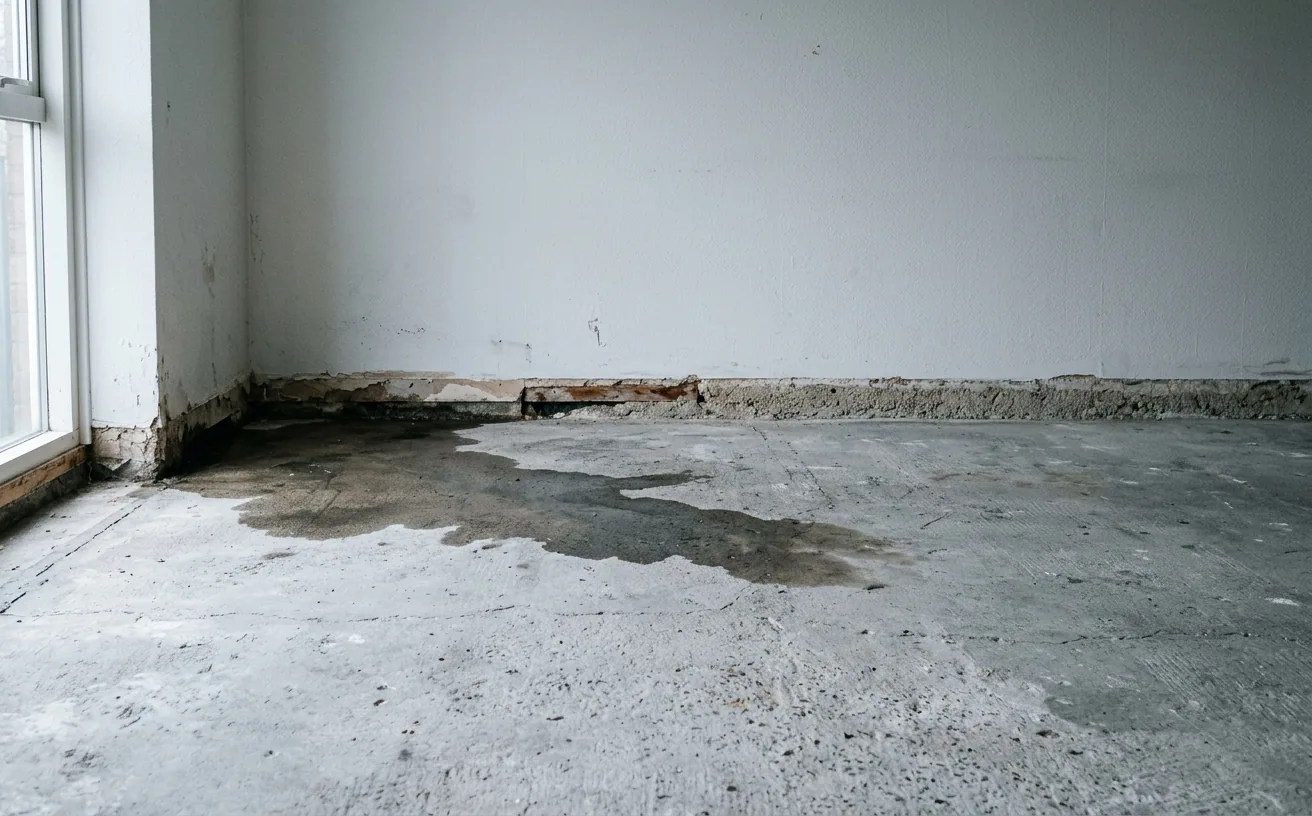
A slab leak is a break in a water line running inside or under the concrete floor. Because the pipe is buried, you read indirect signs. A warm patch on the floor, running water you can hear, a climbing bill, damp flooring, or new drywall cracks all count.
Last updated 2026-09-10. Written for homeowners in Las Vegas and Clark County, Nevada.
What is a slab leak, and why do valley homes get them?
Homes across the Las Vegas Valley sit on concrete slabs rather than basements. The reason is caliche, a natural calcium carbonate layer under the desert soil. It sets about as hard as concrete, and cutting a basement through it is slow and expensive.
A slab leak is a leak in a water line that runs inside or beneath that concrete. Because the pipe is buried, the escaping water has nowhere obvious to go. It travels sideways through the slab and the soil, and it usually surfaces somewhere other than the break.
That is what makes a slab leak different from a leak under a kitchen sink. There is no drip to catch in a bowl. You are reading indirect signs instead, which is why a homeowner can live above one for months without knowing.
The pipe is also under constant household pressure, so the loss never pauses. That is why the bill climbs steadily rather than spiking once, and why the damage accumulates around the clock.
What are the nine signs, one at a time?
A warm or hot patch on the floor is the sign most homeowners notice first, and it only appears on the hot water side. Hot water heats the concrete above it, so the spot stays warm even when nothing is running. Pets often find it before people do.
The sound sign is worth testing deliberately. Shut off every faucet, the ice maker and the irrigation controller, then stand in a quiet room and listen near the floor. A faint hiss or rush with nothing running means water is still moving somewhere.
A bill that climbs with no change in habits is the least dramatic sign and one of the most reliable. Unlike a dripping tap, a slab leak never pauses between uses. The Environmental Protection Agency puts household leak waste above 9,300 gallons a year, and a continuous loss sits at the top of that spread.
The structural signs are the last to appear, and they are not plumbing symptoms at all. Escaping water softens the soil supporting one part of the slab, so that area settles. Fresh drywall cracks, a door that suddenly sticks, or tile that pops loose can all follow.
| What you notice | What it usually points to |
|---|---|
| A warm or hot patch on the floor | A break on the hot water line under the slab |
| Running water you can hear with every tap off | Pressurized water escaping somewhere in the system |
| A water bill that jumps with no change in habits | A continuous loss, often measured in gallons per hour |
| Pressure that drops across the whole house | Supply lost before it reaches the fixtures |
| Damp carpet or a dark stain along tile grout | Water tracking up through the slab to the surface |
| Flooring that lifts, cups or cracks in one area | Trapped moisture under the covering in a fixed spot |
| A musty or mildew smell down near the floor | Long term damp held under the floor covering |
| New drywall cracks or a door that sticks | Soil movement under one part of the foundation |
| The meter still moving after the heater valve is closed | A loss on the cold side rather than the hot |
How does a plumber find a leak under concrete?
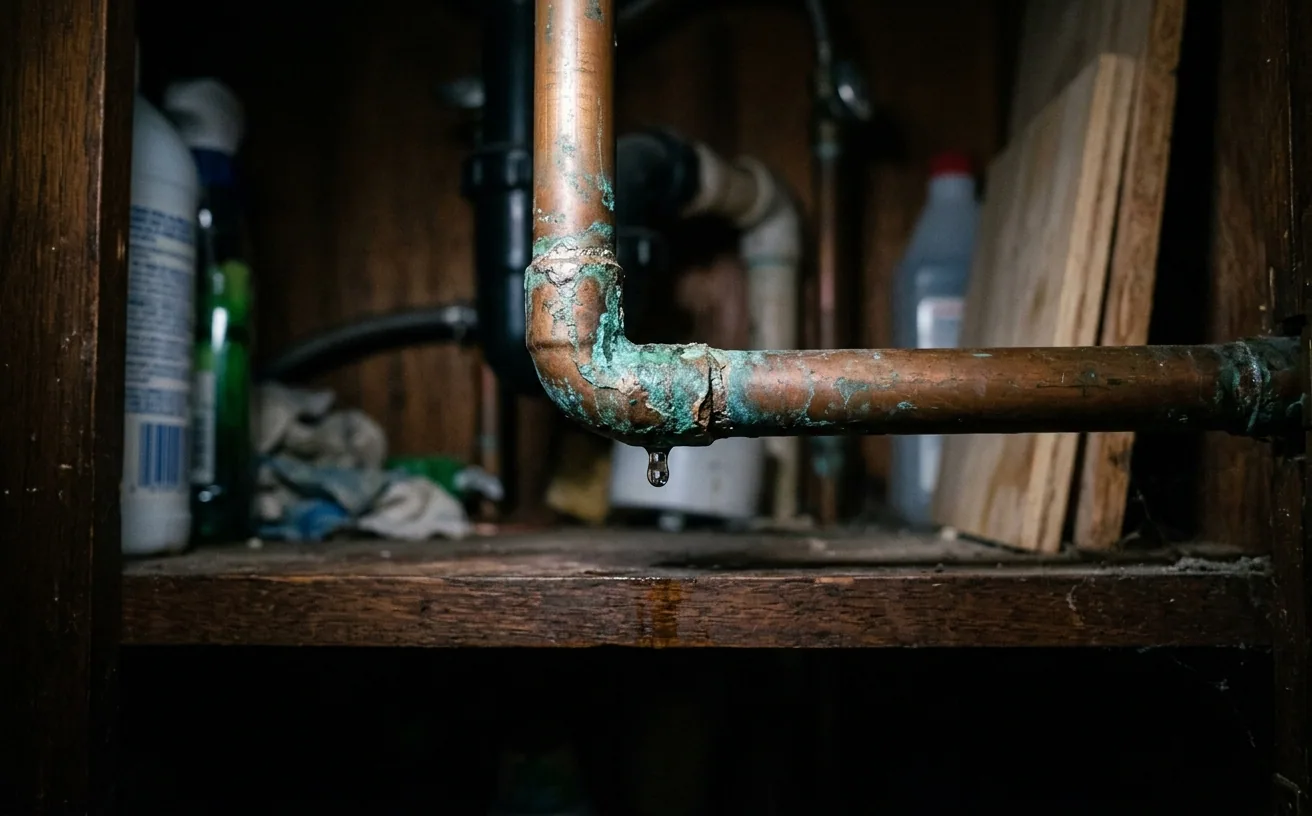
Locating comes before any concrete gets touched, and that order matters. The first move is usually to isolate the system by closing the valve at the water heater, which separates the hot side from the cold. Watching the meter after that shows which line is losing water.
From there the work is acoustic and thermal. Listening equipment picks up the sound a pressurized pipe makes as water escapes through concrete. Thermal imaging maps the warm trail left by a hot water leak under a floor covering.
Pressure testing confirms the finding. A section gets isolated and charged, and the plumber watches whether it holds or bleeds down. Sometimes a trace gas is introduced so a sensor can pick up where it rises.
Every one of those methods serves the same goal. Open the floor once, in the right place, rather than cutting exploratory holes and hoping.
What does the repair actually involve?
Once the leak is pinpointed there are usually three routes, and the choice depends on the pipe and on the house around it.
The first is a spot repair. The slab is opened above the leak, the damaged section is cut out and replaced, and the concrete is patched. That is the smallest job, and it fits a house where the rest of the plumbing is sound.
The second is a reroute. The buried run is abandoned in place and a new line is routed overhead through the attic and down inside the walls. It costs more at the start and it takes that pipe out from under the concrete permanently.
The third is a full repipe, which is the answer when the leak is a symptom rather than an accident. Several leaks in a short window usually mean the material itself has reached the end of its service life.
Published figures help settle that argument. InterNACHI puts a copper water line at about 50 years, and the small angle stop valves under sinks and toilets at 8 to 20 years. The slab Leak Repair in Las Vegas covers how each of the three routes is carried out.
What should you do first if you suspect one?
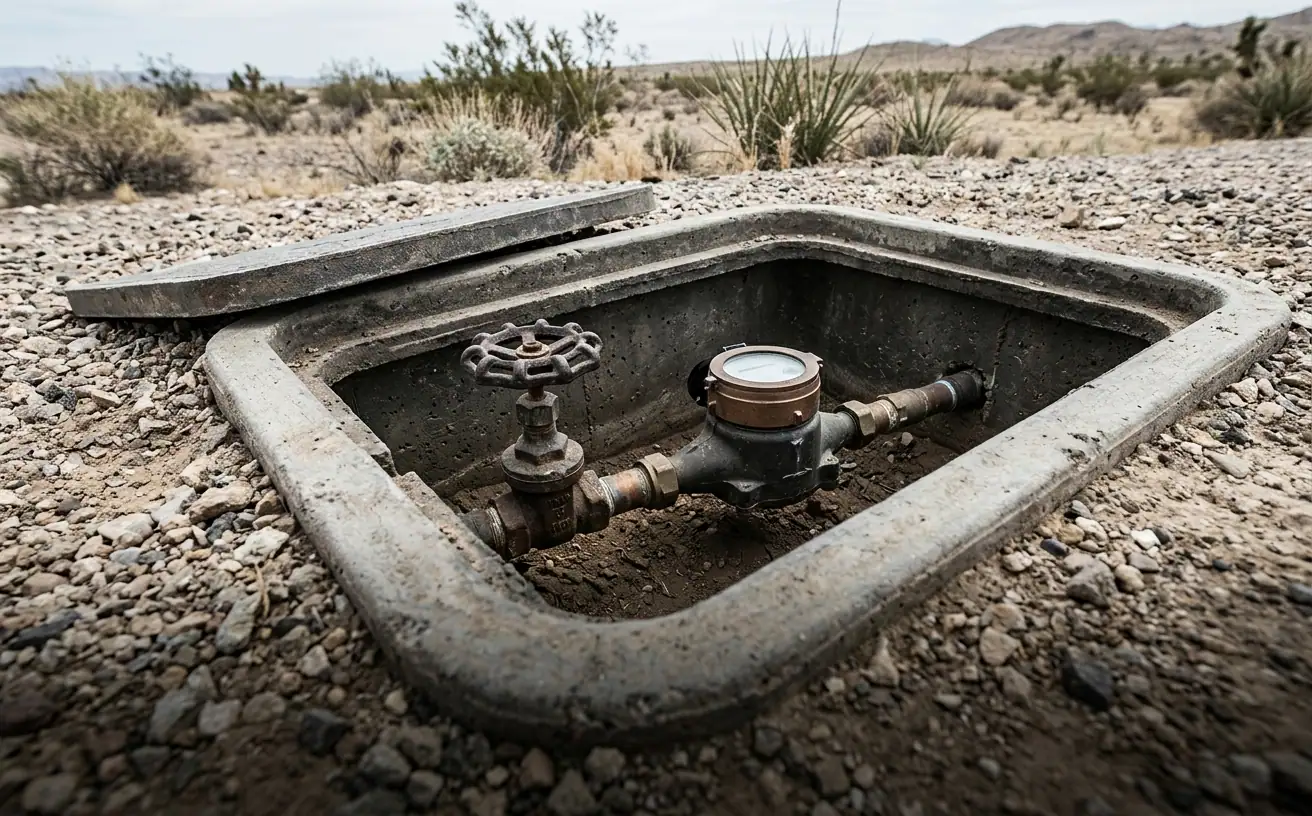
Find the main shutoff valve before you need it. In most valley homes it sits on an exterior wall near the front hose bib, or in a box near the street beside the meter. Knowing where it is turns a flood into an inconvenience.
Shut the water off if the floor is already wet. That stops the loss while you make the call, and it costs you nothing beyond a few hours without running water.
Photograph what you are seeing before anything gets moved. A warm patch, a stained grout line or a lifted plank all read better in a dated photo than in a description over the phone.
One rebate fits this situation well, because pinpointing a slab leak is a diagnostic visit. The Southern Nevada Water Authority voucher covers up to $250 toward that visit, or toward the first two hours of repair. The limit is a single voucher per property each calendar year, and the work has to go through a participating Water Smart Plumber.
If you want to confirm the loss before calling, the guide on finding a hidden water leak walks through the meter test. Otherwise call (725) 337-3692 and describe the sign and where in the house it shows. Have the address ready, along with a time when someone can be home.
Sources
- Voucher of up to $250 toward a leak diagnostic visit or the first two hours of leak repair, one per property per calendar year Southern Nevada Water Authority
- Average household leak waste above 9,300 gallons a year EPA WaterSense
- Median Clark County home built in 1999 US Census ACS via Census Reporter
- Copper water line at about 50 years and angle stop valves at 8 to 20 years InterNACHI life expectancy chart
Where to go from here
Want someone to look at yours?
Reading about it only gets you so far. One call gets you an answer about your house.
Reach Clark County Plumber
- Phone
- (725) 337-3692
- Service area
- Clark County, Nevada, including Las Vegas, Henderson, North Las Vegas, Summerlin, Paradise, Spring Valley, Enterprise and Boulder City
We are a service area business. We come to you, so there is no counter to visit and no street address on this page. The number above is the fastest way in.
What to have ready
About a minute of detail changes what we can tell you on the call.
- The address and ZIP code, so we know which end of the valley you are on.
- What the symptom is, in your own words. "Water under the sink" beats a diagnosis.
- When it started, and anything already tried.
- On a water heater: gas or electric, and roughly how old it is.
- You get the diagnostic fee as a figure on the phone, before anyone is sent.
- Scope and price are agreed together, before any work starts.
- Water moving right now? Shut the main off first, then call and say so.
Related questions
How do I tell a slab leak from a leaking water heater?
Location is the first clue. A heater leak puts water on the floor around the unit or in the pan beneath it. The wet area spreads outward from that one spot. A slab leak warms or dampens a patch of floor far from any fixture, often in a hallway or bedroom.
Closing the valve at the water heater separates the two questions. If the meter keeps moving afterward, the loss is not the heater.
Is a slab leak an emergency?
It depends on how fast it is moving. A leak putting water across a floor is urgent, because flooring, baseboard and drywall start absorbing it within hours. A slow leak showing only as a warm patch and a higher bill is serious but not a same hour problem.
Either way it does not improve on its own. The pipe is under constant pressure, so the opening only gets larger.
Does a slab leak always mean the whole house needs repiping?
No. A single break on an otherwise healthy system is usually repaired or rerouted at that one location. Repiping enters the conversation when the failures repeat, because that pattern points at the material rather than at bad luck.
The age of the house is the tiebreaker. The county's median build year is 1999. That puts a great many valley homes on supply pipe that has sat in concrete for two decades or more.
Can a slab leak damage the foundation?
Water under a slab changes the soil that supports it, and soil that softens or washes out no longer carries the same load. That shows up above ground as new cracks in drywall, doors and windows that bind, or a floor that feels out of level.
None of that happens overnight. It is the reason the structural signs on the list usually appear last, after weeks or months of leaking.
How long can a slab leak run before anyone notices?
Months, routinely. A cold water slab leak produces no warm floor and no sound you would pick out over normal household noise. The bill is often the only signal, and a modest increase can hide inside a hot Las Vegas summer.
That is why the meter is worth a yearly check even when nothing seems wrong. It reports a loss directly, rather than waiting for the leak to warm a floor or wet a carpet.
Talk it through with someone
Describe what you are seeing and we will tell you what it usually turns out to be.